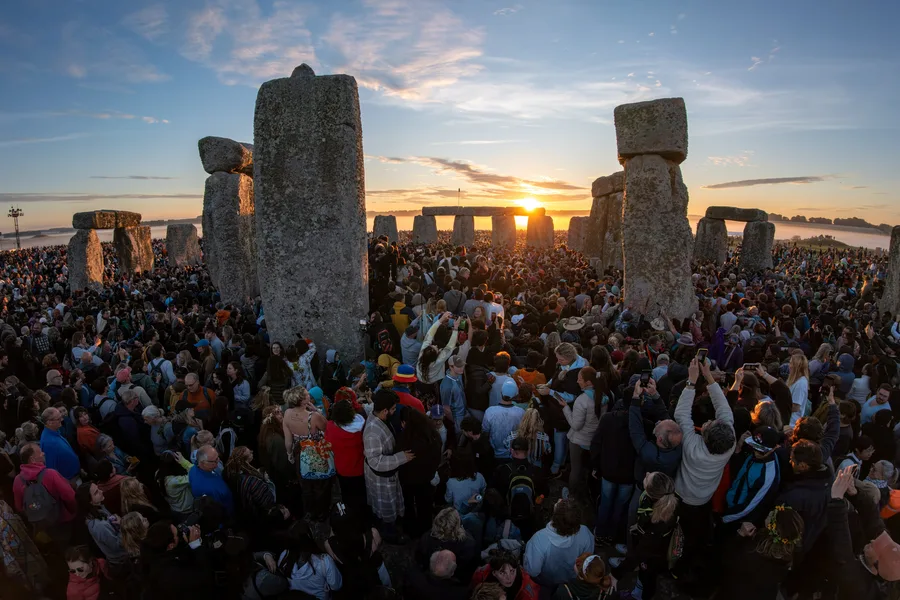
Approximately 20,000 people descended upon Stonehenge in the early hours of Sunday morning to mark the summer solstice at the ancient Wiltshire monument. The crowd assembled around the prehistoric site's heel stone, which serves as the entrance to the structure, to observe the sunrise at 4.52am on what is the longest day of the year in Britain. The astronomical solstice itself was due to take pla…
Stonehenge, the infamous stone circle on Salisbury Plain, U.K., dates to around 2500 B.C.E. The monument is aligned so that if you are standing at the center of the ring on the summer soltice (which can be June 20, 21, or 22), the Sun rises over the Heel Stone; solstice celebrations are believed to have Continue reading "June 21, ca. 2500 BCE: Summering at Stonehenge" The post June 21, ca. 2500 B…
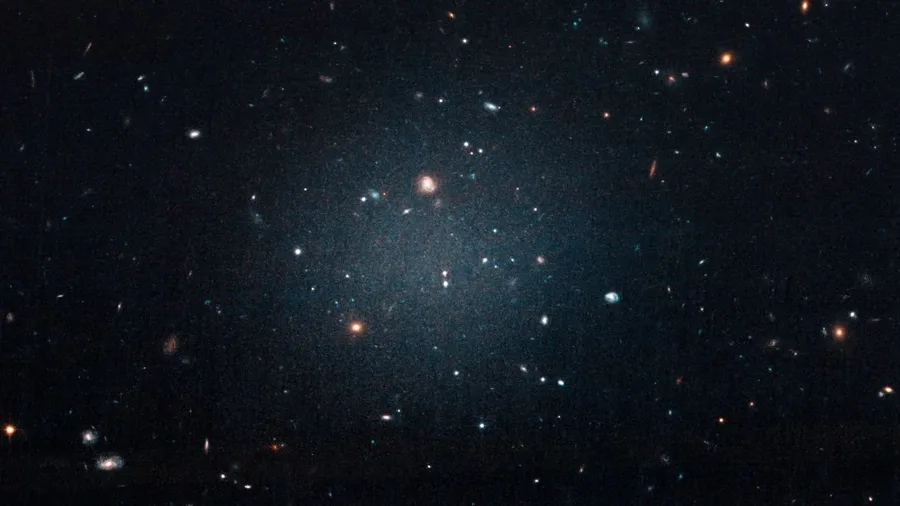
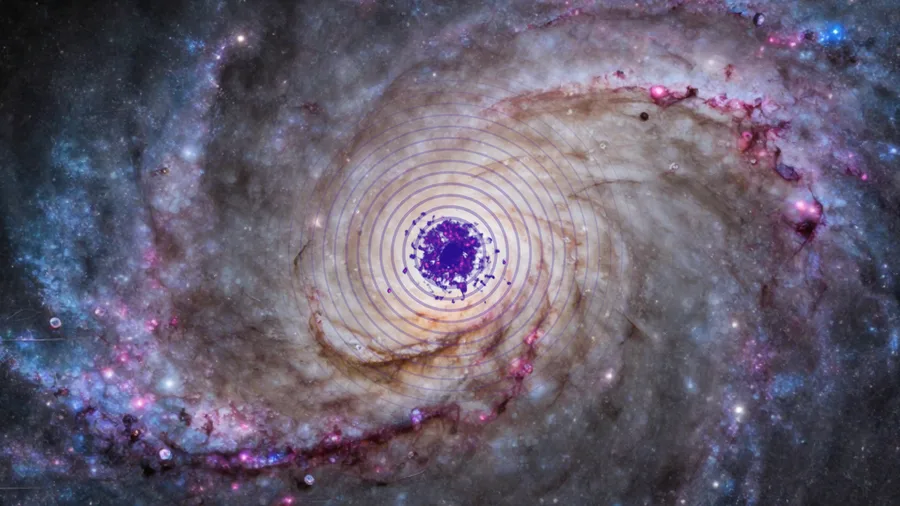
New research has failed to rule out self-annihilating dark matter as the source of a hotly debated gamma-ray emission known as the Galactic Center Excess radiating from the heart of the Milky Way.
Looking for a sky event this week? Check out our full Sky This Week column. June 20: Libra’s Ghost Cluster The summer solstice occurs at 4:25 A.M. EDT. This is the time the Sun reaches its northernmost point in the Northern Hemisphere sky, which also means our star takes its longest path across this hemisphere’s sky on Continue reading "The Sky Today on Sunday, June 21: A summertime lineup" The …
The setup: Two astronauts A and B are in free fall toward a black hole, while an external observer E watches. After A has crossed the event horizon, B (who has not yet crossed it) decides to turn back ...
The Bullet Cluster is one of the most famous objects in astronomy. For years, many scientists have considered it one of the strongest pieces of evidence for the existence of dark matter, the mysterious substance thought to make up most of the matter in the universe. However, a new study suggests there may be another […] The post Iconic cosmic collision challenges long-held ideas about dark matter…
astronomyastrophysicscosmology
Google News Content : ScienceAlert : The Best in Science News and Amazing Breakthroughs
I apologize if I'm posting in the wrong part of the forum, I'm new. I have started find cosmology interesting. I have started to learn about black holes but I don't understand something that might obvious and I'm not getting it. Why is/was there an assumption that things that enter a blackhole... Read more
Nature Astronomy, Published online: 19 June 2026; doi:10.1038/s41550-026-02871-0 Lunar polar shadows are traditionally seen as ancient cold traps. However, new models of orbital evolution suggest lunar ice archives are surprisingly young, fundamentally altering our search for the Solar System’s volatile history.
Nature Astronomy, Published online: 19 June 2026; doi:10.1038/s41550-026-02920-8 Decades of progress in photometric and spectroscopic surveys have led to successful searches for the descendants of the first stars in the nearby Universe, but the first generation itself is still elusive. The prospects for finding them look promising thanks to forthcoming survey facilities, which will open a window …
Millions of years ago, a massive star exploded somewhere far away in our galaxy. During this violent event, called a supernova, the dying star blasted huge amounts of matter into space. These materials included carbon, nitrogen and oxygen—the essential ingredients for life—as well as many other elements, some as heavy as iron. The explosion itself […] The post Mysterious cosmic rays are challengi…
I apologize if I'm posting in the wrong part of the forum, I'm new. I have started find cosmology interesting. I have started to learn about black holes but I don't understand something that might obvious and I'm not getting it. Why is/was there an assumption that things that enter a blackhole... Read more
A mysterious neutrino has arrived from deep space, setting off a search for its source that spans some of the most extreme environments known in the cosmos.
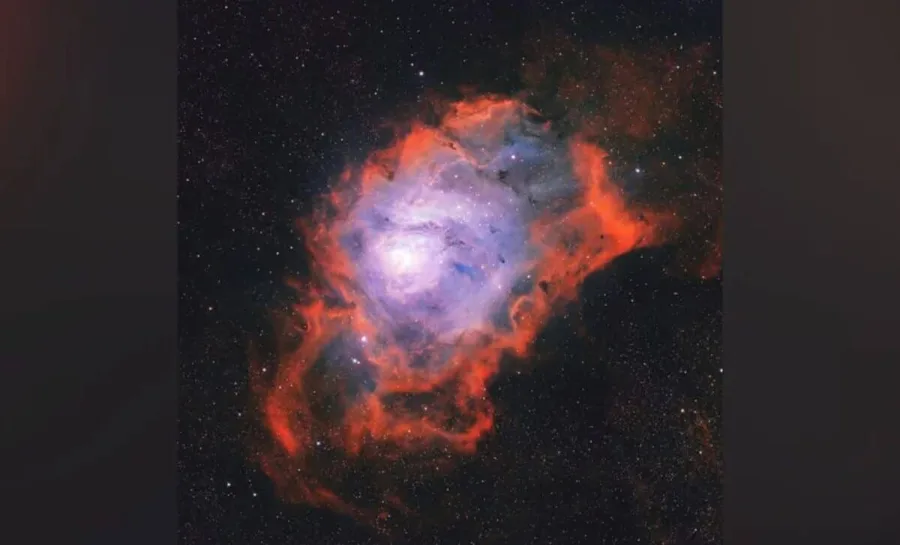
Hidden within the Milky Way’s dense star fields, a delicate cosmic cloud appears as little more than a soft haze. But its true complexity emerges only when viewed under the right conditions.
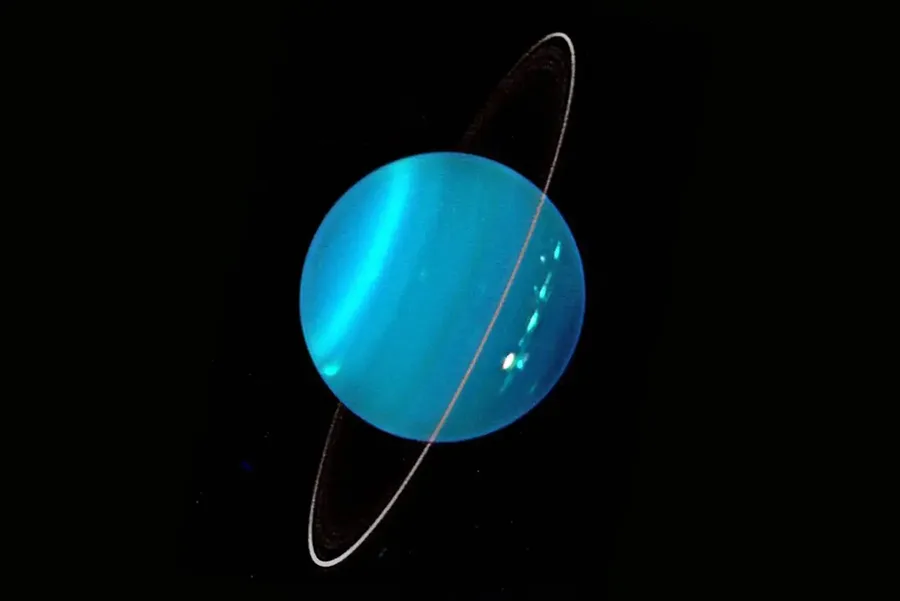
Carbon monoxide in Uranus's deep atmosphere indicates that the planet contains more ice than rock, suggesting it formed more like Neptune than we thought
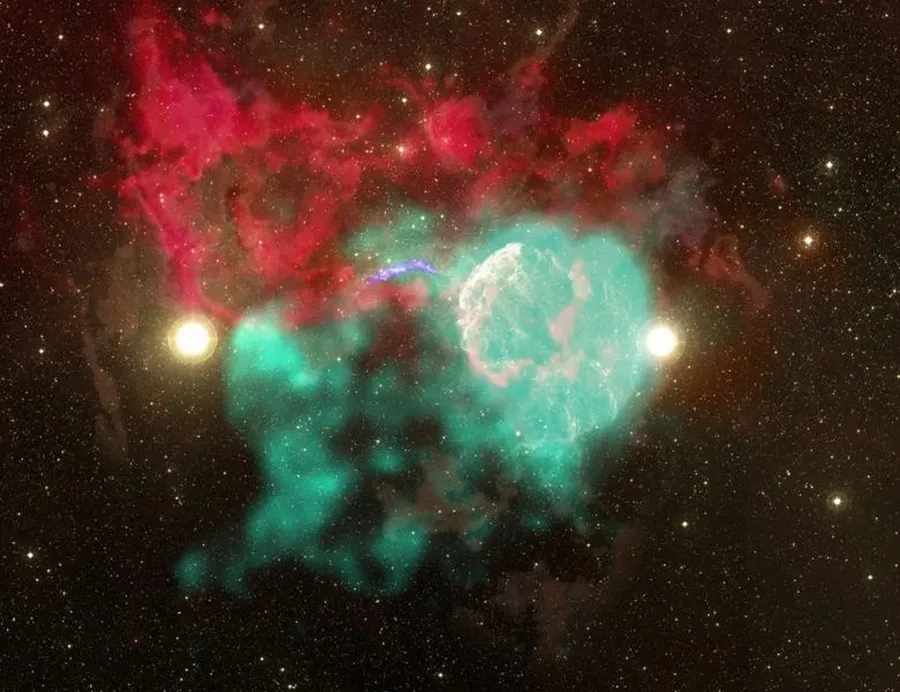
Millions of years ago two massive stars circled each other in a cosmic dance. Then one of the stars went supernova. The blast likely flung the exploded star’s companion across space, setting it adrift in the cosmos for tens of thousands of years before it, too, succumbed to the same explosive end.
That, at least, is what astronomers believe may have happened to a newly identified pair of stellar …
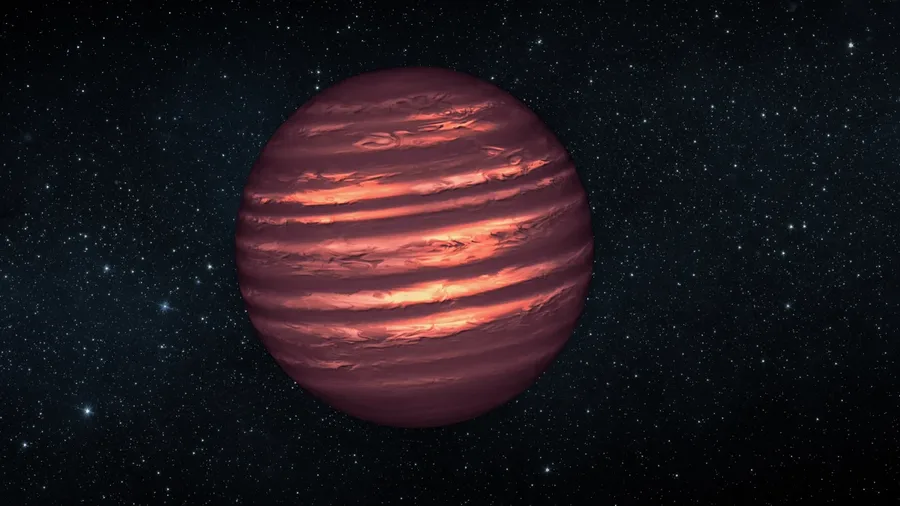
The James Webb Space Telescope has found nearby brown dwarfs masquerading as far-distant galaxies. The discovery reinforces how, in astronomy, what you see isn’t always what you get
astronomyastrophysicscosmology
research.io
Sign up to keep scrolling
Create your feed subscriptions, save articles, keep scrolling.














 research.io