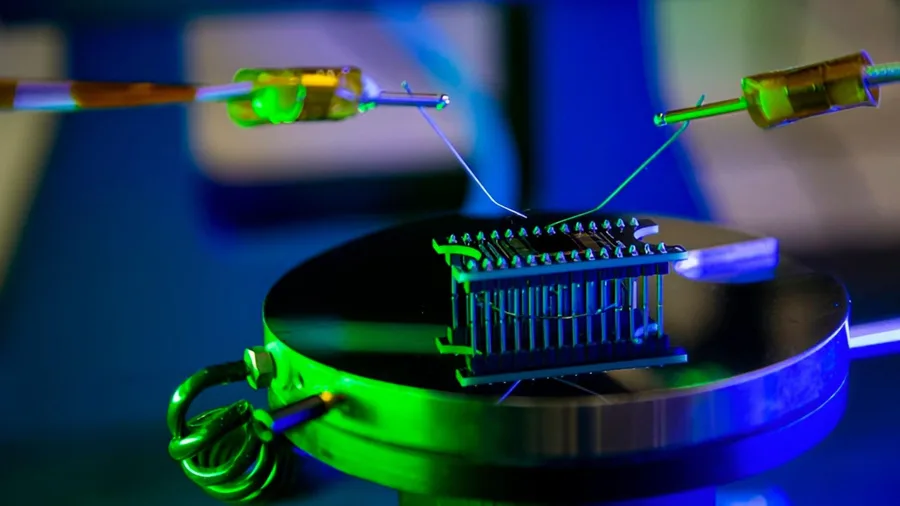
Elon Musk UPDATE Neuralink 4.0 Chip introduces Neuralink’s next-generation O1 brain chip developed with Samsung. This video explores the latest progress of the Neuralink 4.0 chip, including movement restoration, speech recovery, Blindsight vision technology, and how Neuralink patients are using brain-computer interfaces today. We also examine Samsung’s 4nm partnership, the new R1 surgical robot, …
Researchers developed a brain-controlled gaming system that learns from the brain’s natural wiring, enabling fast BCI training and potentially transforming medicine, mental health, and human-computer interaction. It may not be long before video game controllers become optional. Researchers at Yale University have developed a new brain-computer interface (BCI) that allows people to play video game…
Background “BCI illiteracy,” characterized by insufficient μ -rhythm Event-Related Desynchronization (ERD) in approximately 40% of stroke patients, limits the efficacy of Brain–Computer Interface (BCI) training. Intermittent Theta Burst Stimulation (iTBS) can modulate cortical excitability. We hypothesized that sequential application of iTBS over the affected primary motor cortex (M1) before BCI …
From ultra-flexible materials redefining brain-computer interfaces (BCIs) to record-shattering global out-licensing deals, China’s biopharmaceutical sector is undergoing a profound qualitative transformation. ShanghaiEye takes you inside the Yunfan Future Factory and the cross-discipline innovation hub hosted by Chia Tai Tianqing (CTTQ)—a subsidiary of top-50 global pharma giant Sino Biopharmaceu…
(Nature) – The device has helped a man with motor neuron disease communicate and control his computer for nearly two years. The brain–computer interface (BCI) has given 48-year-old study participant Casey Harrell, who was diagnosed with a type of motor … Read More
Neurosurgeons at University of Michigan Health completed the first-in-human implant of a Paradromics Inc., wireless brain-computer interface, or BCI, as part of a national clinical trial for patients with difficulty speaking. The clinical trial will focus on the device's long-term safety, and it will also assess whether the BCI can restore the participant's communication through synthesized text …
Neurosurgeons at University of Michigan Health completed the first-in-human implant of a Paradromics Inc., wireless brain-computer interface, or BCI, as part of a national clinical trial for patients with difficulty speaking.
The first real brain upload just happened — and it might be the strongest evidence yet that simulation theory isn’t just philosophy anymore. A startup called Eon Systems copied a complete biological brain (139,255 neurons, 54 million synapses) into a physics simulation, and the digital fly started walking, grooming, and feeding on its own. No […]
Team leader Professor Sumeet Walia said the goal was to remove the delay and energy cost of transferring data between separate systems. “We’ve made real-time decision making a possibility with our invention, because it doesn’t need to process large amounts of irrelevant data and it’s not being slowed down by data transfer to separate processors.” […]
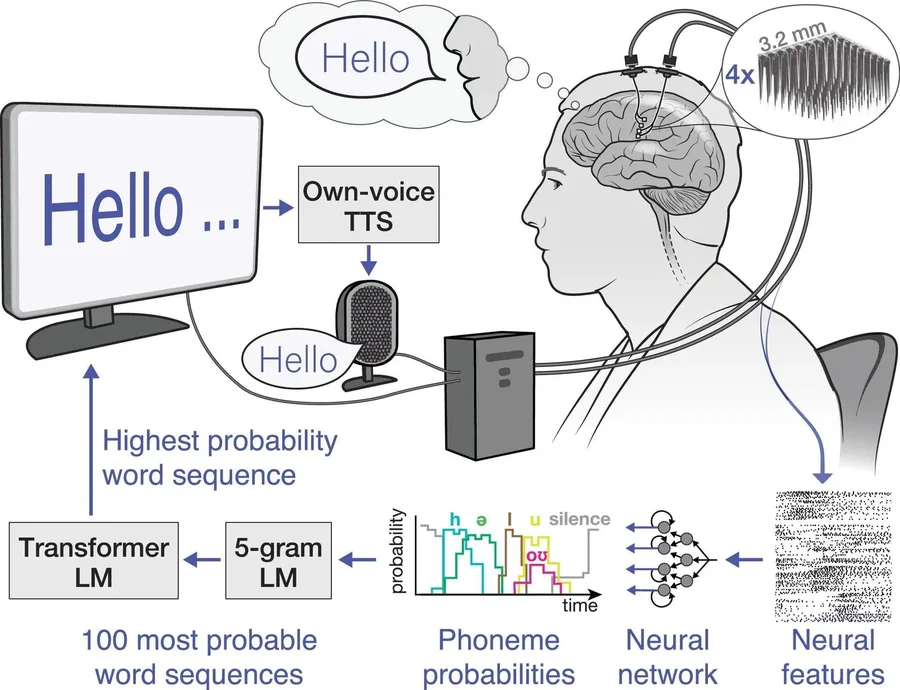
Published in Nature Medicine, new research suggests a brain-computer interface can empower a person with severe paralysis to converse and work from home. The device decodes brain signals into text and computer commands without needing daily expert assistance.
A new study demonstrates that a person with severe paralysis caused by amyotrophic lateral sclerosis (ALS) can use a brain-computer interface (BCI) at home to communicate, work and interact with the digital world—without the need for researcher support. Published in Nature Medicine, the results mark a significant step toward delivering practical assistive technology for people […]
A new UC Davis study, published in the journal Nature Medicine, shows a brain-computer interface system allows man living with ALS to 'speak' clearly, unassisted for prolonged period.
brain-computer-interfacesneuroscience
research.io
Sign up to keep scrolling
Create your feed subscriptions, save articles, keep scrolling.







 research.io