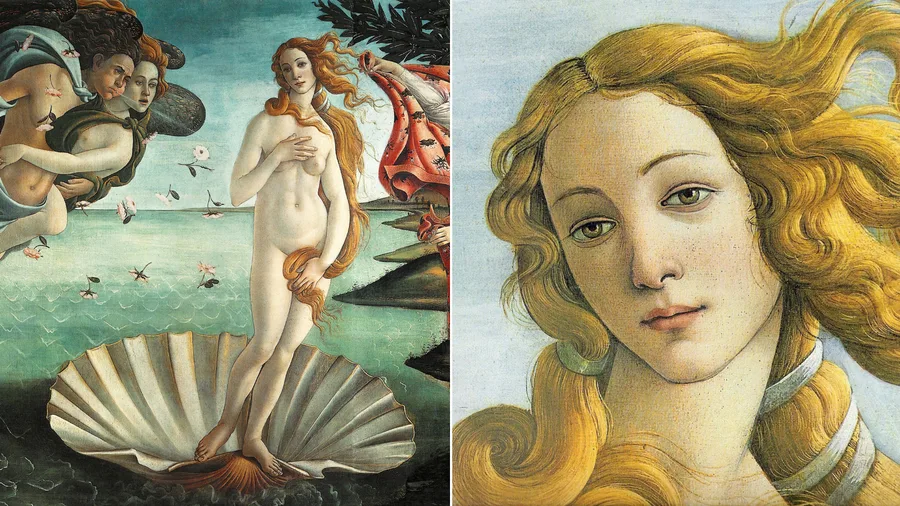
A mystery behind Botticelli's Birth of Venus may finally have been solved after hundreds of years. For centuries, art enthusiasts have puzzled over the distinctive squint visible in the Renaissance masterpiece. Theorists had long proposed Venus's misaligned eye was a symbol representing piety and beauty. But now, researchers from Queen Mary University of London have offered a different explanatio…
Up to 1616, when the Copernican theory of heliocentrism was prohibited, Galileo had never asserted its truth. But the pope and cardinals of the Roman Inquisition assumed that he had, and he was required to repudiate it. In contrast, Copernicus’s book was only lightly corrected and allowed to be read. Galileo continued his practice of not asserting the reality of heliocentrism in his Dialogue on t…
☞ Visiting the History of Computing and Play
The Large Scale Systems Museum and the Toy and Miniature Museum
Over the past month or so I had the chance to visit two fantastic museums: the Large Scale Systems Museum (near Pittsburgh) and the National Museum of Toys and Miniatures (Kansas City). These museums showcase the twin histories of computing and play. These areas intersect explicitly when i…
STEMgineer’s Guide to Problem Solving Workbooks One of the smartest scientists in history went blind as a consequence of a science experiment. Isaac Newton was […] The post Why did Isaac Newton blind himself? appeared first on STEM Education Works .
Naomi Oreskes is an Earth scientist, historian of science and public speaker. She is currently the Henry Charles Lea Professor of the History of Science at Harvard University and an affiliated professor of Earth and planetary sciences. She is author or co-author of numerous books, including the best-selling Merchants of Doubt.
[This interview was edited for length and clarity.]
How would you desc…
Working in Glass
How a twisted triangle of glass tubing helped democratize chemistry and build the modern laboratory.
This essay will appear in our forthcoming book, “Making the Modern Laboratory,” to be published this summer.
By Spencer Wright
It was a revolutionary idea in the 1830s, and it remains one today — virtually anyone can learn to make their own scientific equipment. With a few dollars…
Ask most engineers who laid the groundwork for modern wireless and you will hear names like Marconi, Shannon, or the committees behind the IEEE 802.11 standard. Almost no one says Hedy Lamarr. Yet in 1942 the Hollywood movie star co-patented frequency hopping spread spectrum , the technique that quietly keeps your Wi-Fi, Bluetooth, and GPS working today. It is one of the best stories in wireless …
In The Legal Anatomy of the Body: Health, Rights, and Politics in Times of Emergency. Springer. forthcomingThis article examines how Italian physicians between the 16th and 18th centuries developed a logic of ‘intermediate states’ between health and disease. Moving from late Scholastic Galenism to early mechanistic medicine and through a genealogical counter-history of the concept of health as de…
This paper constitutes the second part of the author's comprehensive three-volume research project, “The Mystery of the Nameless Length: The Path to Understanding Time” (Volume I: First Principles: Time, Space, and Field). Situated firmly within the domains of the philosophy of science, epistemology, and the methodology of theoretical physics, this study provides a rigorous historical-philosophic…
Abū Rayḥān al-Bīrūnī’s Patanjal al-Hindī is a unique intellectual endeavor that bridges Islamic-Iranian and Indian philosophical traditions. His treatise is not merely a translation of Patañjali’s Yoga Sūtras but an interpretative work that recontextualizes Yogic concepts within the framework of Islamic metaphysics and epistemology. This study, based on a broader research project that includes a …
Mathematics > History and Overview
Bibliographic and Citation Tools
Code, Data and Media Associated with this Article
Demos
Recommenders and Search Tools
arXivLabs: experimental projects with community collaborators
arXivLabs is a framework that allows collaborators to develop and share new arXiv features directly on our website.
Both individuals and organizations that work with arXivLabs have em…
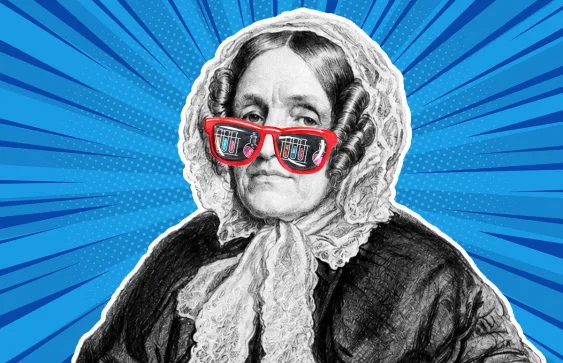
She wrote the bestseller that made young people fall in love with science The post Lessons in Chemistry, 19th-Century Style appeared first on Nautilus .
1948 was an interesting time for computing. For decades, businesses had used punch card equipment that added and sorted electromechanically. Now these electromechanical relays and counting wheels were being used to build room-filling general-purpose computers such as Harvard Mark I (1944) and IBM's SSEC (1948). But slow electromechanical mechanisms were already becoming obsolete. World War II had…
TIL: The Man Who Invented the Future, Then Starved to Death in It
The story of Oleg Losev, LEDs, and a lost manuscript describing a new three-electrode semiconductor device
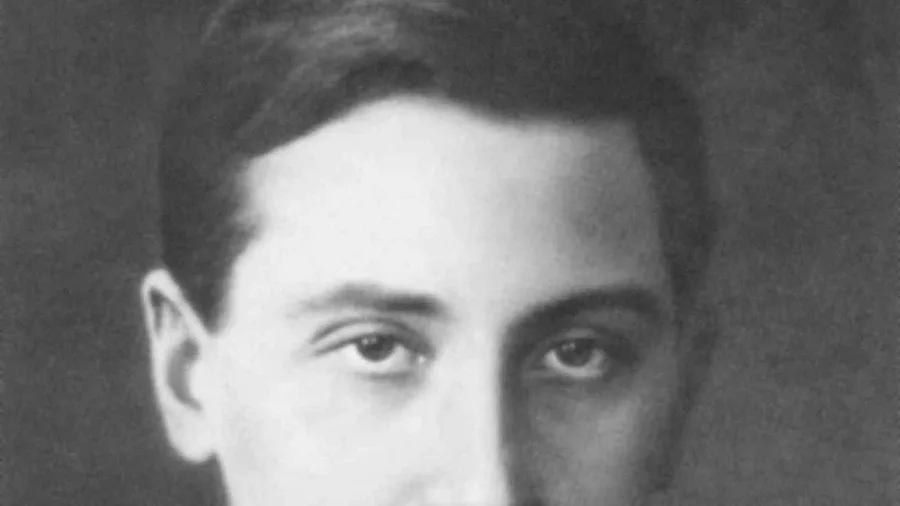
There is a particular kind of tragedy reserved for people who are right too early. Oleg Losev was 18 years old, working as a technician at a Soviet radio lab in Nizhny Novgorod, when he built something in early 1922 that the r…
this page compiles material related to:
letter to Auguste Chevallier
29 May 1832
scan of original: (wikipedia)
French original text: (web)
English translation: (pdf)
commonly known as la lettre testament or Galois’ last letter, since, famously, the morning after writing it the author died in a duel.
The letter announces Galois’ solution to the “solvability of equations by radicals”. It is commonl…
Nature, Published online: 04 June 2026; doi:10.1038/d41586-026-01770-8 Researchers analysed the scientific impact of dual-use research in US patent records and bibliometric databases.
In The Elgar Companion to Émile Durkheim. Northampton: Edward Elgar Publishing. pp. 331-349. 2026In the 1960s Paul Ricoeur coined the phrase “masters of suspicion” to describe Karl Marx, Friedrich Nietzsche, and Sigmund Freud for their ability to reveal the hidden or repressed meanings or truths located in texts or social and psychological phenomena. Philosophers, theologians, and literary theori…
_Intellectual History Review_. forthcomingIn this article, I analyze Johann Christoph Sturm’s characterization of Cartesianism and his response to Descartes’s philosophy and that of his followers. In his days, Sturm (1635–1703) was an important philosopher and professor of physics and mathematics at the University of Altdorf. Sturm has a balanced reading of Descartes, neither echoing the polemics…
historyhistory-of-science
research.io
Sign up to keep scrolling
Create your feed subscriptions, save articles, keep scrolling.















 research.io