hydrology
Evapotranspiration (ET) is a key element in the hydrological cycle. It has a high impact on climate studies, agricultural productivity, and water resource management. Despite its importance, the accurate estimation of ET over semi-arid areas continues to be difficult, mainly due to heterogeneity in land surface properties and large variations in weather patterns. This study follows the PRISMA fra…

Soils that are exposed to prolonged drought often develop desiccation cracks, which impact soil properties and exacerbate moisture loss through evapotranspiration. A new study from the University of Illinois Urbana-Champaign examines the evolution of soil cracking and how cracks interact with storage and movement of water in the soil.
Nature Water, Published online: 17 June 2026; doi:10.1038/s44221-026-00665-2 This Review synthesizes the transformative role of satellite remote sensing in reshaping global river science. It offers a strategic roadmap to overcome current challenges and update our fundamental understanding of Earth’s river systems.
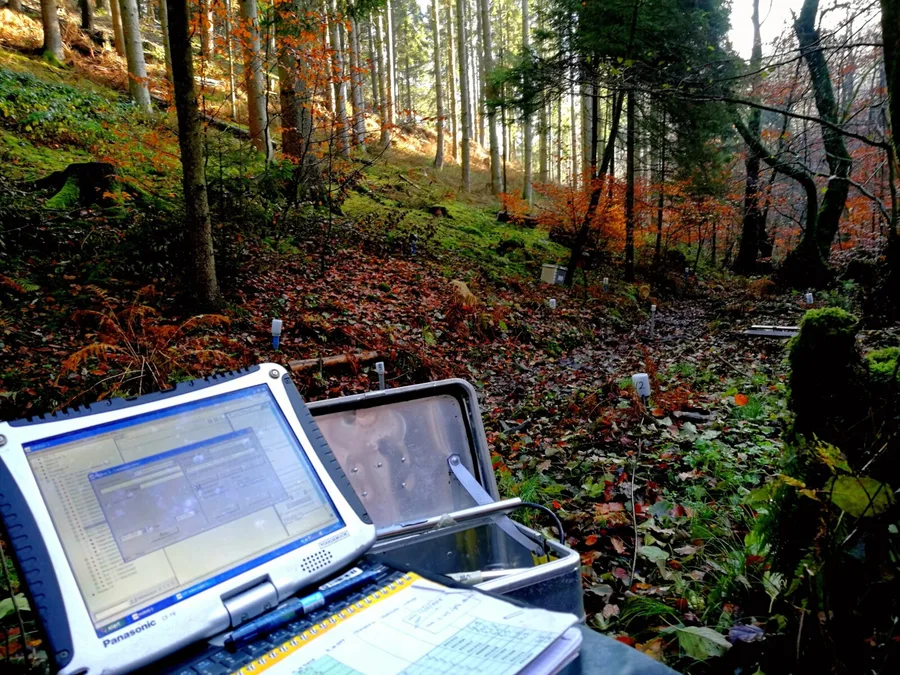
Scientific Data, Published online: 17 June 2026; doi:10.1038/s41597-026-07561-0 Comprehensive dataset of continuously monitored hydrodynamic and physico-chemical parameters in various karst systems, France
Scientific Reports, Published online: 17 June 2026; doi:10.1038/s41598-026-58279-3 Evaluation and analysis of the impact of factors affecting urban flooding using SCS-TR20 and SBUH hydrological models

Rain-on-snow storms have been challenging for emergency managers to forecast and prepare for due to limited understanding about how the snowpack responds to rain. A new tool directly addresses this problem by utilizing hourly soil moisture data from the SNOwpack TELemetry Network (SNOTEL) to provide insight into how the snowpack is responding to a storm in near real-time. The post A New Tool Can …

Using data from NASA's SWOT satellite mission, Illinois researchers helped introduce a new framework for understanding how rivers and lakes interact as connected systems. The study provides the first direct observations of these dynamic transition zones, opening new possibilities for studying water management, ecosystems, and sediment transport around the world.
China is building a dam system that will generate more hydroelectric power than the U.S. generates yearly. But the project comes with huge risks for people downstream.
Rivers are highly dynamic systems. In natural landscapes, we have strong concepts of what drives the expansion and contraction of river networks. Our work extends this understanding to urban, low-lying river networks, where human influence adds new layers of complexity.
Over half of the land in the Northern Hemisphere freezes, either seasonally or as permafrost. When soil freezes, it reduces evaporation, therefore increasing groundwater flow and discharge into water bodies.1[...] The post Research Brief: Freezing Improves Groundwater-Lake Connectivity in Saline Basins appeared first on Lake Scientist .
The new Padma barrage will lie just 180 km downstream of the Farakka barrage in West Bengal — which Bangladesh has blamed for the country’s periodic water scarcity. The Farakka is one of India’s largest with a feeder canal and was built to divert water from the Ganga to the Bhagirathi-Hoogly, and thus flush the Kolkata Port
Scientific Reports, Published online: 12 June 2026; doi:10.1038/s41598-026-55130-7 Unified multi-task learning for hydrological processes using a shared transformer framework
As renewable energy technologies continue to evolve, one engineering discipline is quietly powering innovation beneath the surface: hydrodynamics. From tidal turbines and hydrokinetic river systems to wave-energy concepts and offshore infrastructure, understanding how water moves— and how systems interact with it—has become critical to the next generation of renewable energy development. And incr…
IntroductionIndonesia has designated 15 National Priority Lakes (Presidential Regulation No. 60/2021), yet quantitative baselines to assess sedimentation threats remain insufficient for most watersheds. This study evaluates Volume Development (VD) trajectories as early warning indicators of basin infilling in the Three Mahakam Lakes (Jempang, Melintang, Semayang)—a flood-pulsed tropical lake comp…
A crucial indicator of hydrodynamic conditions, sediment transport systems, and geomorphic evolution is riverbed sediment. Hydraulic engineering, channel upkeep, and ecological management all depend on accurate sediment classification. Because of their intricate geomorphology and dynamic hydrodynamic forces, riverine systems show more spatial heterogeneity than comparatively stable marine habitat…
A package-readiness guide to submitting to Water (MDPI): scope fit across hydrology and water quality, the SuSy portal, the editorial pre-check, single-blind review, and the CHF 2,600 APC.
Introduction In 1921, the U.S. Geological Survey (USGS) established a streamgage on the Colorado River at Lees Ferry, Arizona, to monitor the river’s flow and level as it enters Grand Canyon. The following year, the seven States encompassing the Colorado River Basin (Arizona, California, Colorado, Nevada, New Mexico, Utah, and Wyoming) negotiated the 1922 Colorado River Compact to regulate distri…

research.ioSign up to keep scrolling
Create your feed subscriptions, save articles, keep scrolling.