
marine-biology
Warming ocean temperatures mean sharks are spending more time in high-population areas, yet shark net data shows no significant changes in numbers Get our breaking news email , free app or daily news podcast Rob Harcourt is heading back from a “beautiful surf” at Bondi on a warm and sunny winter’s morning in Sydney. But for him and many of his surfing mates, the compelling pull of the city’s worl…

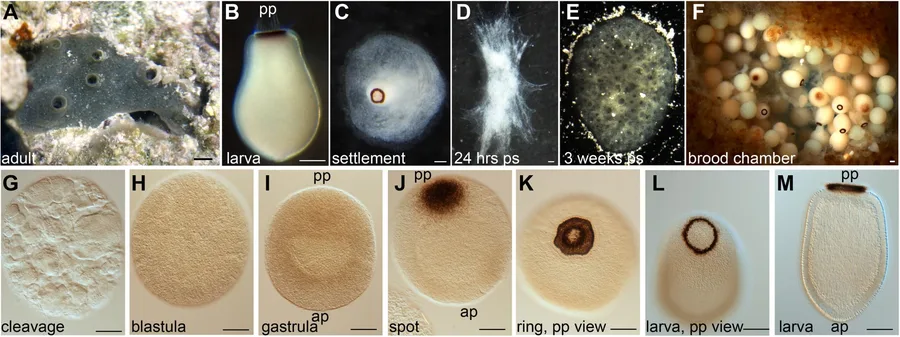
For a flat sea creature just a few millimeters across, a gentle poke is instantly recognized as danger. Trichoplax adhaerens—a translucent blob with no head, brain or muscles—scuttles away in seconds when touched. Imagine a flattened multicellular amoeba moving as a single unit: Trichoplax is only ~20 microns thick and a few millimeters wide. It […]
The reconstruction of the vaquita, whose numbers barely reach double figures in the wild, is designed to help research and conservation efforts Scientists have created a digital reconstruction of the world’s most endangered marine mammal, preserving its anatomy in three dimensions to aid research and conservation efforts as the species teeters on the brink of extinction. The project digitised the…


Researchers say these coral strongholds may help repopulate more degraded reefs.
Smart Sound Connect Subsurface extends the capabilities offered through the UK's premier marine autonomy testbed beneath the ocean surface
The deep ocean is amongst the most inhospitable environments on Earth. Microbial inhabitants of this niche frequently possess evolutionary adaptations that facilitate their survival under extremes of pressure, temperature, pH and nutrient deprivation. These characteristic features have historically positioned marine extremophiles as intriguing targets for study as proxies for extraterrestrial lif…

The Inamori Foundation today announced Farooq Azam, a marine microbiologist and distinguished professor emeritus at UC San Diego's Scripps Institution of Oceanography, as the recipient of its 2026 Kyoto Prize in Basic Sciences. Among Azam's many contributions to science is his discovery of the "microbial loop," which has influenced our understanding of the ocean's role in sustaining life and regu…
Portsmouth, Hampshire: A huge conservation effort is under way to restore native oysters to the Solent, and I was on hand to help give them a pre-release spa day Native oysters ( Ostrea edulis ) have been harvested from Chichester Harbour since Roman times, but due to overfishing, disease, pollution and competition from invasive Pacific oysters ( Magallana gigas ), the population has declined by …
Study documents first direct evidence of an Arabian Sea humpback whale crossing the Arabian Sea, an unusual journey for a species so uniquely adapted to their habitat they represent a behavioral anomaly
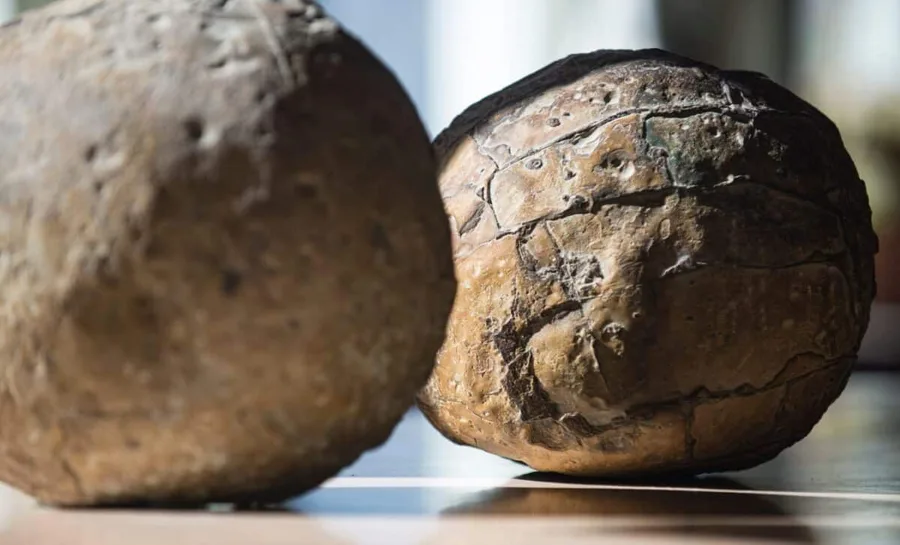
The fossil turned out to be a hatchling of a crocodile-like creature, and it suggests, according to a new study, that early animals did not use metamorphosis to evolve to dwell on land
Highly modified distributary channels are shaped by interacting hydromorphological alteration, sediment redistribution, navigation-related pressures, and lateral connectivity, but their combined influence on benthic macroinvertebrate communities remains difficult to disentangle in deltaic systems. This study assessed how macrozoobenthic assemblages vary across the Sulina Canal navigation corridor…
A new study out of William & Mary’s Batten School & VIMS is redefining how we visualize and track marine heatwaves in estuarine systems.
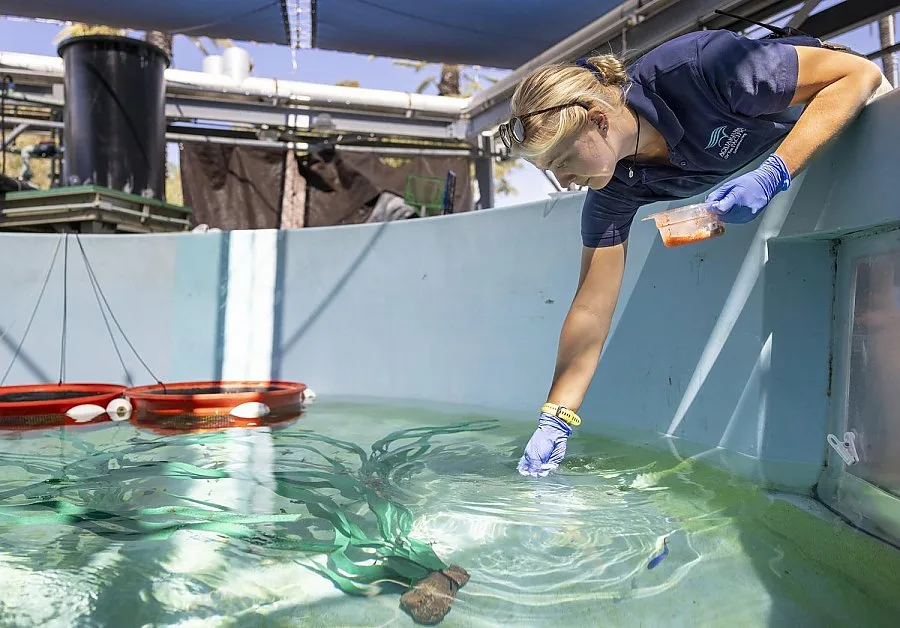
A major milestone for marine conservation has arrived in The Bahamas. FAU Harbor Branch, in partnership with The Island School's Cape Eleuthera Institute and supported by Chef Jose Andres' Longer Tables Fund, has successfully launched the Queen Conch Mobile Lab following its first egg masses and hatch. Designed to produce up to 2,000 juvenile queen conch each year, the innovative mobile hatchery …
Scientists have digitally preserved the world’s most endangered marine mammal by creating highly detailed 3D models of a vaquita skeleton using advanced imaging technology. The virtual archive provides an unprecedented look at the species and could help inspire conservation efforts before the tiny porpoise disappears forever.
Galapagos sharks have been spotted scrubbing off parasites with help from manta rays
NeMO-Net Patch Activity Dive into real coral reef data and help NASA scientists map the ocean floor. What is NeMO-Net? NeMO-Net is a single player iPad game where you help classify coral reefs by painting 2D and 3D images of coral. The data you collect in the game trains NASA’s neural network to study coral […] The post Girl Scout Patch – NeMO-Net appeared first on NASA Science .
Marine biologists have identified a new species of the shark genus Hemiscyllium in the waters of eastern Papua New Guinea, expanding a remarkable group of reef-dwelling sharks known for using their four fins to ‘walk’ across the seafloor. The post New Species of Walking Shark Discovered off Papua New Guinea appeared first on Sci.News: Breaking Science News .
research.ioSign up to keep scrolling
Create your feed subscriptions, save articles, keep scrolling.