Determining the lower limits of pore and throat sizes for shale oil occurrence is essential for reservoir evaluation, yet existing methods yield a single fixed threshold that fails to capture the heterogeneity of interbedded systems. This study addresses this limitation through integrated characterization of 59 core samples from the Chang 7 Member, Longdong area, Ordos Basin, using high-pressure …
Journal of Computer Science, Published online: 15 June 2026; doi:10.3844/jcssp.2026.1835.1842 Reservoir characterization is a fundamental process in estimating reserves within petroleum and hydrogeological systems, where the precise determination of pore space dictates the validity of fluid fl...
engineeringpetroleum-engineering
Frontiers in Earth Science | New and Recent Articles
Successful unconventional oil and gas production relies on horizontal drilling and hydraulic stimulation. Wellbore casing deformation–including distributed bending (buckling), zones of ovality, and discrete shearing–can hinder deployment of downhole tools and, in severe cases, lead to complete well loss. Geological factors (e.g., stress and pore pressure states, rock properties) represent root ca…
Scientific Reports, Published online: 06 June 2026; doi:10.1038/s41598-026-54830-4 Permeability calculation for glutenite reservoirs based on variable T 2 cutoff value in nuclear magnetic resonance logging
Pore volume compressibility (PVC) is a key petrophysical parameter controlling the mechanical response and production performance of reservoir rocks. However, the complex and heterogeneous pore systems of carbonate reservoirs make it difficult for traditional empirical models developed for sandstone to accurately predict PVC. In this study, an interpretable PVC prediction framework based on XGBoo…
Oil wells often dry up far earlier than predicted, leaving companies baffled about the “missing” reserves. A Penn State team tackled this puzzle by harnessing PSC’s Bridges-2 supercomputer, adding a time dimension and amplitude analysis to traditional seismic data. Their findings revealed hidden rock structures blocking oil flow, meaning reserves weren’t gone—they were trapped.
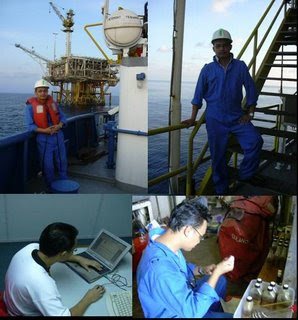
As an engineer, I experienced a lot of sweet and enjoyable moment. I also did tasted some sad and bitter moments as well. I'm no longer experiencing them because now I'm no longer a practicing engineer. However, once in a while I still contact my fellow counterparts (engineers) and also visited few plants / projects under official duties as an academician / researcher / consultant, or as a member…
The following information is more towards the Oil and Gas field, especially exploration and production area. Check out the infos that was delivered to my mailbox. Hart Energy Publishing and E&P are pleased to announce that RPSEA will co-present BOMA 2007. Hart Enery Publishing and E&P Magazine announce the Research Partnership to Secure Energy for America (RPSEA) has agreed to co-present the 3rd …