This document is Paper 1 of a three part series derived from the unified canonical reference GREMN v25. The v25 mother document contains the complete analytical framework for the Griffiths Rotating Electromagnetic Nozzle including all physics engineering subsystems validation architecture and mission applications. The present paper isolates the physics and MHD theory layer for readers whose prima…
Plasma Diagnostics and Applications
Z
Zenodo (CERN European Organization for Nuclear Research)
This document is Paper 3 of a three part series derived from the unified canonical reference GREMN v25. The v25 mother document contains the complete analytical framework for the Griffiths Rotating Electromagnetic Nozzle including physics engineering subsystems validation architecture and mission applications. Paper 3 isolates the mission and systems layer for readers whose primary focus is space…
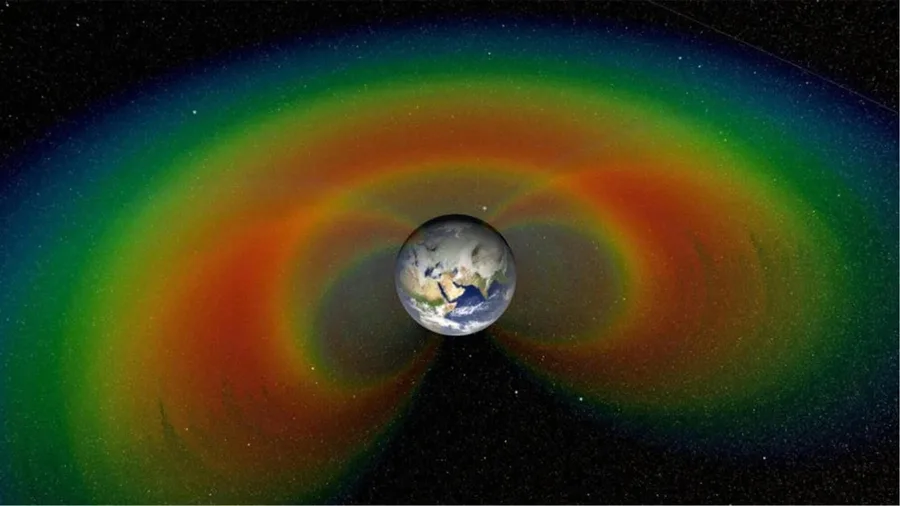
High above our heads, a silent battle is unfolding within Earth’s magnetic shield. For decades, scientists have tracked “killer electrons”—ultrafast particles capable of piercing satellite armor and endangering astronauts as they zip through the Van Allen radiation belts. While we knew these dangerous particles eventually leak out of the belts and into the atmosphere, the […]
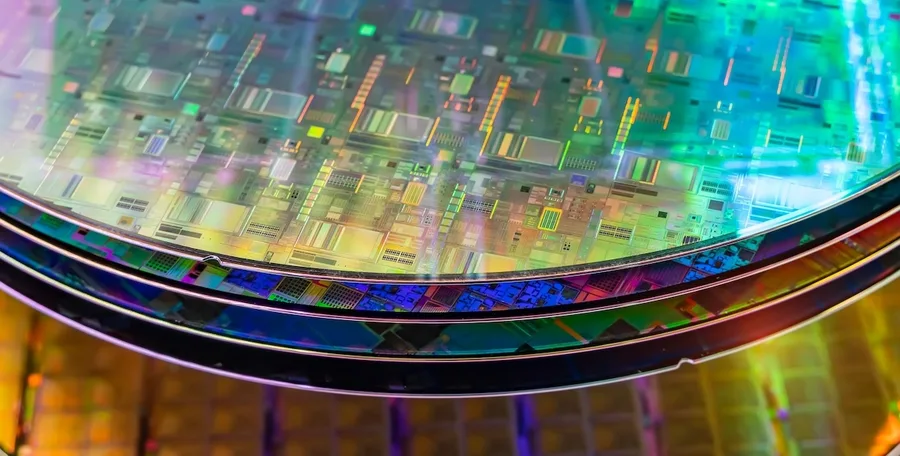
Abstract Atomic-scale control in plasma processing is becoming increasingly critical for fabricating of advanced semiconductor devices, particularly as the industry shifts toward three-dimensional (3D) architectures and high-aspect-ratio (HAR) structures. This review presents a comprehensive overview of recent developments in atomic-scale controlled plasma processes, organized along two key direc…
Inertial electrostatic confinement fusion devices (fusors) are becoming increasingly attractive neutron sources, and are well suited for global distribution with great humanitarian benefits. However, such neutrons are agnostic to the user’s intent, so could in theory be used for malicious means. This paper discusses the feasibility of using fusors to convert fertile thorium-232 or uranium-238 int…
This manuscript develops a mathematically disciplined version of the electromagnetic motherboard hypothesis. It does not assert that all gravitational curvature is electromagnetic in origin. Instead, it advances a focused and testable claim: in a wide class of physically important systems—plasmas, jets, accretion flows, magnetospheres, radiation fields, and atomic structure—electromagnetic fields…
Bob Mumgaard is an engineer and entrepreneur who co-founded Commonwealth Fusion Systems and serves as its chief executive officer. Trained in applied plasma physics at the Massachusetts Institute of Technology, he has worked on fusion energy technologies and efforts to commercialize fusion power.
[This interview was edited for length and clarity.]
How would you describe the current state of Ameri…
Nature Communications, Published online: 15 June 2026; doi:10.1038/s41467-026-74298-0 Recent developments of proton acceleration have demonstrated remarkable energies, yet further insight into the acceleration mechanism is needed to fully achieve application-relevant regimes. Here, the authors demonstrate a hybrid scheme where the established target normal sheath acceleration mechanism is enhance…
Researchers from The University of Osaka, National Institute for Fusion Science, National Institutes for Quantum Science and Technology, and Osaka Metropolitan University, et al. have published “Optimization of EUV output by experimentally validated radiation-hydrodynamic simulations across a broad laser parameter space”. Abstract “Practical requirements such as improving wall-plug efficiency a…
PPPL welcomes the arrival of the central magnet bundle for its National Spherical Torus Experiment-Upgrade, a crucial step in resuming the device's research operations.
physicsplasma-physics
H
HAL (Le Centre pour la Communication Scientifique Directe)
Controlled nuclear fusion, recognized as the ultimate solution to humanity's energy crisis, has failed to achieve sustained stable operation with an energy gain factor Q > 10 after 70 years of research. The traditional research paradigm treats plasma and confinement fields as two opposing entities, trapping itself in a vicious cycle of "more complex technology, more instabilities". Based on the u…
Abstract Radio-frequency (RF) ion thrusters, as electrodeless plasma sources, offer significant advantages such as simple structure and long operational lifetime. However, their discharge efficiency is often limited by wall losses and the skin effect. Among various optimization approaches, the application of additional magnetic fields has emerged as an effective method for improving discharge per…
Abstract The RF-biased ion thruster is a promising method for achieving self-neutralization. However, the thruster performance is constrained by the limited self-bias voltage, which tends to degrade due to capacitive coupling between the screen grid and the discharge chamber wall. This paper proposes a novel method to enhance the self-bias voltage by adding a screen grid extension ring between th…
Plasma Diagnostics and Applications
research.io
Sign up to keep scrolling
Create your feed subscriptions, save articles, keep scrolling.











 research.io