polymers

Compostable plastics could be part of a solution to the world’s plastic waste problem. But currently these materials need industrial composting facilities to break down. In a step toward making a home-compostable plastic, researchers reporting in ACS Central Science have augmented polylactide (PLA)—a widely used biobased and compostable polymer—with a small amount of an additive. […]
Scientific Reports, Published online: 19 June 2026; doi:10.1038/s41598-026-58047-3 Development and performance evaluation of macropore intelligent plugging hydrogels
All-solid-state batteries (ASSBs) are widely viewed as a safer and more powerful alternative to conventional lithium-ion batteries, but their promise is often limited by unstable interfaces inside the cell. A new study shows that carefully introducing oxygen into a sulfide-based solid electrolyte (SE) can stabilize this vulnerable interface while keeping lithium ions moving rapidly. Using lithium…
Once cotton gets wet, it pulls heat from your body. This is helpful when you're exercising or outside on a hot day but dangerous in the bitter cold. Now, researchers reporting in ACS Energy Letters have created an ultralight synthetic fiber material with a cotton-like fluffiness that also repels water.
A research team led by Dr. Muhammad Talha Junaid at the University of Sharjah tested cement mortar beams reinforced with FDM-printed PLA profiles. The study found that surface geometry was the dominant variable, with the best-performing configuration reaching nearly 80% of steel’s bending strength and matching its ductility. Concrete on its own handles compression well…


Professor Dirk M. Guldi was invited to speak at the symposium From Molecular Design to Future Materials, held in honor of Professor Nazario Martín to celebrate his 70th anniversary at the Facultad de Ciencias Físicas, Universidad Complutense de Madrid, Spain, on June 11–12, 2026. The event brought together leading international researchers to discuss recent advances […]
Nature Communications, Published online: 15 June 2026; doi:10.1038/s41467-026-74145-2 Material with both thermally activated delayed fluorescence and room temperature phosphorescence are challenging to achieve with biobased materials. Here, the authors report the use of boric acid as a crosslinker for ellagic acid and cellulose for the preparation of such materials.
Scientific Reports, Published online: 14 June 2026; doi:10.1038/s41598-026-58237-z Energy-controlled supercapacitors based on polybenzidine-oxidant-GO hybrid electrodes with vanadate and dichromate redox chemistry
Nature Communications, Published online: 13 June 2026; doi:10.1038/s41467-026-74218-2 Liang et al. present flexible semiconductive polyMOF membranes, created by copolymerizing metal–organic frameworks with polymers. This integration reduces structural defects and improves charge transport, enabling highly sensitive X-ray detection with leading sensitivity and a conformal design suited for flexibl…
Looking to 3D print with stronger-than-metal PEEK polymer? Our updated guide covers the material and the best 3D printers for the job.
Nature Communications, Published online: 12 June 2026; doi:10.1038/s41467-026-73959-4 Regulated helical orientation of polymer chains proved to greatly enhance fiber mechanics, and the highly stretchable fibers were capable of simultaneously sensing and decoupling tensile and torsional strains via a designed tri-channel structure

A patent application proposes a more selective way to post-cure stereolithography parts. The post Selective SLA Curing Patent Targets Variable Properties appeared on Fabbaloo .
Nature Communications, Published online: 11 June 2026; doi:10.1038/s41467-026-74266-8 Preparation of room temperature phosphorescent polymeric materials with high quantum yield and long lifetime is challenging but desirable. Here, the authors report a material combining iodine, boric acid and stretching to influence generation and quenching of triplet excitons for favorable properties.

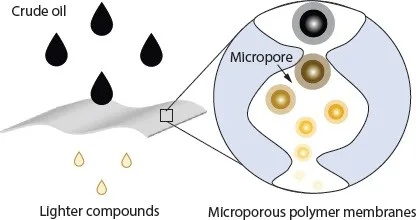
Crude oil refining still relies heavily on thermal distillation, a process that separates hydrocarbons by repeated heating and phase changes. A new review highlights a promising alternative: microporous polymer membranes that can sort hydrocarbon molecules through carefully designed nanoscale pores.

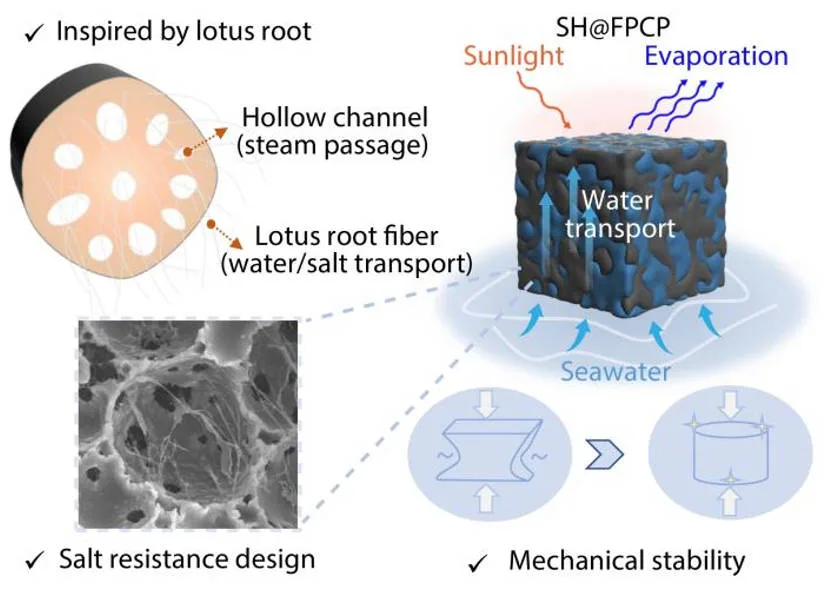
Freshwater scarcity is driving demand for desalination technologies that are efficient, low-cost, and reliable beyond the laboratory. A new lotus-root-inspired solar evaporator offers a promising solution by combining rapid water transport, salt resistance, mechanical robustness, and heat-to-electricity conversion in one material platform. The system integrates a polymerized high internal phase e…
Researchers at IMDEA Materials Institute and the Institute of Polymer Science and Technology (ICTP-CSIC) have developed an innovative biodegradable multilayer film capable of protecting and controlling the release of anthocyanins inside the body.
research.ioSign up to keep scrolling
Create your feed subscriptions, save articles, keep scrolling.