solar-physics

Astronomy Magazine

Looking for a sky event this week? Check out our full Sky This Week column.  June 20: Libra’s Ghost Cluster The summer solstice occurs at 4:25 A.M. EDT. This is the time the Sun reaches its northernmost point in the Northern Hemisphere sky, which also means our star takes its longest path across this hemisphere’s sky on Continue reading "The Sky Today on Sunday, June 21: A summertime lineup" The …

astronomycosmologysolar-physics
Nature Astronomy

Nature Astronomy, Published online: 19 June 2026; doi:10.1038/s41550-026-02871-0 Lunar polar shadows are traditionally seen as ancient cold traps. However, new models of orbital evolution suggest lunar ice archives are surprisingly young, fundamentally altering our search for the Solar System’s volatile history.

astronomycosmologysolar-physics
DEV Community

The Sun is not a static, gentle star. It is a churning, magnetic powerhouse that bathes our solar system in radiation and particles, capable of launching billion-ton coronal mass ejections and intense solar flares. For data scientists and astrophysicists, this dynamic activity generates a data deluge so massive—petabytes annually—that generic tools simply crumble under the pressure. Welcome to th…

astronomyastrophysicssolar-physics
Lifeboat News: The Blog

WASHINGTON — NASA has selected for development a space science mission that will study how space weather interacts with Earth’s atmosphere. NASA announced June 18 that the Dynamic Atmosphere-Ionosphere Explorer, or DAPHNE, mission will proceed into the next phase of development, with a launch planned for no earlier than 2029. DAPHNE was one of three […]

astronomysolar-physicsspace-exploration
The Daily Galaxy –Great Discoveries Channel
Frontiers in Astronomy and Space Sciences | New and Recent Articles

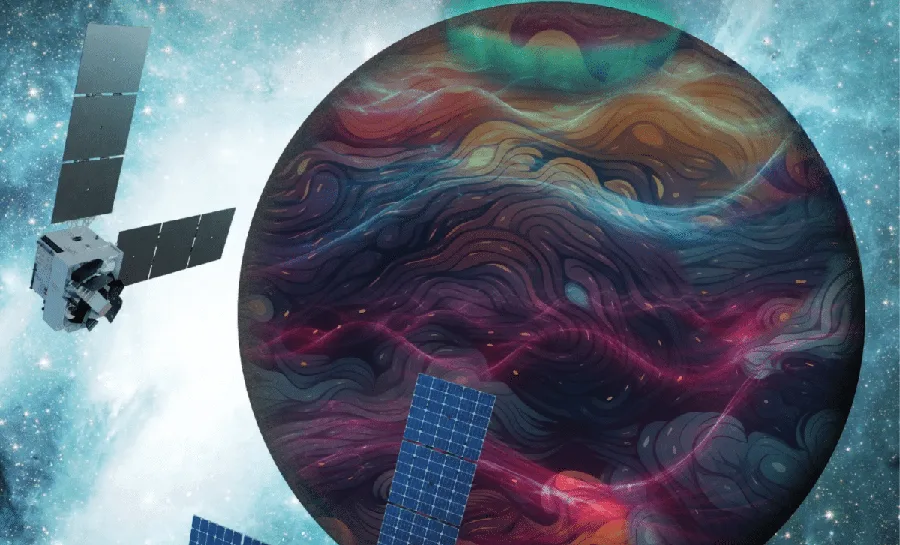
Magnetohydrodynamic wave activity in small-scale magnetic structures, such as solar pores, provides key insights into energy transport in the lower solar atmosphere. This study presents high-resolution observations of ten solar pores contained within a 43×43Mm2 field of view, obtained with the CRISP instrument at the Swedish 1-m Solar Telescope. We investigate the temporal behaviour of the line-o…

astronomysolar-physics
Nature Communications

Nature Communications, Published online: 18 June 2026; doi:10.1038/s41467-026-74509-8 Non-fused ring electron acceptors (NFREA) are limited by their electron transport efficiencies for solar cells. Here, the authors introduce supramolecular interaction sites on the side groups of NFREAs to construct multi-dimensional charge transport channels for higher performance solar cells.

materialsnanomaterialssolar-physics
Universe Today
Paul Sutter (https://www.universetoday.com/authors/pmsutter)
4d ago

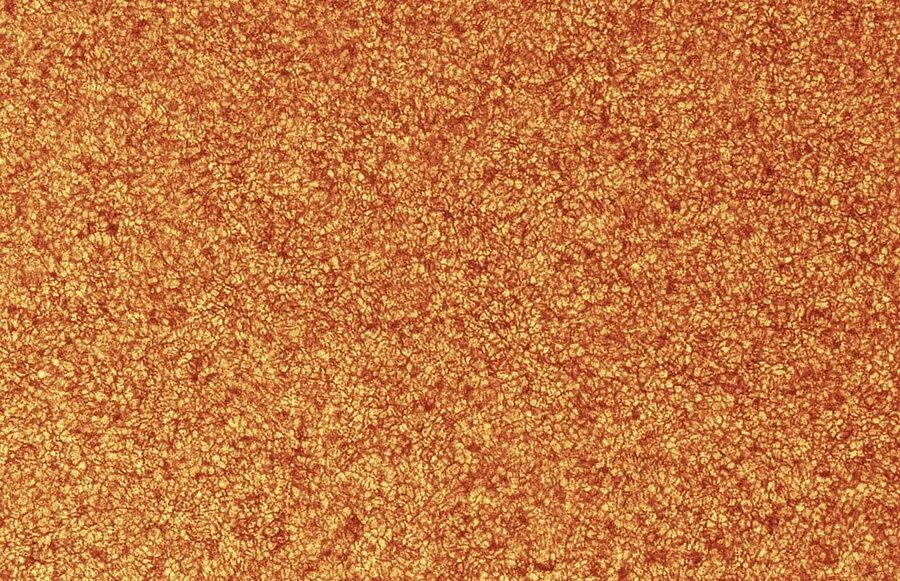
A photon born in the Sun's core takes around 100,000 years to fight its way to the surface, bouncing through a random walk so inefficient that the light on your face is older than human civilization. Why the Sun's surface is a hundred-millennia-delayed broadcast.

astronomycosmologysolar-physics
Astronomy Magazine

Looking for a sky event this week? Check out our full Sky This Week column.  June 16: The Moon meets up with Mercury and Jupiter The Moon, moving east along the ecliptic (the plane of the solar system and the line along which the planets and Moon move on the sky), passes 3° north of Jupiter in Continue reading "The Sky Today on Wednesday, June 17: The Moon covers Venus" The post The Sky Today on …

astronomyastrophysicssolar-physics
Frontiers in Astronomy and Space Sciences | New and Recent Articles

Next-generation solar spectrographs increasingly record dense wavelength windows in which tens to hundreds of spectral lines are sampled at each spatial location and time step. This expands the scope for multi-line, multi-height diagnostics of magnetohydrodynamic (MHD) motions, but also raises a practical challenge: deriving stable line-core intensity and line-of-sight (LOS) velocity time series …

astronomysolar-physics
Universe Today
Paul Sutter (https://www.universetoday.com/authors/pmsutter)
5d ago

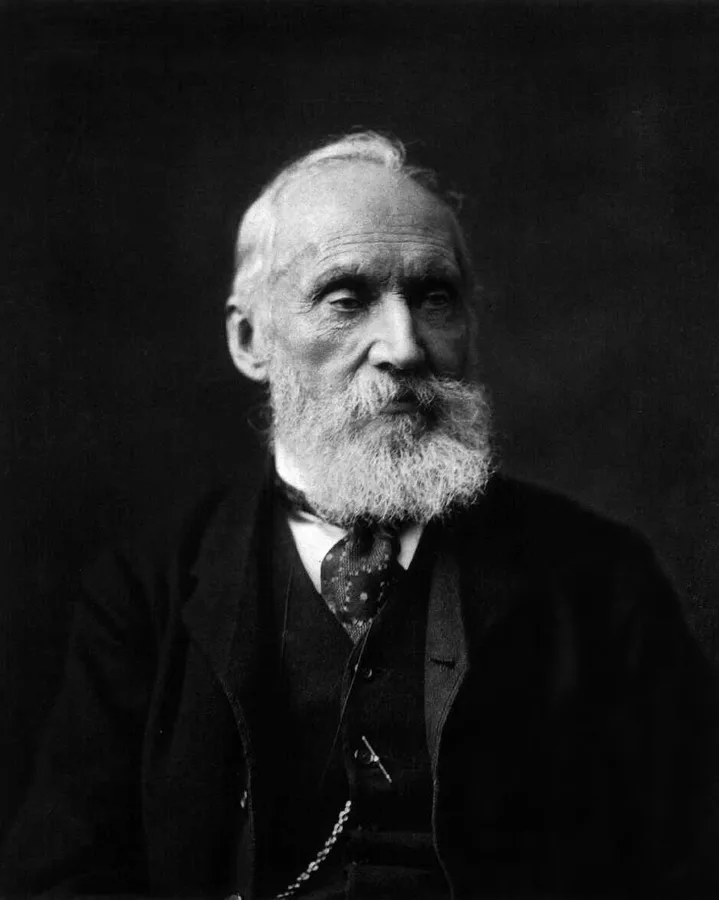
How can the Sun keep shining with its furnace switched off? Two nineteenth-century aristocrats, Helmholtz and Lord Kelvin, worked out the answer mostly by accident. It comes down to stored heat, gravitational shrinking, and the strange self-regulating thermostat of hydrostatic equilibrium.

astronomycosmologysolar-physics
NASA
HQ Web Team
5d ago

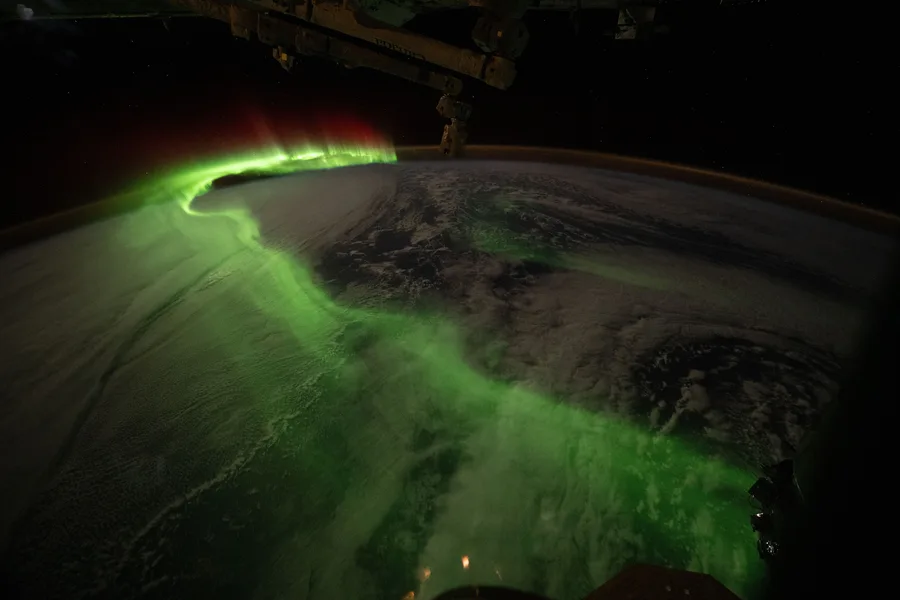
The aurora australis arcs over Earth during an active solar event in this photograph taken on June 5, 2026, from the International Space Station as it orbited 271 miles above the Indian Ocean southwest of Perth, Australia. Auroras are colorful, dynamic, and often visually delicate displays of an intricate dance of particles and magnetism between […]

astronomysolar-physics
The Daily Galaxy –Great Discoveries Channel
Universe Today
Paul Sutter (https://www.universetoday.com/authors/pmsutter)
6d ago

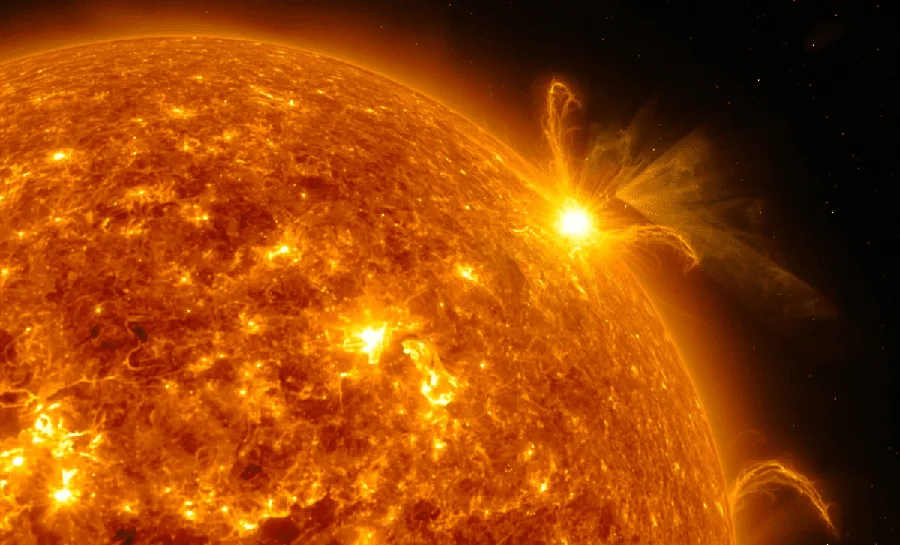
If the Sun's fusion shut off right now, you would not notice for a very long time. The first stop is understanding the Sun itself: a vast pile of gravitating matter where fusion is so absurdly inefficient that, pound for pound, a compost heap beats it.

astronomycosmologysolar-physics
astrobites

Today we interview solar physicist and 2026 Hale Prize recipient Dr. Yi-Ming Wang about the discoveries that shaped our understanding of the solar wind, the Sun’s magnetic field, and a career built on unexpected turns.

astronomysolar-physics
Nature
Astronomy Magazine

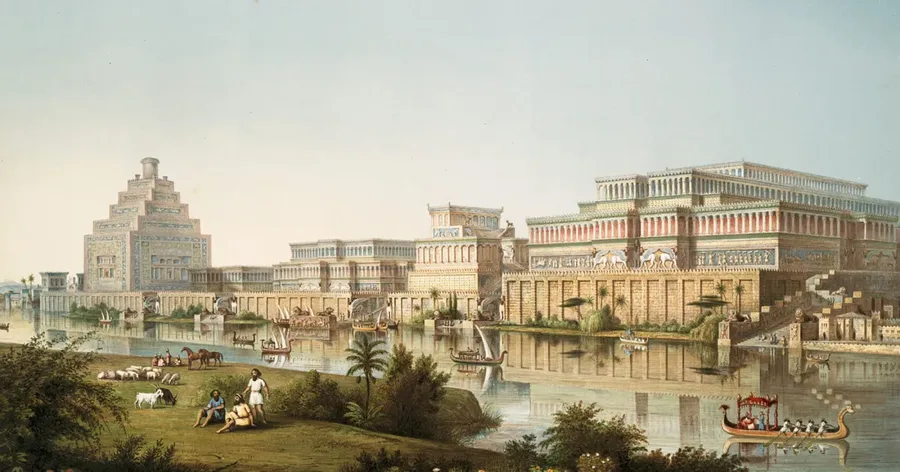
On June 15, 763 B.C.E., a near-total solar eclipse occurred over northern Assyria and was recorded by observers in Nineveh, the capital city. This event is preserved in the Eponym Canon, a list of historical events made by the Assyrians on clay tablets, following a specialized calendar system. The text notes: “Insurrection in the City Continue reading "June 15, 763 BCE: Assyrians record a solar e…

astronomysolar-physics
astrobites

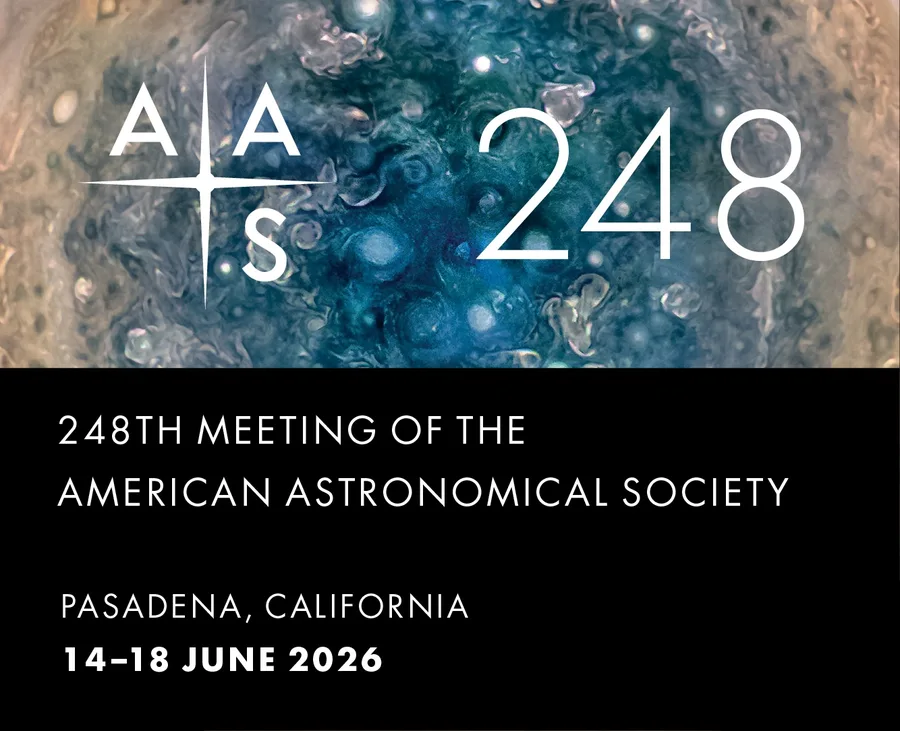
Today we interview Solar System scientist and expert in Rubin Observatory data, Prof. Mario Jurić from the University of Washington, for his Plenary Talk at #AAS248!

astronomysolar-physics
Astronomy Magazine
Mark Zastrow
9d ago

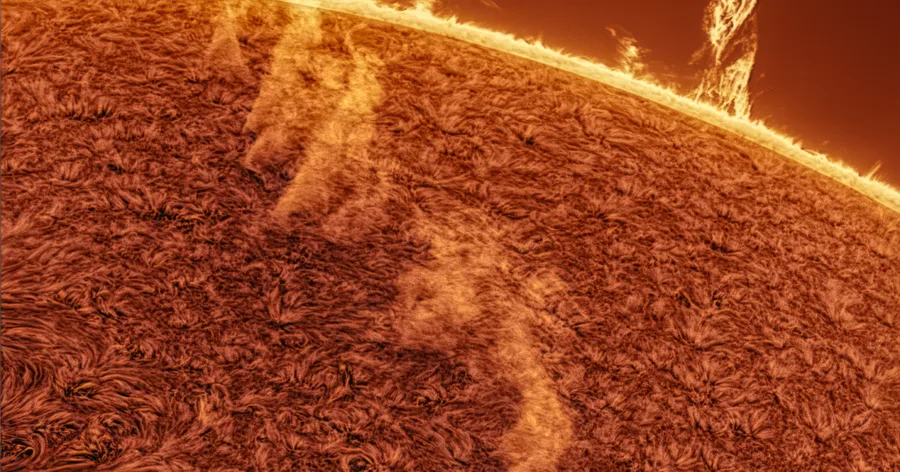
📷 Mark Johnston from Scottsdale, Arizona A line of filaments march toward the limb of the Sun, which itself is bedecked with multiple prominences in this Hα image. Both phenomena are made of loops and tendrils of plasma that arch off the surface of the Sun; their varying appearance depends on the viewing geometry. The Continue reading "Prominent filaments" The post Prominent filaments appeared fi…

astronomysolar-physics
Universe Today
Mark Thompson (https://www.universetoday.com/authors/mark)
9d ago

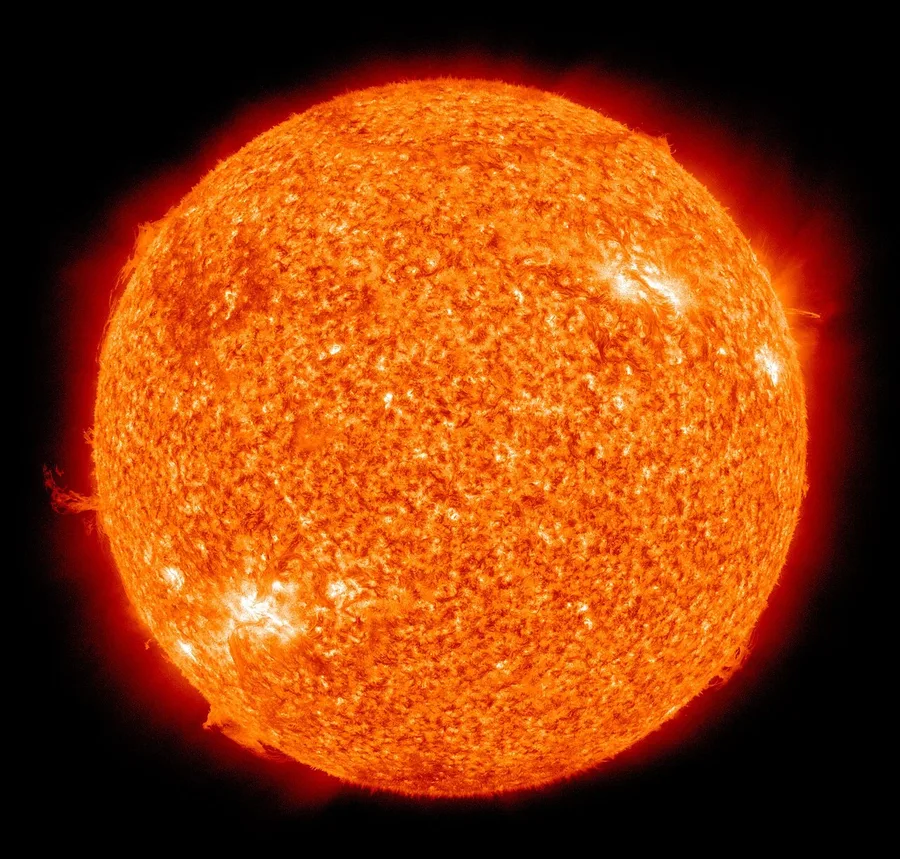
Every so often, the Sun hurls billions of tonnes of charged particles toward Earth in what are called coronal mass ejections and if a big one hits at the wrong moment, the consequences for satellites, power grids, and communications systems could be catastrophic. Our best defence is to predict them before they happen, and that means watching the Sun's magnetic fields constantly and precisely. Now…

astronomysolar-physics
research.ioresearch.io

Sign up to keep scrolling

Create your feed subscriptions, save articles, keep scrolling.

Already have an account?