

For decades, the mathematical backbone of high-precision Global Navigation Satellite System (GNSS) positioning has rested on a Gaussian assumption that rarely holds in the real world. Multipath reflections, atmospheric interference, and signal blockages produce erratic, heavy-tailed errors that classical models systematically underestimate--leading to incorrect integer fixes when accuracy matters most. A new theoretical framework now generalizes the sharpest known success-rate bounds to a broad family of heavy-tailed distributions, preserving computational simplicity while finally accounting for the non-Gaussian disturbances that plague urban canyons and challenged environments.
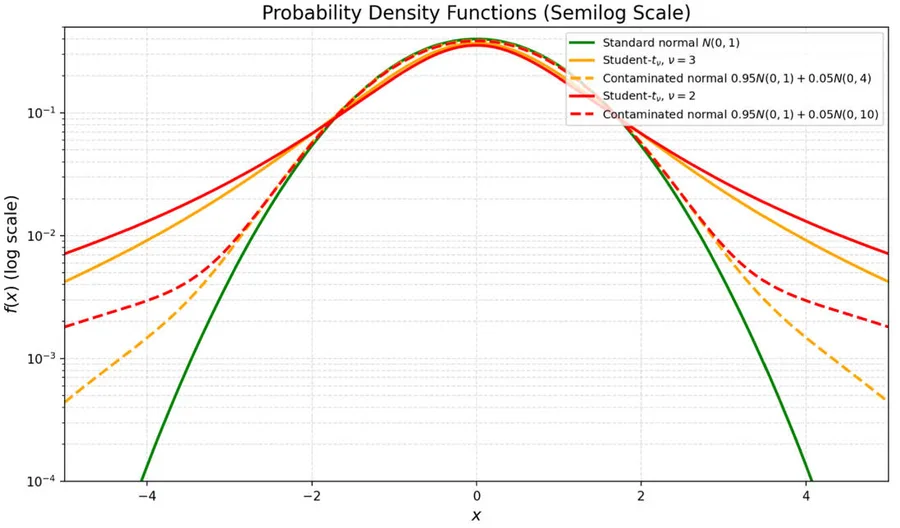
New Math Tames Gnss Chaos When Signals Go Haywire
Chinese Academy of Sciences