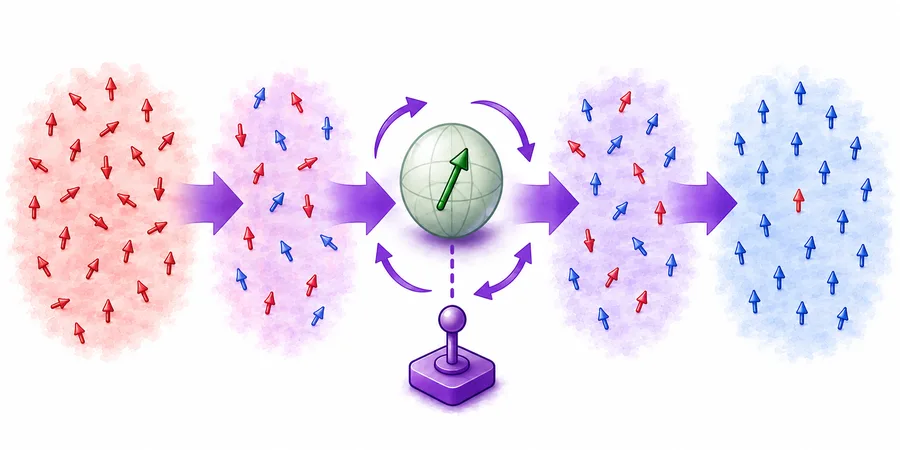
Quantum 10, 2143 (2026). https://doi.org/10.22331/q-2026-06-19-2143 Quantum reservoir engineering leverages dissipative processes to achieve desired behaviour, with applications ranging from entanglement generation to quantum error correction. Therein, a structured environment acts as an entropy sink for the system and no time-dependent control over the system is required. We develop a theoretica…
Quantum 10, 2142 (2026). https://doi.org/10.22331/q-2026-06-19-2142 We construct an ontological model for the theory known as bilocal classical theory [ 1 ]. To our knowledge, this is only the second time that an ontological model has been constructed for an entire theory, rather than just for some particular scenarios within a theory. This result refutes a conjecture from [ 1 ] which suggested t…
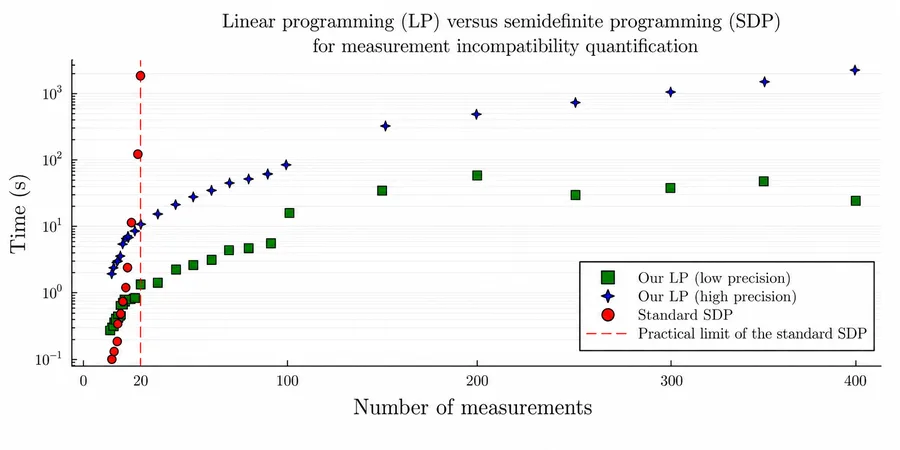
Quantum 10, 2141 (2026). https://doi.org/10.22331/q-2026-06-19-2141 The problem of deciding whether a set of quantum measurements is jointly measurable is known to be equivalent to determining whether a quantum assemblage is unsteerable. This problem can be formulated as a semidefinite program (SDP). However, the number of variables and constraints in such a formulation grows exponentially with t…
Quantum 10, 2140 (2026). https://doi.org/10.22331/q-2026-06-15-2140 Phase estimation, due to Kitaev [ 17 ], is one of the most fundamental subroutines in quantum computing. In the basic scenario, one is given black-box access to a unitary $U$, and an eigenstate $\lvert \psi \rangle$ of $U$ with unknown eigenvalue $e^{i\theta}$, and the task is to estimate the eigenphase $\theta$ within $\pm\delta…
Quantum 10, 2139 (2026). https://doi.org/10.22331/q-2026-06-15-2139 Nonlocality is an essential concept that distinguishes quantum from classical models and has been extensively studied in systems of qubits. For higher-dimensional systems, certain results for their two-level counterpart, like Bell violations with stabilizer states and Clifford operators, do not generalize. On the other hand, simi…
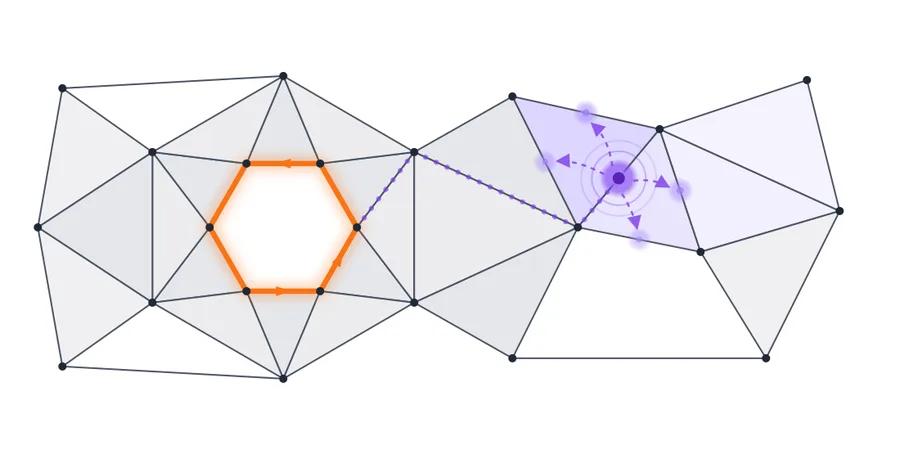
Quantum 10, 2138 (2026). https://doi.org/10.22331/q-2026-06-15-2138 This work investigates whether quantum walks on simplicial complexes exhibit quantum advantages. We introduce a novel quantum walk that encodes the combinatorial Laplacian, a key object reflecting the topology of the simplicial complex. We construct a unitary encoding projecting onto the kernel of the Laplacian, representing the …
Quantum 10, 2137 (2026). https://doi.org/10.22331/q-2026-06-15-2137 Simulations of quantum systems with Hamiltonian classical stochastic noise can be challenging when the noise exhibits temporal correlations over a multitude of time scales, such as for $1/f$ noise in solid-state quantum information processors. Here we present an approach for simulating Hamiltonian classical stochastic noise that …
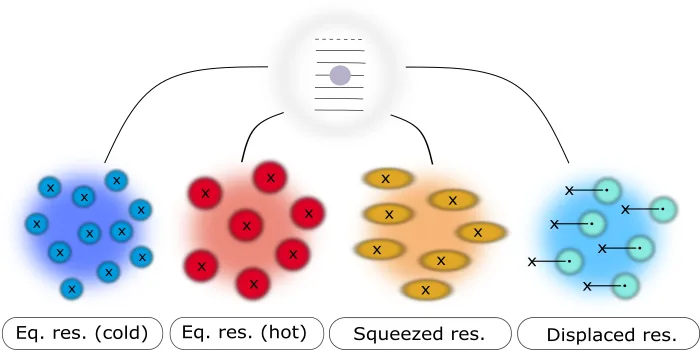
Quantum 10, 2136 (2026). https://doi.org/10.22331/q-2026-06-15-2136 We introduce a non-equilibrium version of the Caldeira-Leggett model in which a quantum particle is strongly coupled to a set of engineered reservoirs. The reservoirs are composed by collections of squeezed and displaced thermal modes, in contrast to the standard case in which the modes are assumed to be at equilibrium. The model…
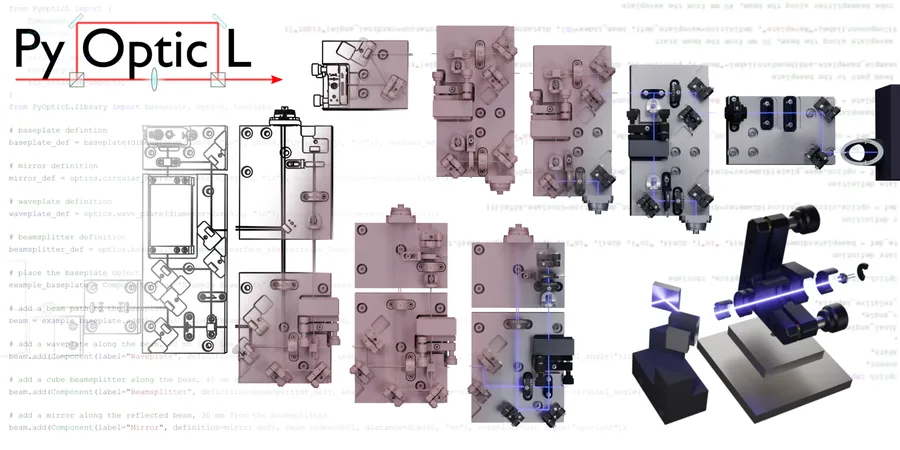
Quantum 10, 2135 (2026). https://doi.org/10.22331/q-2026-06-15-2135 Complex optical design is hindered by conventional piecewise setup, which prevents modularization and therefore abstraction of subsystems at the circuit level. This limits multiple fields that require complex optics systems, including quantum computing with atoms and trapped ions, because their optical systems are not scalable. W…
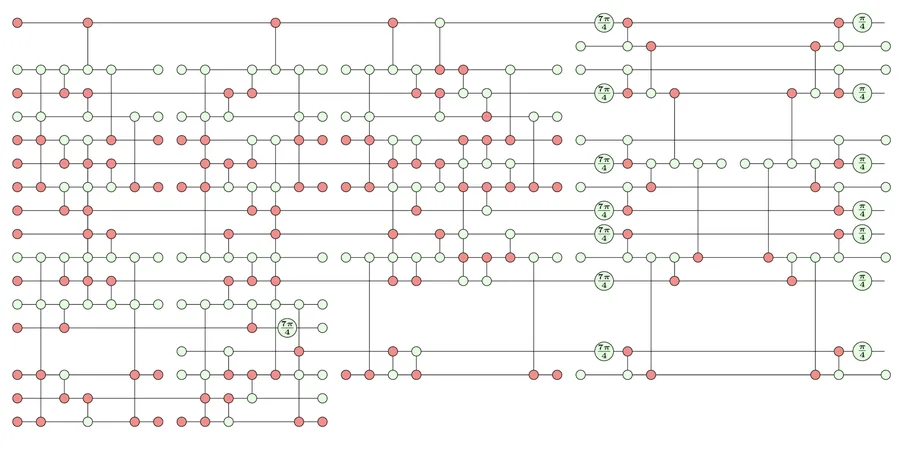
Quantum 10, 2134 (2026). https://doi.org/10.22331/q-2026-06-12-2134 Building upon $\textit{Wan, Zhong (2025)}$ [ 5 ] we present a few methods on how to simulate the non-Clifford $d=5$ magic state cultivation circuits[ 4 ] with a sum of $\approx 8$ Clifford ZX-diagrams on average, at $0.1\%$ noise. Compared to a magic cat state stabiliser decomposition of all $53$ non-Clifford spiders ($6{,}377{,}…
Quantum 10, 2133 (2026). https://doi.org/10.22331/q-2026-06-12-2133 Recent advances in analog and digital quantum-simulation platforms have enabled exploration of the spectrum of entanglement Hamiltonians via variational algorithms. In this work we analyze the convergence properties of the variationally obtained solutions and compare them to numerically exact calculations in quantum critical syst…
Pablo V. Parellada·...·and Juan Carlos Garcia-Escartin
9d ago
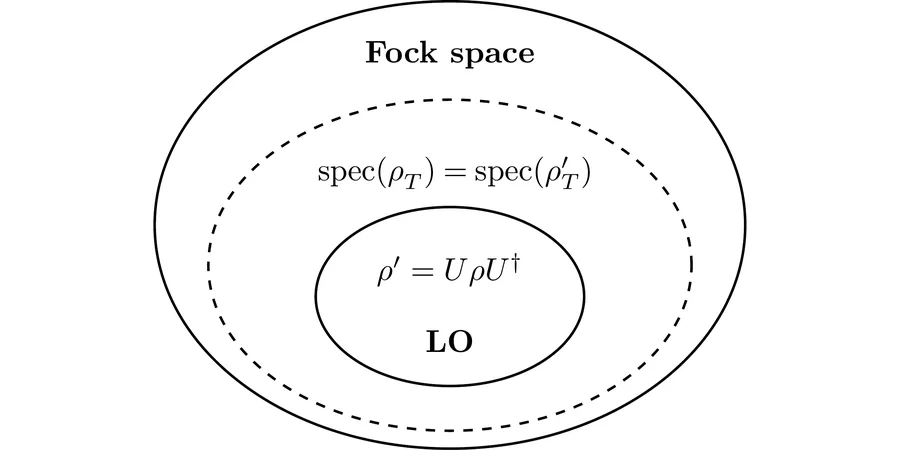
Quantum 10, 2132 (2026). https://doi.org/10.22331/q-2026-06-12-2132 Quantum linear optics without post-selection is not powerful enough to produce any quantum state from a given input state. This limits its utility since some applications require entangled resources that are difficult to prepare. Thus, a deeper understanding of linear optical state preparation is needed. In this work, we give a r…
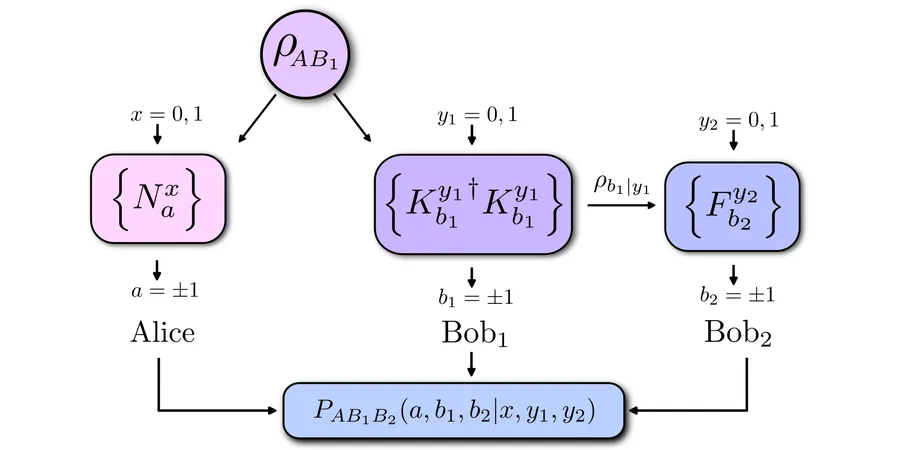
Quantum 10, 2131 (2026). https://doi.org/10.22331/q-2026-06-11-2131 Device-independent quantum information is attracting significant attention, particularly for its applications in information security. This interest arises because the security of device-independent protocols relies solely on the observed outcomes of spatially separated measurements and the validity of quantum physics. Sequential…
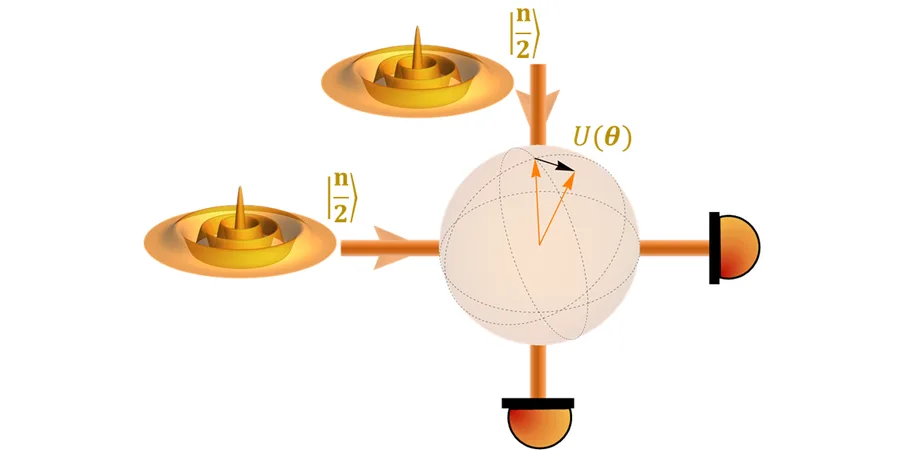
Quantum 10, 2130 (2026). https://doi.org/10.22331/q-2026-06-08-2130 We analyze the task of estimating a multi-parameter unitary belonging to the $SU(2)$ or $SU(1,1)$ groups, in a two-bosonic-mode scenario and investigate the scaling of the precision in terms of the total particle number. For the $SU(2)$ case, the total particle number is conserved by the evolution and we discuss optimal states in…
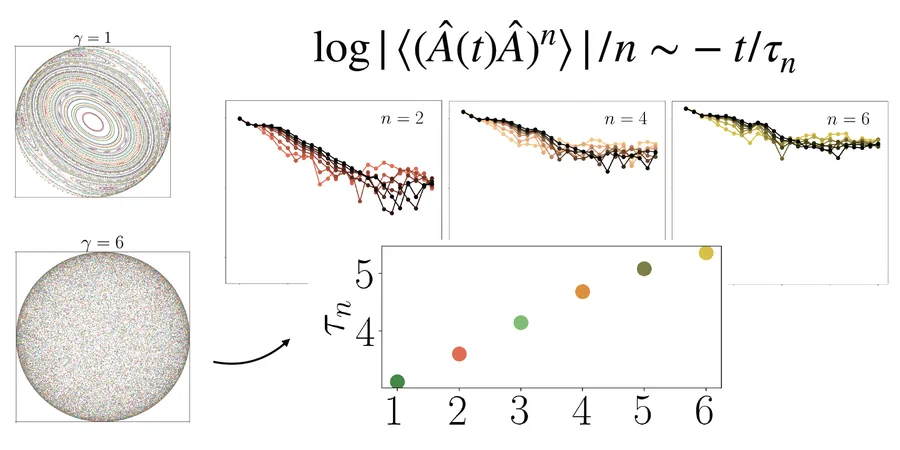
Quantum 10, 2129 (2026). https://doi.org/10.22331/q-2026-06-08-2129 Recent work highlighted the importance of higher-order correlations in quantum dynamics for a deeper understanding of quantum chaos and thermalization. The full Eigenstate Thermalization Hypothesis, the framework encompassing correlations, can be formalized using the language of Free Probability theory. In this context, chaotic d…
Quantum 10, 2128 (2026). https://doi.org/10.22331/q-2026-06-08-2128 Entanglement witnesses (EWs) are a collection of observables that can characterize separable states and, experimentally, estimating EWs can verify entangled states. In this work, we show that a fixed measurement setting on a multipartite entangled state, which we introduce as a network state for the purpose, can estimate EWs. Nam…
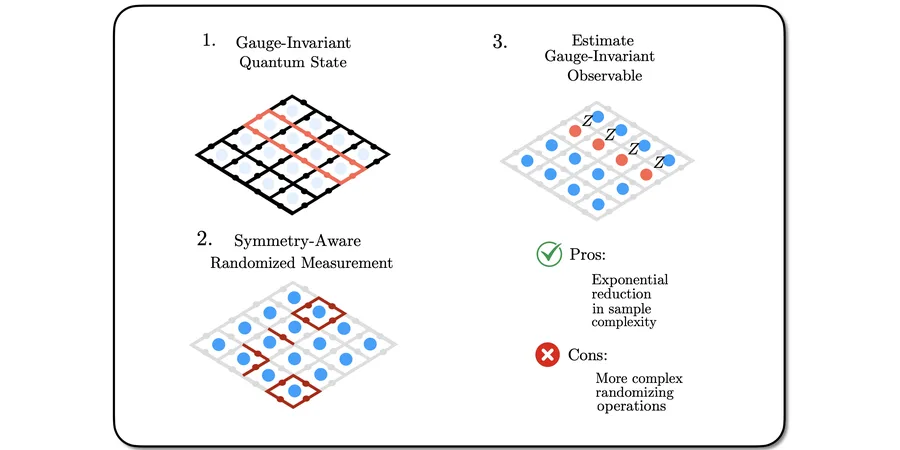
Quantum 10, 2127 (2026). https://doi.org/10.22331/q-2026-06-08-2127 Classical shadows provide a versatile framework for estimating many properties of quantum states from repeated, randomly chosen measurements without requiring full quantum state tomography. When prior information is available, such as knowledge of symmetries of states and operators, this knowledge can be exploited to significantl…
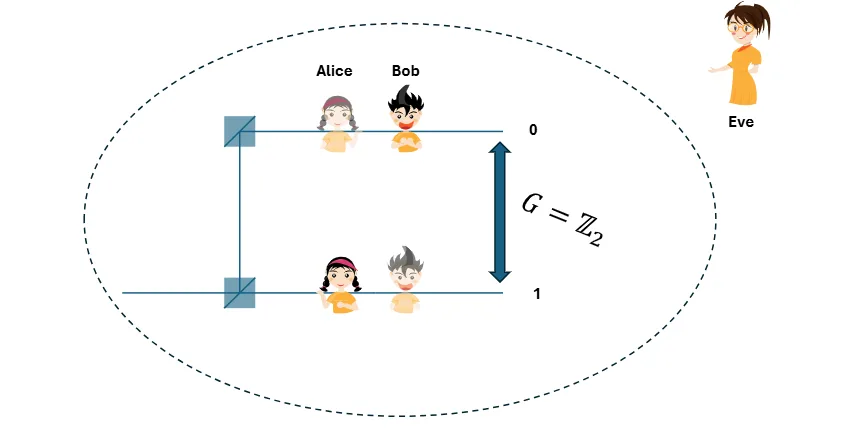
Quantum 10, 2126 (2026). https://doi.org/10.22331/q-2026-06-08-2126 The study of quantum reference frames has received renewed interest over the last years, leading to the parallel development of non-equivalent frameworks by different communities. We clarify the differences between these frameworks. At the mathematical level, they mainly differ in the kind of symmetry (either weak or strong) empl…
Quantum 10, 2125 (2026). https://doi.org/10.22331/q-2026-06-02-2125 We construct a local decoder for the 2D toric code using ideas from the hierarchical classical cellular automata of Tsirelson and Gács. Our decoder is a circuit of strictly local quantum operations preserving a logical state for exponential time in the presence of circuit-level noise without the need for non-local classical compu…
Quantum 10, 2124 (2026). https://doi.org/10.22331/q-2026-06-01-2124 We present a new simulation-secure quantum oblivious transfer (QOT) protocol based on one-way functions in the plain model. With a focus on practical implementation, our protocol surpasses prior works in efficiency, promising feasible experimental realization. We address potential experimental errors and their correction, offerin…
physicsquantum-physics
research.io
Sign up to keep scrolling
Create your feed subscriptions, save articles, keep scrolling.





 research.io