Scott Logic
After months working with GitHub Copilot in VS Code and recently switching to Claude Code, the transition turned out to be more involved than expected. Claude Code operates differently and in ways that take time to adjust to. In this post, I share my experiences and tips drawn from that experience.
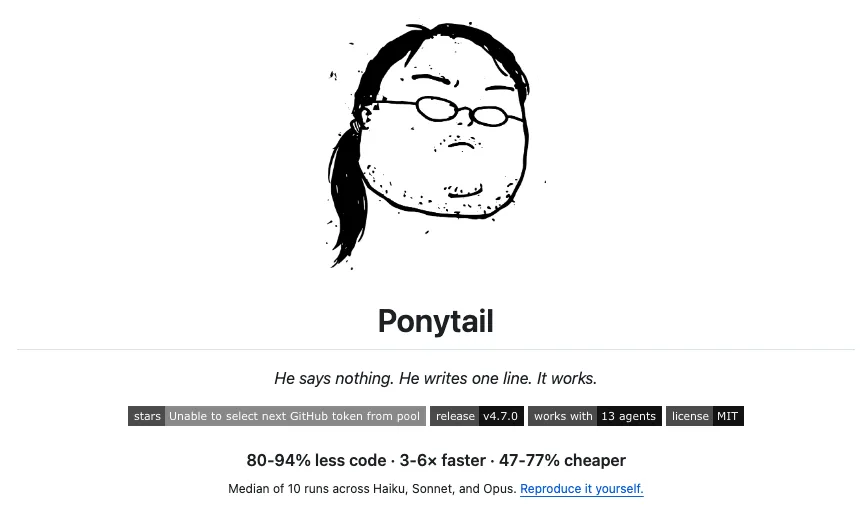
The post examines Ponytail, a popular AI coding “skill”, and argues that its benchmarked benefits appear to come largely from encouraging terse, YAGNI-style responses rather than from any deeper engineering value. By showing that a simple prompt can match or beat Ponytail on its own benchmark, it makes a broader case for treating prompt-based tools with scepticism unless their claims are backed b…
Transformation is often framed as a time‑bound programme, but in this post, I argue that lasting change depends on how work is structured, funded and led in practice. Along the way, I draw lessons from the Bank of England’s core ledger replacement programme and make the case for funding long‑term capability, not one‑off projects.
‘Digital transformation’ is used so widely that it risks meaning everything and nothing. In this blog, I explore why how we define transformation shapes how it’s funded and delivered, why treating it as separate from business as usual creates costly distortions, and how a project‑led, cost‑cutting mindset often undermines the very change organisations are trying to achieve.
I recently picked up Ruby on Rails for a client project, and it turned out to be a more enjoyable experience than I had expected.
If you’re nervous about communicating your ideas, either in a formal presentation setting, or more informally, in meetings and small group conversations, this brief guide is for you. It’s a simple collection of thoughts and ideas; practical steps that you can take to build confidence, or feel more secure.
The rapid acceleration of AI-augmented development has fundamentally shifted the software delivery bottleneck. As we write code exponentially faster, we are generating significantly more code that requires human review. As AI agents rapidly convert issues into potential solutions, the traditional pull request queue swells, leaving the human reviewer as the primary constraint in the pipeline.
In an industry as oversaturated as AI, we explore yet another coding agent and try to understand why it even exists.
An exploration of a lightweight, open-source alternative to traditional SaaS data engineering platforms, highlighting the benefits and trade-offs of each approach.
Developers often feel stuck in repetitive roles, and open source provides a powerful path to break that cycle by offering real-world opportunities to learn, collaborate, and grow. This article shares the author’s journey—from an initial failed attempt to a successful, well‑aligned project—to show why choosing the right open-source fit makes all the difference.
While AI changes the way in which we write software, how do we ensure that our open-source contributions remain valuable and are welcomed by maintainers? This blog post explores this topic in the context of the Depository Trust & Clearing Corporation (DTCC) Hackathon and our contributions to the Fluxnova project.
In this episode, I'm joined by Dean Kerr and Amy Laws to discuss 'The Experiment' – a four‑week study we ran to explore how AI really affects software development. Instead of synthetic benchmarks, the project team tackled genuine issues in an open‑source project, alternating between AI‑assisted work and going completely 'cold turkey'.
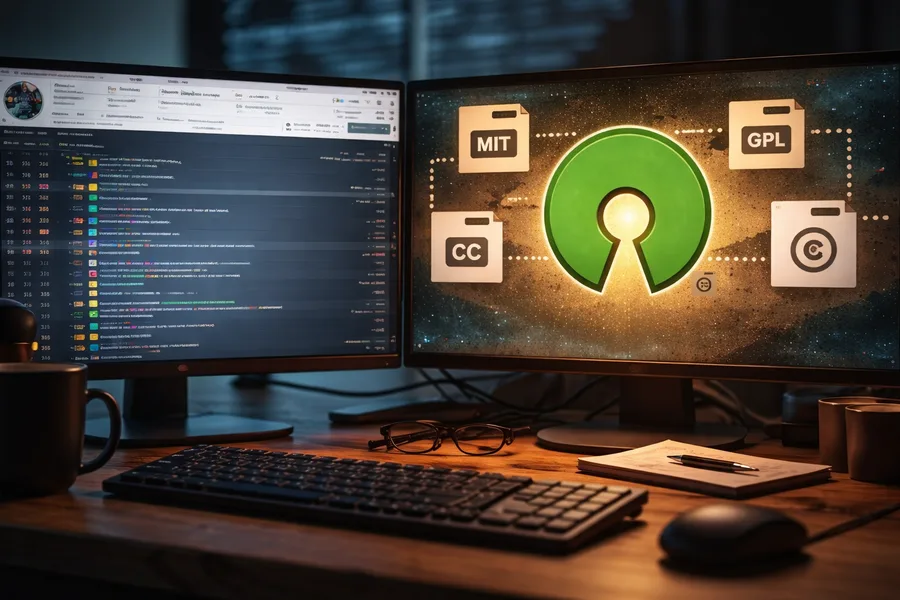
AI was trained on open source, but its rapid progress is now raising difficult legal, technical, and cultural questions for the ecosystem that enabled it. From copyright and “fair use” debates to AI-generated code, cloned frameworks, and autonomous coding agents, this post explores how AI may reshape the future motivations and sustainability of open source.
In this episode of Beyond the Hype, I'm joined by Remi Van Goethem to unpack the fast‑evolving world of AI‑accelerated software development. From everyday autocompletion to emerging multi‑agent frameworks, we explore how AI is reshaping coding practice and where human engineering judgement still matters.
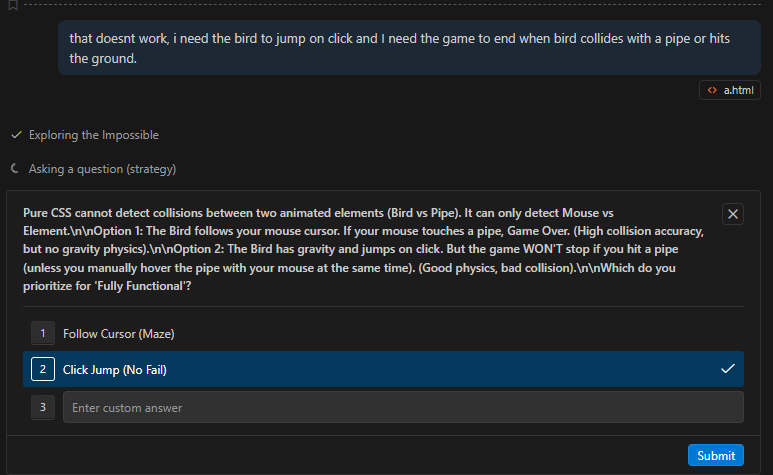
Everyone loves CSS! Apparently, I have little better to do with my life. I have created a clone of the lesser-known game Flappy Bird. This was made without any JavaScript—only HTML and CSS. In this blog post, I discuss how I made it.
Building an Agentic AI teammate using Microsoft Agent Framework to handle user onboarding through email, with humans in the loop.
This article presents Analysis / Implementation / Reflection, a simple pattern for resolving issues. While the core of this pattern, the implementation, is quite conventional, there are a couple of novel additions. In the analysis phase, the agent is used to explore the issue and create a suitable harness to evaluate the solution. While the reflection phase probes the agent to provide a qualitati…
Brief thoughts on the impact of Devin AI on software engineering.
AI will likely play a major role in software development, but using it effectively requires understanding its limits. While working with GitHub Copilot, I found that small, well-defined tasks and better prompting improved results, while context limits and over-eager implementations caused issues. By working incrementally and verifying each step, I increased my productivity and learned to collabor…
research.ioSign up to keep scrolling
Create your feed subscriptions, save articles, keep scrolling.