nanoscale views

Douglas Natelson (noreply@blogger.com)
1d ago

A few days ago I wrote about localization , where waves in a medium can become trapped due to interference by scattering off disorder.  This is an extremely general phenomenon that applies to light, sound, and electronic waves in solids. Now I want to write about a phenomenon that is specific to electrons (or at least wavepackets that carry electronic charge, if we want to be very general).  Rath…

condensed-matterphysics
Douglas Natelson (noreply@blogger.com)
5d ago

Physicists love simplifying idealizations , and this is especially true in the physics of materials.  The simplest decent model for metals, for example, is the ideal Fermi gas , where we neglect the existence of atoms entirely and just model the electrons as noninteracting particles in some box.  One step up from there, the Sommerfeld model , assumes that the electrons are in a perfectly periodic…

condensed-mattermaterialsphysicssurface-science
Douglas Natelson (noreply@blogger.com)
14d ago

It's been almost a decade since I last wrote about this topic , and a preprint on the arXiv this week is a good jumping off point for more discussion. Thermometers are devices that allow us to take some physical observable and infer temperature.  I wrote about the nature of temperature 17 years ago (!!!) in a way that did not completely satisfy me or most of my readers, so maybe I should take ano…

physicsthermodynamics
Douglas Natelson (noreply@blogger.com)
18d ago

I watched the webcast of the NAS State of Science address by outgoing NAS president Dr. Marcia McNutt .  (I did not watch the panel discussion afterward, so sorry if I missed critical pieces.)  A few thoughts on this: The intro music was a very classy baroque string quartet.  Hard not to think of this scene from Titanic . The main theme was about ways to revitalize US science, and there were six …

Introductory undergraduate labs are a recurring challenge at nearly every university.  Is the purpose to teach students something about how experimental science works (formulating hypotheses, defining measurement needs, setting up equipment, acquiring and analyzing data)?  Is the purpose to emphasize and reinforce specific scientific points from the curriculum?  How structured should they be?  Wh…

Douglas Natelson (noreply@blogger.com)
27d ago

The Manhattan Project was the largest government sponsored research and development project of its time.  Some things worth noting, in light of the present US government attitude toward science: It's hard to overstate the role played by immigrant scientists in this story.  Szilard, Einstein, Fermi, Wigner, Teller, von Neumann, and many more. I was trying to remember when the Manhattan Project bec…

Douglas Natelson (noreply@blogger.com)
28d ago

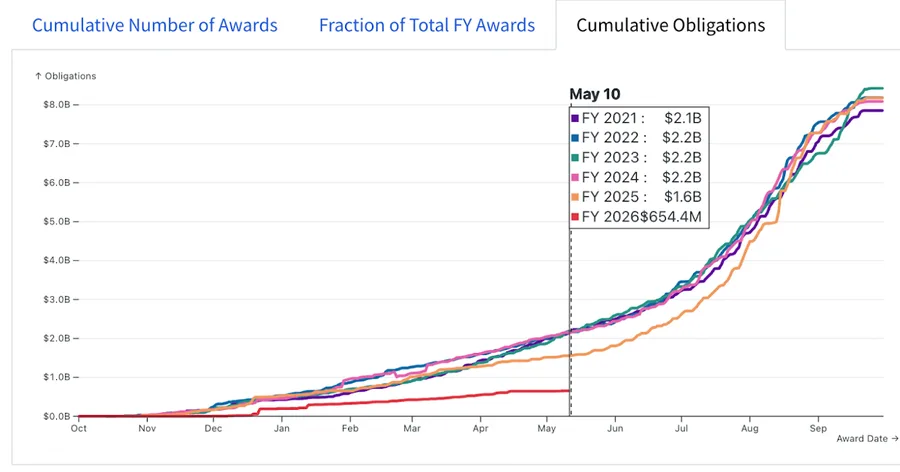
Several items worth reading about as we head into a long weekend in the US.  Starting with news related to funding and other aspects of US government policy: US government taking equity stakes in some quantum information sciences companies while investing around $2B (seemingly from the Department of Commerce and the CHIPs Act resources.  (Non-paywall news story here ).  This raises a number of th…

Douglas Natelson (noreply@blogger.com)
5/18/2026

I'm surprised that I haven't written about heavy fermion s as a separate post before, so here we go. (It's a break from thinking about science and politics, anyway.) I've written before about " effective mass " for electronic excitations in solids ( wiki page here ).  From classical physics, we are used to the idea that inertial mass \(m\) is the ratio between an external force \(\mathbf{F}\) and…

condensed-matterphysics
Douglas Natelson (noreply@blogger.com)
5/13/2026

As I mentioned previously, the National Science Board was summarily fired on April 25.  The NSB nominally advises the National Science Foundation.  There have been a number of pieces written about this: Going back in time to 2022, this essay is interesting to read, about the history of the NSF and the NSB, and the compromises put in place with the administrative structure.  Short version: Initial…

Douglas Natelson (noreply@blogger.com)
5/3/2026

A science story first, then a US research ecosystem story later. When we think about using molecules to store energy, it's usually in the context of food or fuel, so that chemical reactions take place - bonds are broken and remade, and in an exothermic reaction, the products end up with more kinetic energy (center of mass motion, molecular vibrations and rotations) than the initial reactants.  Ho…

chemistryphysical-chemistryphysicsquantum-physics
Douglas Natelson (noreply@blogger.com)
4/25/2026

First, some inside-baseball US funding discussion.  Apologies to my international readers, who likely don't care much about this except in the abstract. Breaking news : According to journalist Dan Garisto , as of April 25, 20206, the president has fired the entire National Science Board .  The NSB helps oversee the National Science Foundation .   From the outside, it had sure looked to me like th…

Douglas Natelson (noreply@blogger.com)
4/18/2026

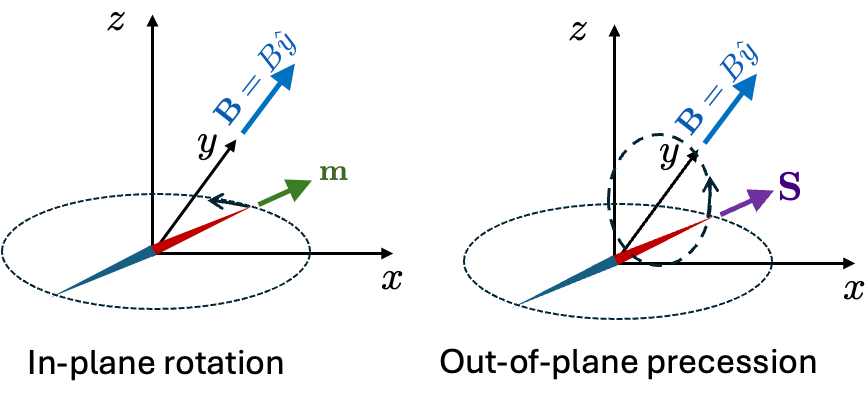
We've all seen a traditional compass.  A ferromagnetic, magnetized needle is mounted on a rotating bearing (or floated on the surface of a liquid) so that it can rotate in the \(x-y\) plane.  If there is an in-plane magnetic field \(\mathbf{B}\), the needle will rotate to align with that component of the field.  (It stops in the aligned state because of friction; otherwise it would "librate", osc…

condensed-mattermagnetismphysics
Douglas Natelson (noreply@blogger.com)
4/13/2026

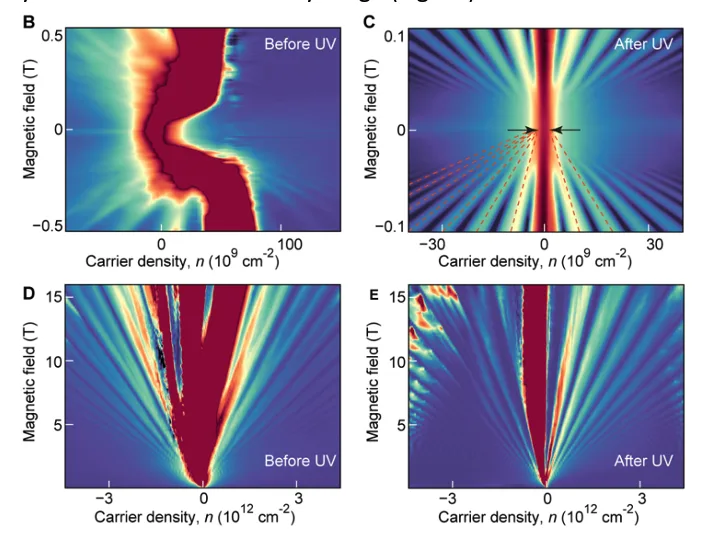
No, this is not another grim post about the chaotic US research funding environment.  Instead I wanted to write a bit about a good example of empiricism in experimental condensed matter physics, the use of illumination to (somewhat but not entirely mysteriously) improve electronic transport in 2D electronic systems. This story goes back decades, and it's all about the role of "disorder" and its e…

condensed-matterphysics
Douglas Natelson (noreply@blogger.com)
4/3/2026

To the surprise of no one at all, the 2027 presidential budget request is extremely bad for science. Remember, this is largely a political document, and Congress does not have to follow this. In the past year, Congress largely ignored the recommendations and appropriated a much flatter budget (though agency priorities are still set by the PBR for executive agencies). This new request shows that V…

Douglas Natelson (noreply@blogger.com)
3/29/2026

- This article in ars technica is about this paper, in which a quantum interference experiment is performed that, in the most straightforward interpretation, involves superpositions of states where "event A preceded event B" and "event B preceded event A". This is in the same mind-zapping vein as quantum eraser experiments. I haven't read this in detail, but my typical takeaway from these things …

physicsquantum-physics
Douglas Natelson (noreply@blogger.com)
3/25/2026

Matthew Schwartz of Harvard has made a big recent splash, between his public Aspen talk "10000 Einsteins" a year ago about the role of AI and the future of physics, and his talk last week at the APS Global Physics summit on the same topic, and now with this essay, "Vibe Physics: The AI Grad Student", on the website of Anthropic (producers of the AI tool Claude). The essay talks about how Prof. Sc…

aideep-learningmachine-learningphysics
Douglas Natelson (noreply@blogger.com)
3/19/2026

Since I headed home early this afternoon, I was only able to go to a couple of talks this morning. Here are those highlights, and a couple of general observations about the meeting. - Piers Coleman gave a very interesting talk that put me onto an experimental puzzle I'm sorry to say I had not seen previously. Some context: It is now well-established that one can do spin-polarized scanning tunneli…

condensed-matterphysics
Douglas Natelson (noreply@blogger.com)
3/18/2026

It was another eclectic day at the APS Global Physics Summit. Here is a selection of highlights based on my stochastic sampling of talks. - I've written before about CISS (the chirality-induced spin selection effect). Joe Subotnik gave a neat invited talk related to this, based on something I'd never really considered. In physics we learn about the Born-Oppenheimer approximation, which basically …

condensed-matterphysics
Douglas Natelson (noreply@blogger.com)
3/17/2026

Today was again a bit random, as I had talks for both one of my students and me, and meetings with folks. Some highlights: - Edoardo Baldini gave a very nice talk about exotic phases and collective excitations in van der Waals magnets. This included using second harmonic generation microscopy and polarimetry to look at the evolution of magnetic phases in NiPS3 as a function of thickness, ending u…

condensed-matterphysics
Douglas Natelson (noreply@blogger.com)
3/16/2026

I hit a pretty random assortment of talks on my first day at the APS Global Physics Summit, after catching a very early flight to get to Denver. Here are a few highlights: - My colleague Hanyu Zhu gave a nice talk about the coupling between chiral phonons (vibrational excitations of atomic motion that carry net orbital angular momentum) and their coupling to electronic spins. For example, chiral …

condensed-matterphysics
research.ioresearch.io

Sign up to keep scrolling

Create your feed subscriptions, save articles, keep scrolling.

Already have an account?