Blog of the Isotopes
A few updates: 1. The BBC got in touch last week to ask if I'd look at a press release and embargoed preprint on quantum computing to give some expert commentary. The work turned out to be from Microsoft, claiming another breakthrough in their desire to fabricate functional majorana qubits. The preprint shows their "multi-qubit" tetron device, with signals coming from its operation. What was n…
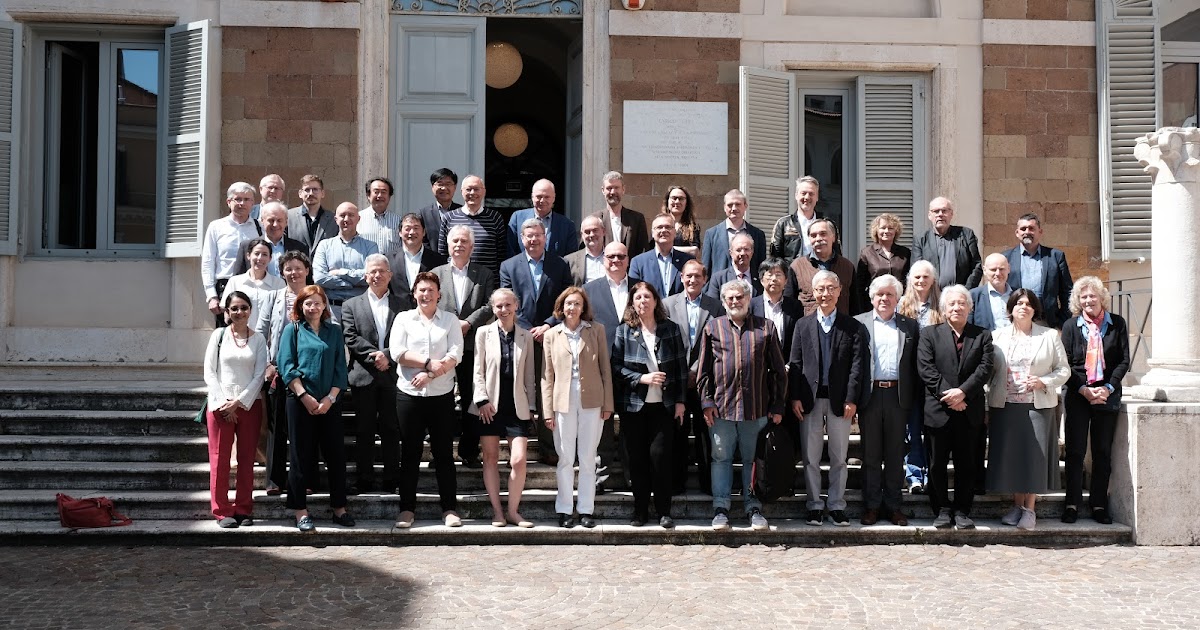
The organisers of the meeting in Rome last week just sent through the group photos we had taken, so I thought I'd share them here for posterity. The first, from Thursday 16th April, shows those present at the Nuclear Science Symposium, organised as a satellite meeting to the IUPAP WG9/C12 AGM (don't ask me what all that means). Those scheduled to attend the Friday meeting (including me), were in…
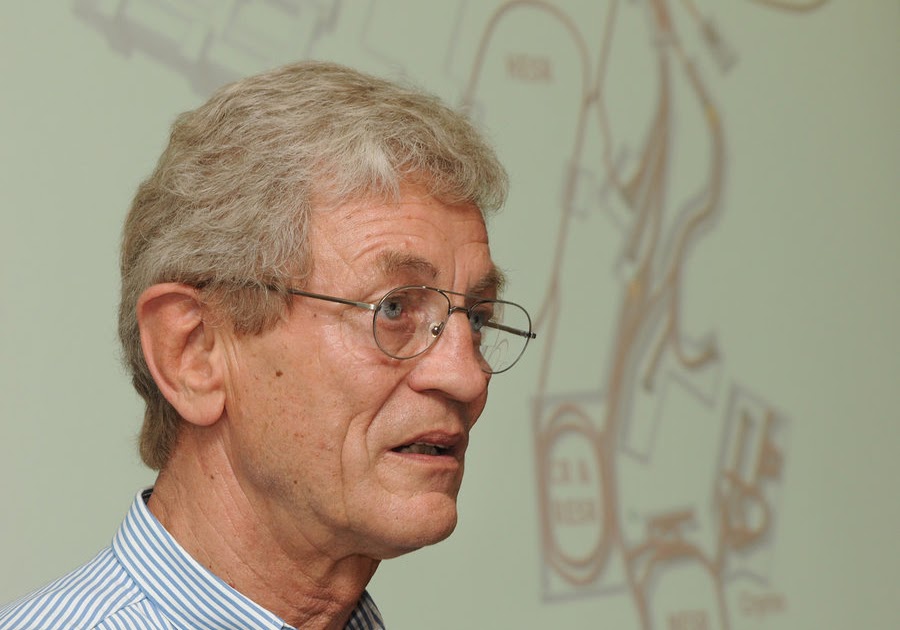
I missed posting about this last month, but I have been reminded about the recent death of Günther Rosner as part of the chair's presentation in the NuPECC committee meeting I am attending today. Günther was a professor in the UK (at Glasgow) when I started working at Surrey back in 2000, and I remember coming across him at various meetings over the years he was in the UK. I never knew him perso…
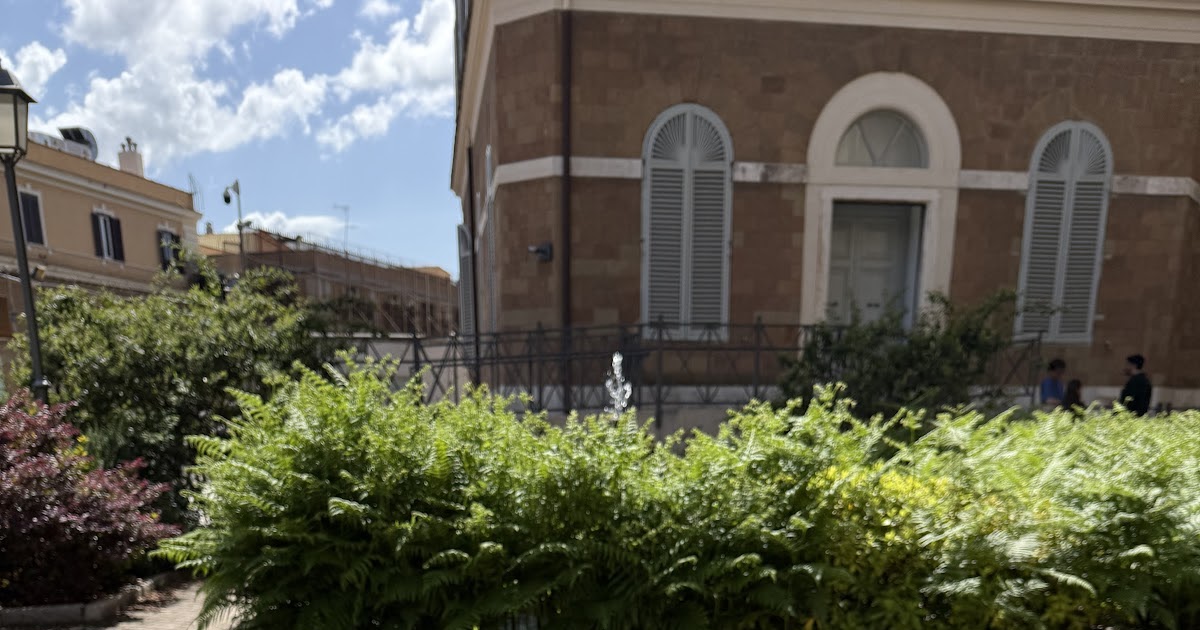
I'm at a meeting at the CREF - Centro Ricerche Enrico Fermi - in Rome. The building is inside a government compound shared with the Italian Interior Ministry, so is slightly bureaucratic to get into, but the centre is here as it is the building where Enrico Fermi worked. There is a museum here which I hope to go to later, but as proof that this place has some nuclear physics history, here's a p…
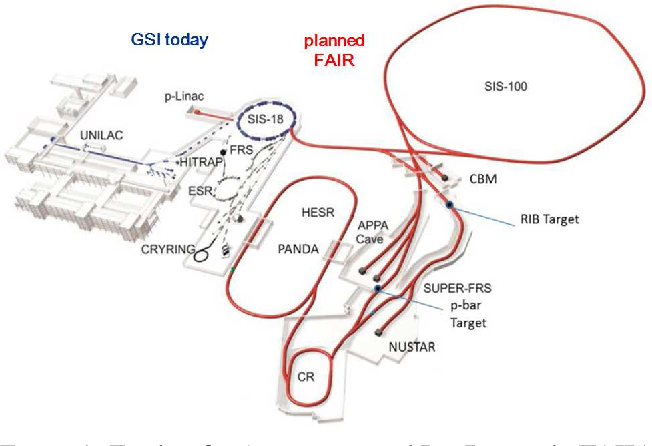
I got forwarded a press release from the GSI / FAIR facility in Germany describing a "major fire" which happened there yesterday. The fire happened in the "GSI" part - the longstanding facility which has been conducting research in nuclear physics for many years (the SI in GSI is Schwerion = heavy ion). FAIR is the linked site where they are building a new facility, which is apparently unaffected…
The last week has seen the outcome of the recent UK government spending review trickle down through all the levels of the science funding structure. From the STFC council came a headline announcement for many doing "curiosity-driven" research in Nuclear Physics, Particle Physics, and Astronomy: That there will be a ~30% reduction in the budget for such activities, at least in the grant lines that…
It's my first day back in the office since the Christmas / New Year break and I am a combination of raring to go and slightly filled with trepidation about just how busy the upcoming couple of months are going to be. For one thing, it is the time of the eyar when I have the most intensive teaching activity, giving two courses in semester 2 on quantum computing. It's fun, but busy, and it doesn't …
All about nuclear physics - research, news and comment. The author is Prof Paul Stevenson - a researcher in nuclear physics in the UK. Sometimes the posts are a little tangential to nuclear physics.
I am at day 5 of 5 at the European Nuclear Physics Conference in Caen, France. It's the first time I've been at one of the conferences in this series, and I've enjoyed the broad range of talks, attending not only the sessions very close to my own activity, but also those on applications and distant parts of the field. Caen seems like a nice enough place, though I can't say I have explored it very…
It's the third and final day at the NSP-2025 conference in Sivas, Türkiye. The scientific programme has continued with some experimental work on basic nuclear physics from international participants and theoretical and applied work from others. We've had presentations from ELI-NP in Romania again, this time covering gamma-ray strength functions. This is an area where I have done a bit of work in …
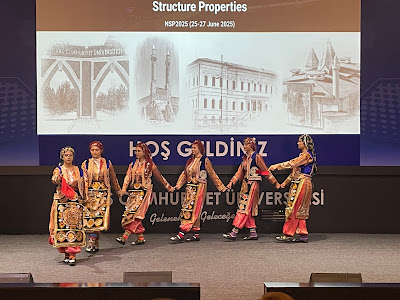
It is day 2 of 3 at this conference I am attending in Sivas, Türkiye. As if the opening concert were not enough yesterday, today we finished one of the scientific sessions with some Turkish folk dancing The conference has otherwise carried on with a combination of Turkish and international speakers. Unlike the kind of conferences I usually go to, the emphasis here is on theoretical and applied nu…
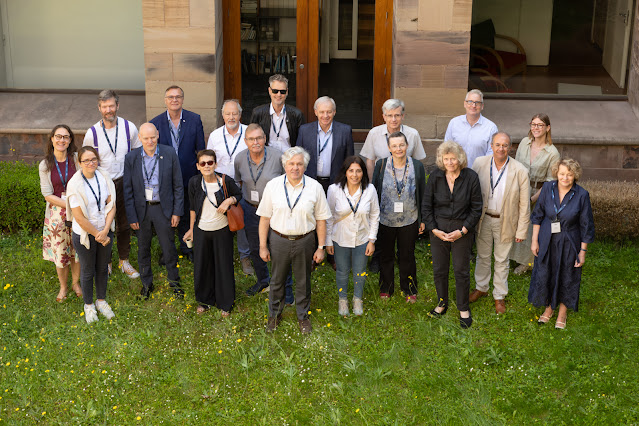
I've spent today in a meeting in Strasbourg as part of the NuPECC (Nuclear Physics European Collaboration Committee) on which I sit as a nominated delegate of the UK. This is my second such meeting, having been rather recently named on the committee, and the structure was now familiar, with a series of reports on various things to do with nuclear physics research and the general research environe…
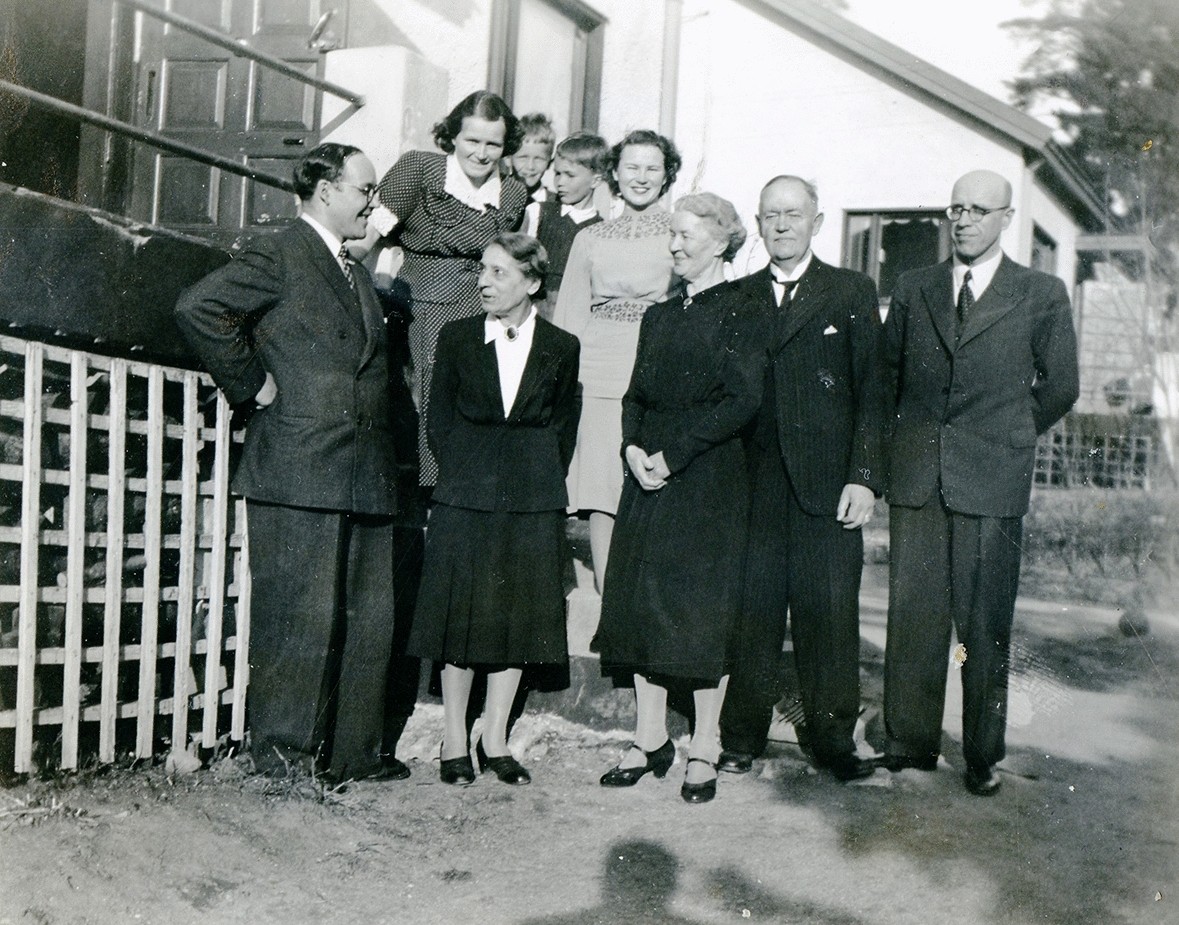
Through one of those more useful email services that send me a list of recent papers I might be intersted in, I came across a history of nuclear physics in Finland in the years from WWII to a decade or two afterwards. I'm well aware of the excellent work now taking place at Jyväskylä where, thanks to an accelerator facility, support for theory, a great local group and access to international user…
I've had a few emails forwarding the announcement of a conference celebrating the 40th annversary of Halo Nuclei. The circular is not a very colourful, but I paste the top of the pdf below. Since the image is not clickable (except to see it at higher resolution), here is the link above if you want to follow it. I have never worked on halo nuclei – light nuclei in which the last particle (or two …
Well, I am a bit behind in this project. It's now April, and I am posting about February's book of the month. I have had my copy of Bleaney & Bleaney's Electricity and Magnetism (vol 1) since the early 90s when I was an undergraduate student at Oxford. It was one of the small number of physics books I got a copy of from the reading lists, what with textbooks being expensive and me not having mu…
I posted on Thursday of Week 1 about my first experience teaching the new modules I am doing this semester, both on the subject of quantum computing. Now it's Thursday of week 10 and I've just given the last class for the modules. If nothing else, I've learnt a lot along the way, and judging from what I've seen from mid-semester tests and tutorial sessions, so have most of the students. I can'…
As students of physics will know, atomic and nuclear states are labelled using a sequence of letters that has a historical derivation from a time before the underlying physics was fully understood. Thus the sequence of letters s, p, d, f, g, h, i, j, k, ... correspond to angular momentum values of 0, 1, 2, 3, 4, 5, 6, 7, 8, ... . The letters are known as spectroscopic notation . Sometimes in co…
It's Thursday of week 1 of the second semester of our academic year and I've just given my first lecture of a new module that covers quantum algorithms. I've been teaching here for more than 20 years, but it's a rare thing to be teaching a new module, to have the fun (and fear) of designing and writing and then delivering a set of material. I must say, it was with a little trepadation that I pr…
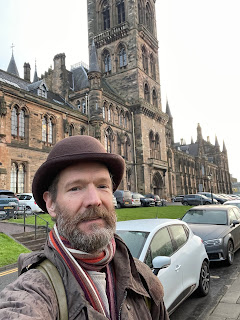
I'm in Glasgow for a community meeting as part of the Quantum Technologies for Fundamental Physics (QTFP) programme. I'm a PI (principal investigator) of one of the grants awarded in the programme, working in the use of quantum technolgies (quantum computers in my case) for fundamental physics (nuclear physics). We've just been through a several-year cycle of the first round of these grants and…
research.ioSign up to keep scrolling
Create your feed subscriptions, save articles, keep scrolling.