Sci.News: Breaking Science News
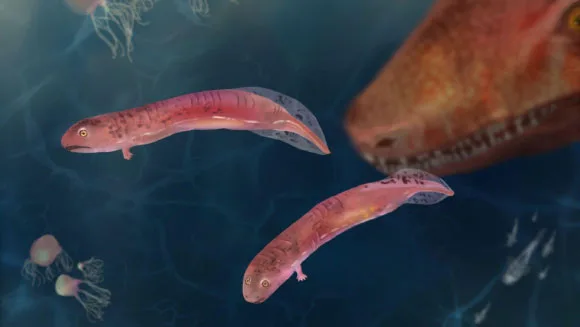
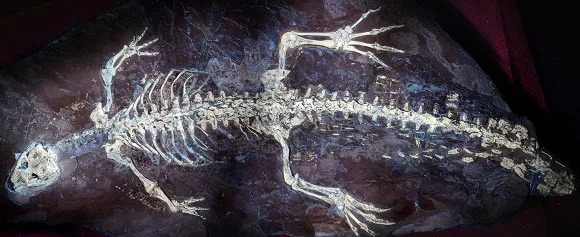
Paleontologists from the Field Museum of Natural History have described the fossilized remains of baby embolomeres, crocodile-like predators that prowled ancient rivers and swamps between 350 and 280 million years ago. The post Earth’s First Land Animals May Never Have Been Amphibian-Like After All appeared first on Sci.News: Breaking Science News .
Exceptionally preserved skin of Montsecosuchus depereti, an extinct crocodylomorph no larger than a house cat that prowled the tropical wetlands of Early Cretaceous Spain, has allowed paleontologists to reconstruct details of its scales, sensory organs and even possible banded markings along its tail. The post 125-Million-Year-Old Crocodile Relative Reveals Its True Colors appeared first on Sci.N…
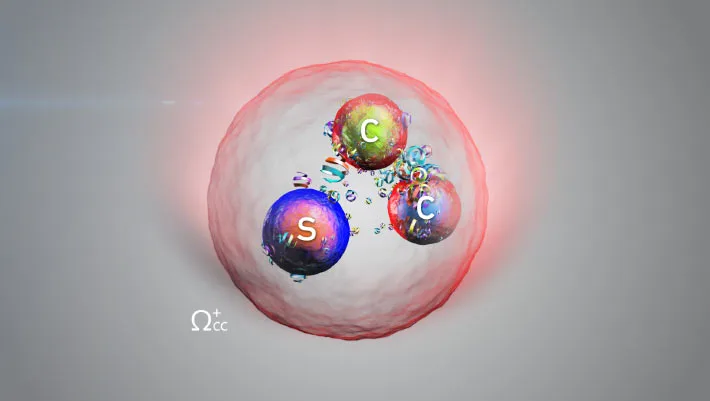
Physicists with LHCb Collaboration at CERN’s Large Hadron Collider (LHC) have detected the elusive Ωcc⁺ baryon, a particle containing two charm quarks and one strange quark, completing a long-sought family of doubly charmed baryons first predicted over half a century ago. The post CERN Physicists Discover Third and Final Member of Doubly Charmed Baryon Family appeared first on Sci.News: Breaking …
Researchers at Binghamton University have applied a 70-year-old theory of information to the viral word game Wordle, revealing how a carefully chosen first guess can dramatically improve a player’s chances of solving the puzzle. The post Scientists Use Math to Solve Viral Word Game ‘Wordle’ with 99% Success Rate appeared first on Sci.News: Breaking Science News .
University of California, Riverside’s Professor Eric Schwitzgebel and University of Lisbon postdoctoral researcher Jeremy Pober argue that consciousness is substrate flexible, meaning it can arise not just in the biological tissue we find on Earth, but potentially in radically different physical materials found elsewhere in the cosmos. The post Consciousness is Not Exclusive to Earth’s Biology, P…
New Webb and Hubble data not only confirm the existence of two distinct populations of stars in the ancient stellar system Terzan 5, once classified as a globular cluster, but also provides evidence for two more recent rounds of star formation. The post Astronomers Find Four Separate Generations of Stars in ‘Globular Cluster’ Terzan 5 appeared first on Sci.News: Breaking Science News .
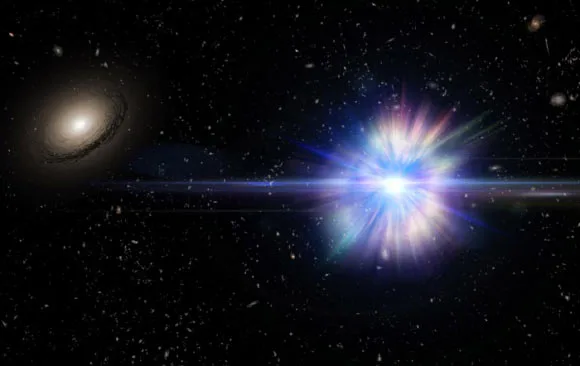
JCMT0402-0424, a dusty starburst galaxy around 11 billion light-years away, is the strongest candidate yet for the source of the high-energy neutrino event IC 210922A, according to a team of astronomer led by Yuji Urata of MITOS Science Co. The post Astronomers Trace Elusive High-Energy Neutrino to Star-Forming Galaxy in Early Universe appeared first on Sci.News: Breaking Science News .
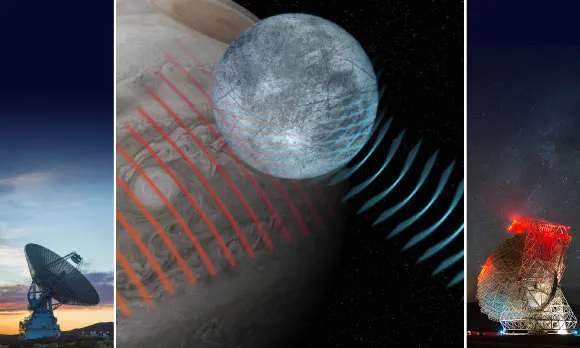
Using NASA’s Goldstone Solar System Radar and NSF’s Green Bank Telescope, astronomers from the University of California, Los Angeles, confirmed that the icy surface of Jupiter’s moon Europa scatters radio energy in an unusually strong and complex way not seen on rocky worlds. The post Radar Observations Reveal New Clues about Europa’s Hidden Interior appeared first on Sci.News: Breaking Science N…
A fresh analysis of Type Ia supernovae overturns a controversial 2025 claim that cosmic expansion is slowing. The post New Supernova Study Confirms Universe’s Expansion is Still Accelerating appeared first on Sci.News: Breaking Science News .
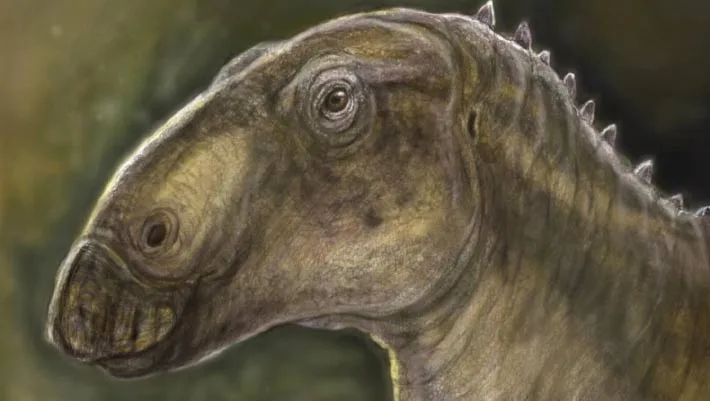
An international team of paleontologists from Romania, Hungary and Italy has identified a new genus and species of herbivorous, duck-billed dinosaur from an incomplete skeleton unearthed in the Hațeg Basin, a bowl-shaped depression in the Carpathians of present-day Romania. The post New Duck-Billed Dinosaur Unearthed in Romania appeared first on Sci.News: Breaking Science News .
Marine biologists have identified a new species of the shark genus Hemiscyllium in the waters of eastern Papua New Guinea, expanding a remarkable group of reef-dwelling sharks known for using their four fins to ‘walk’ across the seafloor. The post New Species of Walking Shark Discovered off Papua New Guinea appeared first on Sci.News: Breaking Science News .
Scientists have uncovered compelling new evidence that early human ancestors, likely Homo erectus, were deliberately bringing fire into Wonderwerk Cave in South Africa as far back as 1.79 million years ago. The post Evidence of Fire Use by Early Humans May Date Back Nearly 1.8 Million Years appeared first on Sci.News: Breaking Science News .
Deep inside a limestone cave in southern China, paleontologists have uncovered an assemblage of thirteen fossilized teeth belonging to Gigantopithecus blacki, the largest primate species ever known to have lived. The post Fossils from Chinese Cave Fill Crucial Gap in History of Gigantopithecus blacki appeared first on Sci.News: Breaking Science News .
Copper diacetyl bis(4-methyl-3-thiosemicarbazone), or Cu(ATSM), restored a key waste-removal system in the brain, reducing toxic amyloid-beta buildup and improving spatial memory in lab models of Alzheimer’s disease, according to a team of researchers at Monash University. The post Experimental Copper-Based Drug Clears Alzheimer’s Plaques and Boosts Memory in Mice appeared first on Sci.News: Brea…
Paleontologists have described a new genus and three new species of small, insect-eating marsupials from the Early Miocene deposits of the Riversleigh World Heritage Area in northwestern Queensland, one of Australia’s richest fossil sites. The post New Marsupial Lineage Emerges from Australian Fossils appeared first on Sci.News: Breaking Science News .
In a mouse study conducted by scientists at the Dasman Diabetes Institute in Kuwait, rodents fed a sucrose-free diet developed insulin resistance, gut microbial imbalances and signs of fatty liver disease despite maintaining similar body weight. The post Eliminating Sucrose from Low-Fat Diet Alters Gut Microbiome, Animal Study Suggests appeared first on Sci.News: Breaking Science News .
Using Webb’s NIRCam and NIRSpec instruments, astronomers have obtained the deepest spectrum ever taken of a little red dot. The post Webb Delivers Strongest-Ever Case for ‘Black Hole Stars’ Lurking in Early Universe appeared first on Sci.News: Breaking Science News .
Two elusive groups of millipedes, Siphoniulida and Siphonocryptida, were the last missing pieces in the evolutionary history of Earth’s oldest land animals, according to a team of entomologists led by Virginia Tech. The post Entomologists Reconstruct Evolutionary History of Millipedes appeared first on Sci.News: Breaking Science News .
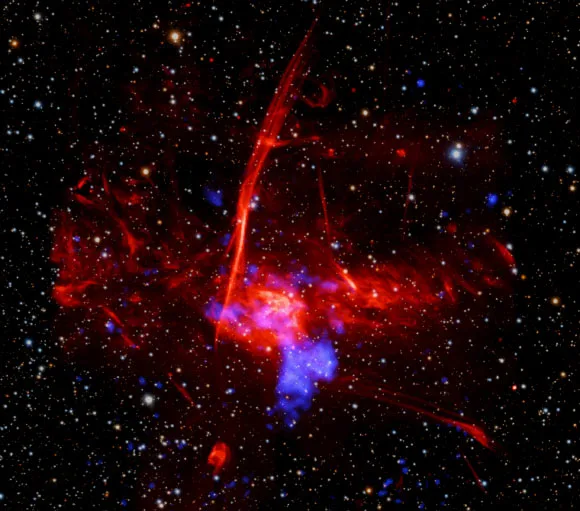
Using NASA’s Chandra X-ray Observatory and ESA’s XMM-Newton satellite, astronomers identified a possible remnant of ancient stellar explosion just a few dozen light-years from Sagittarius A*, a supermassive black hole at the center of our Milky Way Galaxy. The post Astronomers May Have Found Supernova Remnant near Milky Way’s Central Black Hole appeared first on Sci.News: Breaking Science News .
research.ioSign up to keep scrolling
Create your feed subscriptions, save articles, keep scrolling.