James Van Allen, who was born in Iowa on Sept. 7, 1914, showed talent and interest in science and math from an early age. A major in physics from Wesleyan College in 1935 was followed by a Ph.D. in nuclear physics in 1939. Before and after World War II – during which he developed antiaircraft Continue reading "Sept. 7, 1914: The birth of James Van Allen" The post Sept. 7, 1914: The birth of James…
Wouldn’t a free-floating planet eventually cross paths with a star or even a black hole and start revolving around it? YinToronto, Ontario Free-floating planets (FFPs) or rogue planets are bodies that move through space by themselves, not locked into an orbit around a star. While some may have begun as typical planets flung out of Continue reading "Why aren’t free-floating planets captured when t…
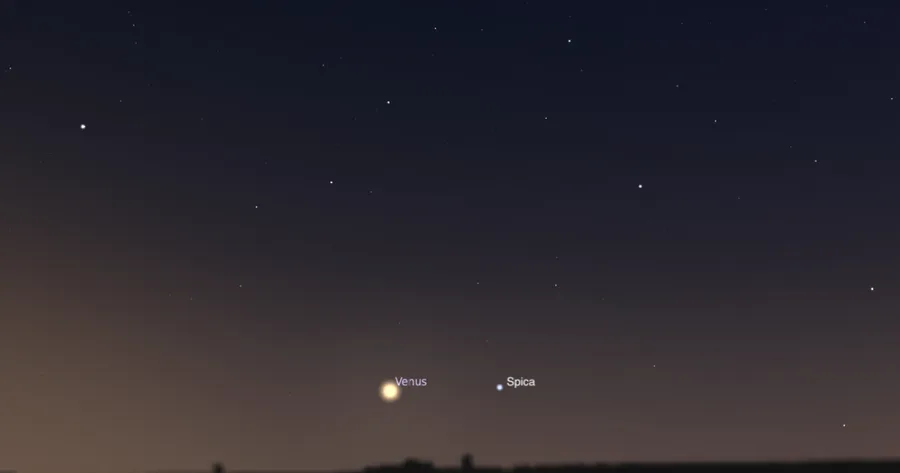
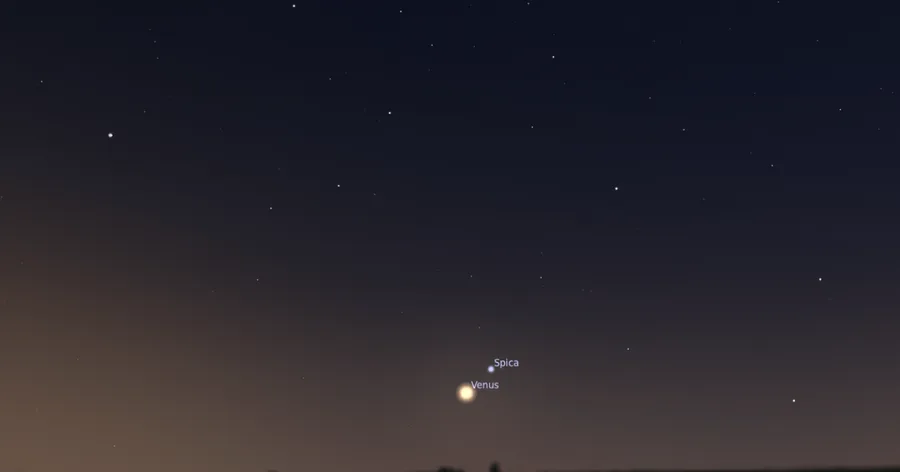
Looking for a sky event this week? Check out our full Sky This Week column. September 6: The Moon and Mars in Gemini Venus has pulled away from the bright star Spica in Virgo, which it met in the sky last week, and tonight stands side by side with the star as they set together following sunset. Continue reading "The Sky Today on Monday, September 7: Venus and Spica, side by side" The post The Sk…
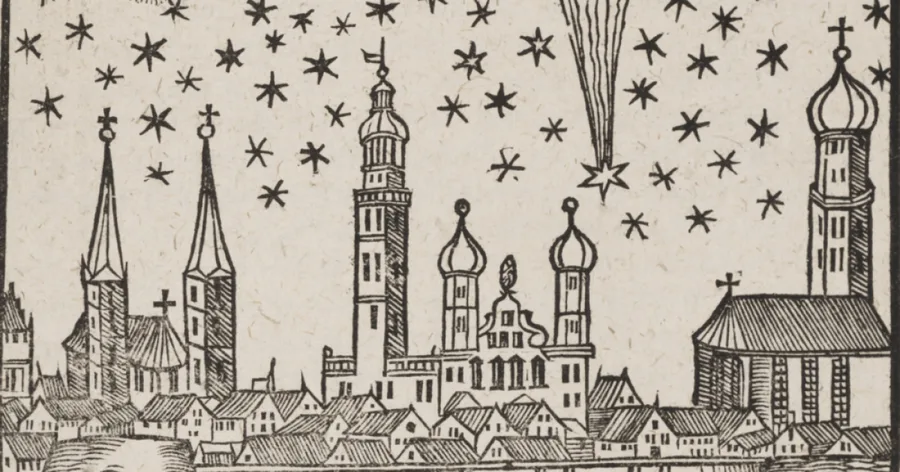
The fall of 1618 was a standout when it came to notable comets, boasting three visible to the naked eye. In late August, C/1618 Q1 appeared, first spotted in the skies over Hungary. Johannes Kepler observed the comet throughout the month of September, spotting it from Linz, Austria, through a small telescope on Sept. 6. Continue reading "Sept. 6, 1618: The first comet seen through a telescope" Th…
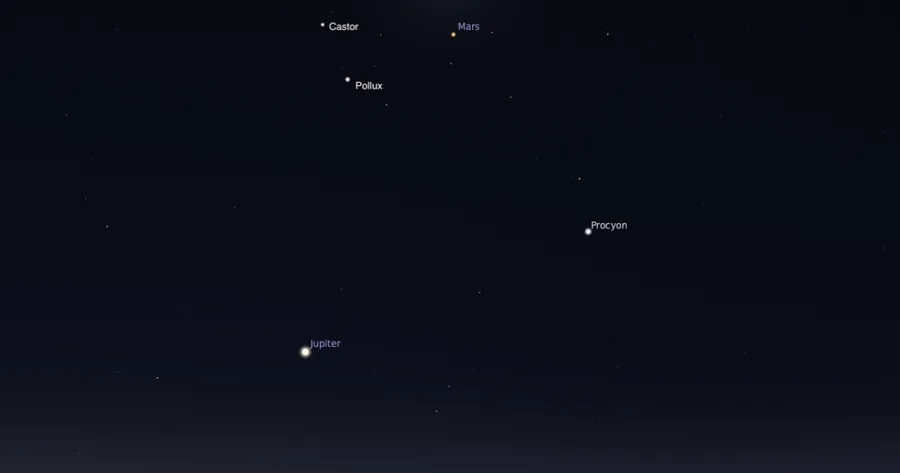
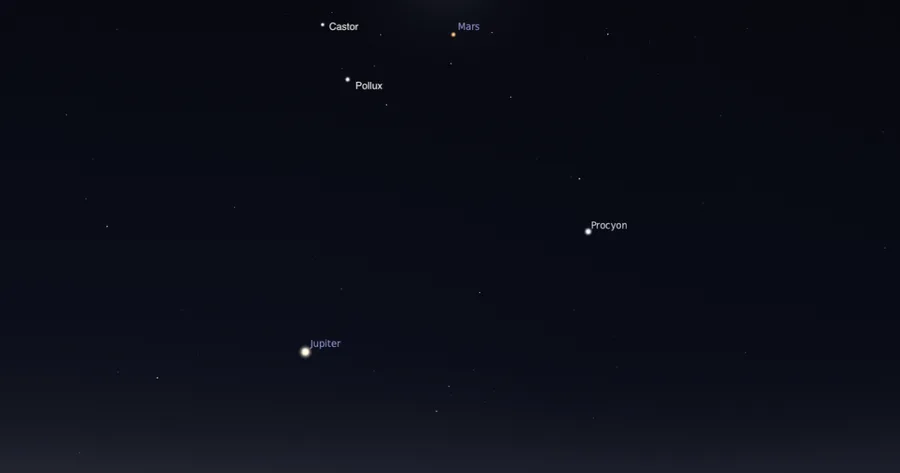
Looking for a sky event this week? Check out our full Sky This Week column. September 5: Titan near Saturn The waning crescent Moon lies in Gemini today, not far from the 3rd-magnitude star Epsilon (ε) Geminorum, roughly around where western twin Castor’s knee would be. Mars is also in Gemini, closer to the midsection of the Continue reading "The Sky Today on Sunday, September 6: The Moon and Ma…
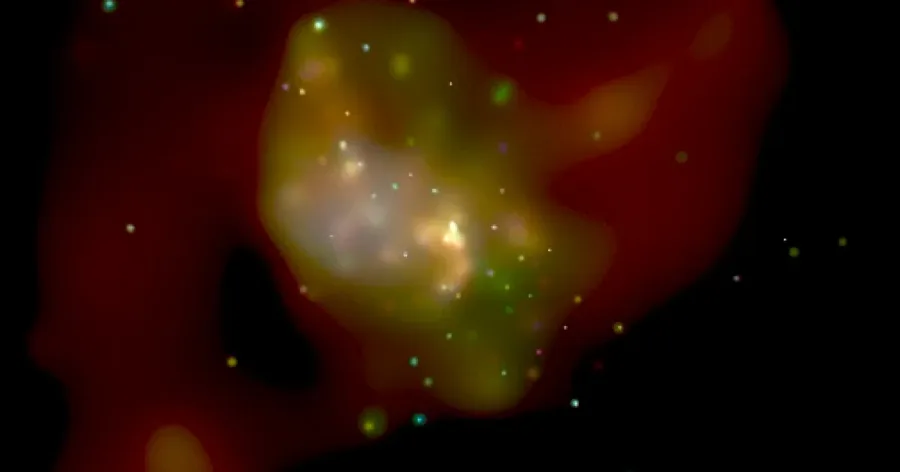
NASA’s Chandra X-Ray Observatory is the agency’s flagship mission for X-ray astronomy. On Sept. 5, 2001, NASA announced that astronomers using Chandra in October of the previous year had witnessed a fast, strong X-ray flare coming from the supermassive black hole at the center of our galaxy. This black hole, named Sagittarius A* (Sgr A*) Continue reading "Sept. 5, 2001: The Milky Way has a black …
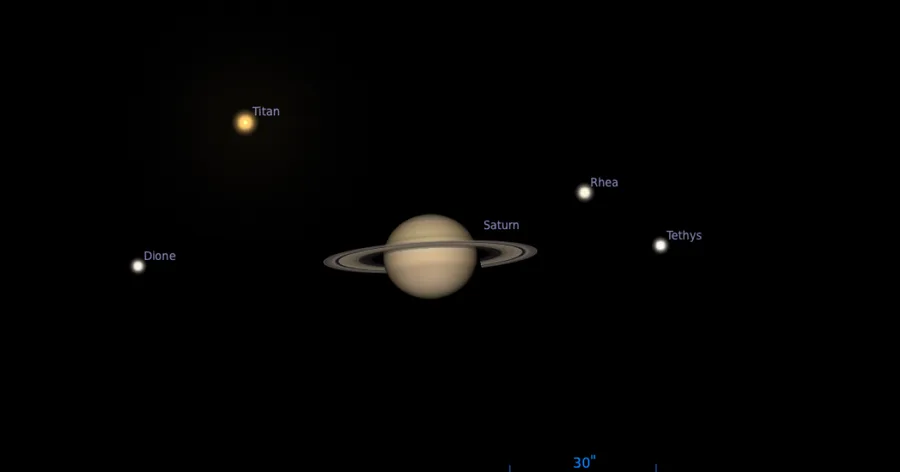
Looking for a sky event this week? Check out our full Sky This Week column. September 4: Get in a workout Titan, Saturn’s brightest moon, orbits its parent world with a period of about 16 days. You’ll find this moon passing near Saturn today and tomorrow, when it will be northeast and northwest of the ringed world, Continue reading "The Sky Today on Saturday, September 5: Titan near Saturn" The …
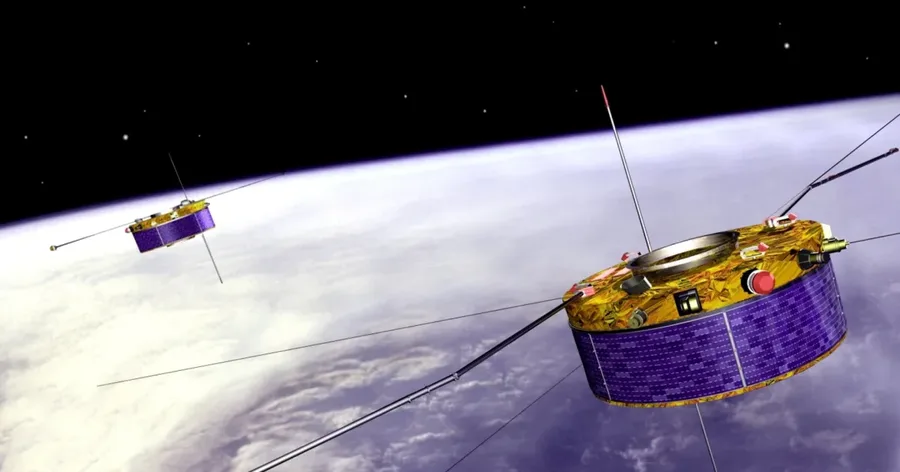
The last two spacecraft of the European Space Agency’s (ESA) Cluster mission plunged into Earth’s atmosphere this week, closing out 26 years of research into the planet’s magnetic environment — and handing scientists a front-row seat to their destruction. ESA’s Samba spacecraft reentered the atmosphere on Aug. 31 at 5:39 p.m. EDT, disintegrating over a Continue reading "Scientists watch as two sa…
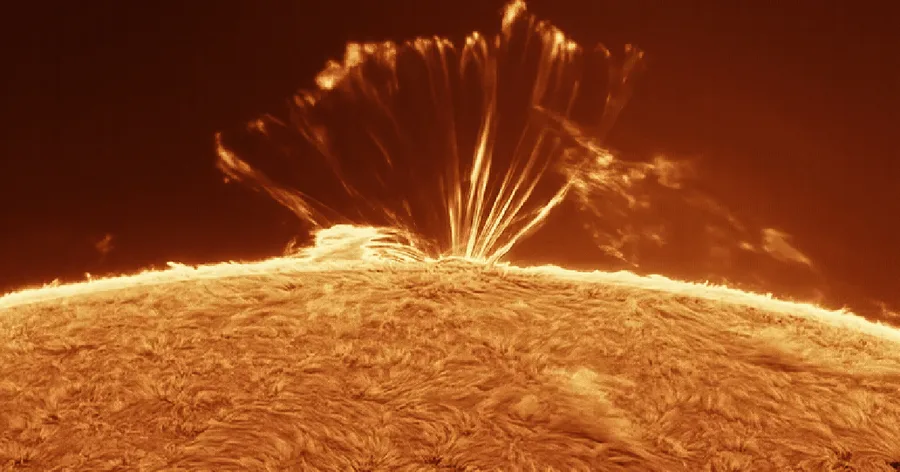
Mark Johnston from Scottsdale, Arizona On Aug. 21, 2026, an unusually long-lasting M-class flare erupted from a sunspot group near the Sun’s west limb. As the flare’s stretched magnetic field lines reconnected and relaxed, they filled with hot plasma that cooled and drained along the loops, producing the glowing arcade seen here in Hydrogen-alpha (Hα) Continue reading "The aftermath of a solar fl…
Born in Kath, Khwarezm – a region that today would be cover parts of Uzbekistan, Kazakhstan, and Turkmenistan – Abu Raihan Muhammad al-Biruni was a man of many scientific talents. His extensive travels throughout the Middle East and modern India and his self-education in Greek, Syriac, Hebrew, and Sanskrit helped him produce respected works in Continue reading "Sept. 4, 973 C.E.: The birth of al-…
Looking for a sky event this week? Check out our full Sky This Week column. September 3: The Moon in Taurus Last Quarter Moon occurs at 3:51 A.M. EDT, leaving our evening sky completely dark and perfect for searching out fainter, deep-sky targets. High in the southeastern sky two hours after sunset is the constellation Vulpecula, which Continue reading "The Sky Today on Friday, September 4: Get…
Friday, September 4Last Quarter Moon occurs at 3:51 A.M. EDT Have you heard of the “demon star,” Algol? This strange sun is actually two stars in a system known as an eclipsing binary. As the name would suggest, as they orbit, one star regularly passes in front of and eclipses the other from our point Continue reading "The Sky This Week from September 4 to 11: The Moon joins Jupiter and Mars" The…
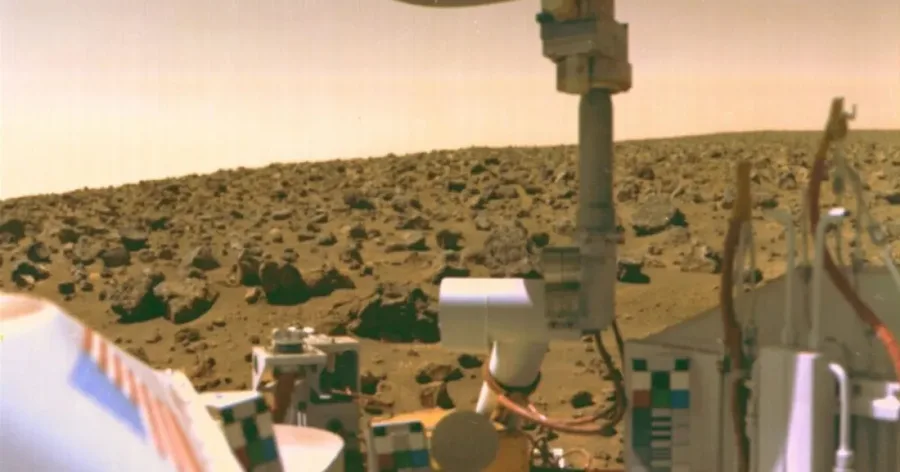
Only a little over a month after Viking 1 landed on Mars, Viking 2 followed suit. Though the two Viking landers touched down in different locations, they used identical spacecraft and had the same mission: to create global maps of Mars, observe weather patterns, investigate the surface, measure temperatures, and search for life. Viking 2 Continue reading "Sept. 3, 1976: Viking 2 reaches Mars" The…
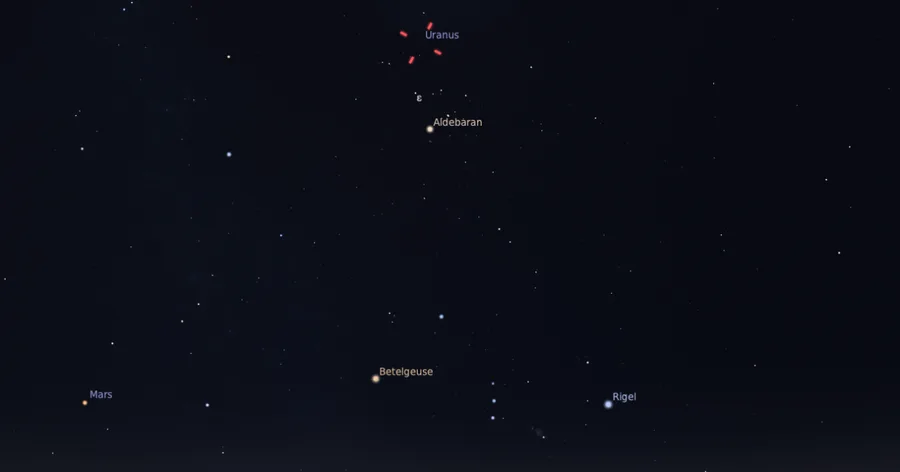
Looking for a sky event this week? Check out our full Sky This Week column. September 2: Venus south of Spica The Moon passes 5° north of Uranus at 7 P.M. EDT. However, you’ll want to check out the pair in the early-morning sky, now located in Taurus the Bull. Rising about an hour before midnight, Uranus Continue reading "The Sky Today on Thursday, September 3: The Moon in Taurus" The post The …
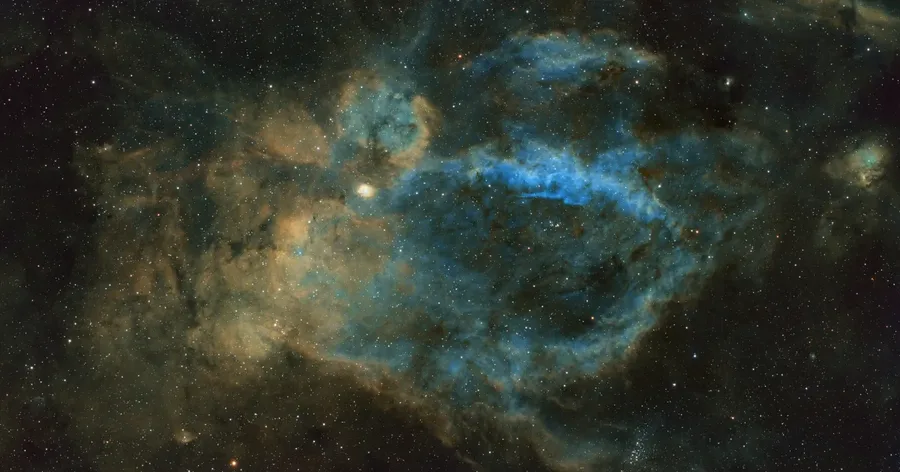
Luigi La Bella from Melilli, Italy The Lobster Claw Nebula (Sharpless 2-157) is a faint emission nebula straddling the constellations Cassiopeia and Cepheus. This complex of gas and dust has been sculpted by the massive stars of the Cassiopeia OB2 association — including the Wolf-Rayet star WR 157 — whose winds carve its ring-shaped northern Continue reading "Clawing through Cassiopeia" The post …
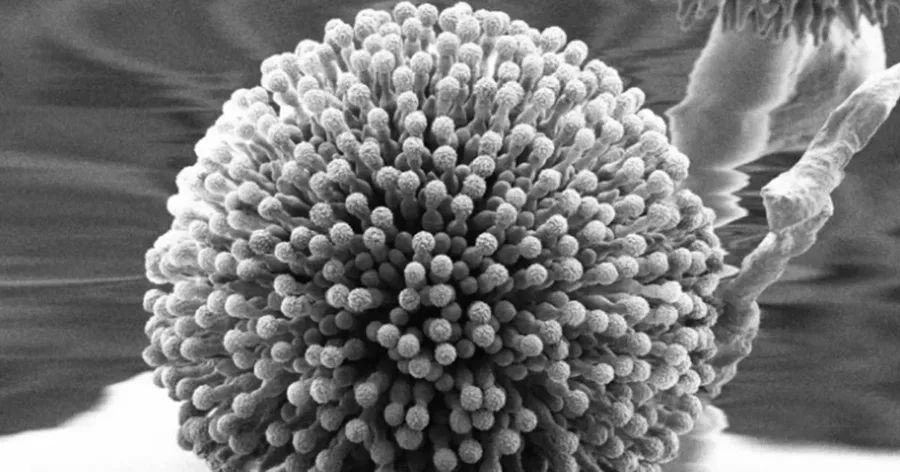
According to a new study, bacteria and fungi shed by humans could survive on the lunar surface for up to a week or longer. The study, published in Science Advances Aug. 19, paired microbiologists with researchers who model lunar surface conditions. Led by Prabal Saxena, research space scientist at Goddard Space Flight Center, the team Continue reading "Microbes may make it on the Moon" The post M…
On Sept. 1, 1859, amateur astronomer Richard Carrington observed a massive eruption of bright light from the Sun’s surface. It was the first recorded observation of a solar flare. Within only 17.5 hours, a coronal mass ejection (CME) – an expulsion of plasma and magnetic waves that often accompanies flares and prominences – reached Earth, Continue reading "Sept. 2, 1859: The Carrington Event peak…
Looking for a sky event this week? Check out our full Sky This Week column. September 1: Visit globular cluster M30 Venus passes 1.7° due south of Spica at 11 P.M. EDT. Although the pair has set for most by then (around 9 P.M. local daylight time), regardless of your location they are visible in the west Continue reading "The Sky Today on Wednesday, September 2: Venus south of Spica" The post Th…
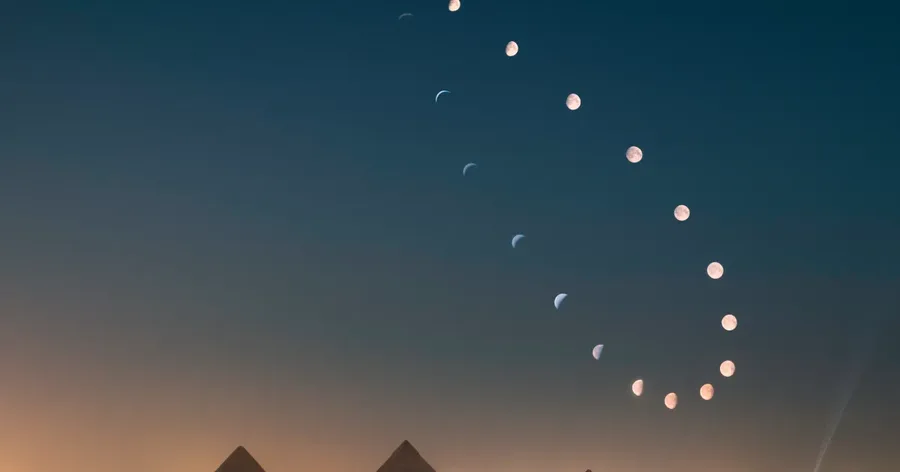
Why does the daily moonrise time change by as much as 60 minutes from the previous day, and as little as 30 minutes during the same month? Jim WakefieldBend, Oregon It depends on how far the Moon dips below the horizon from one day to the next. Our satellite moves, on average, 13.2° per day Continue reading "Why doesn’t the moonrise time change by the same amount of time each day?" The post Why d…
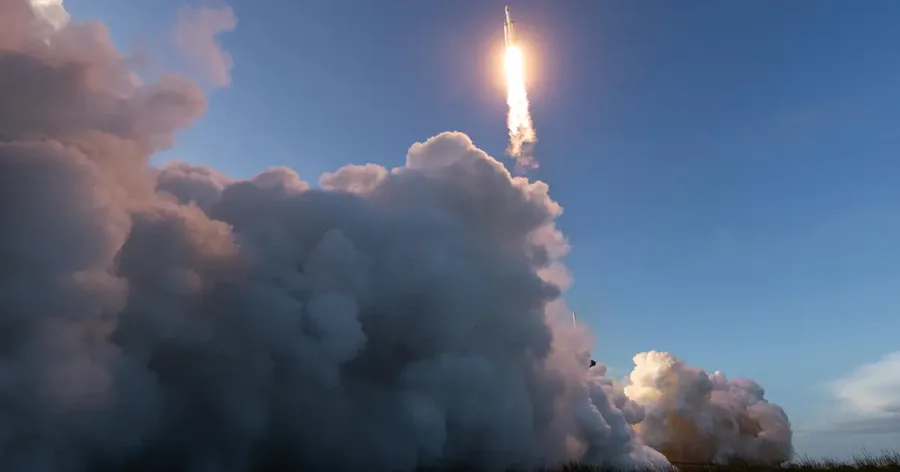
The journey of a million miles began with a successful launch Sunday morning. NASA’s next-generation observatory, the Nancy Grace Roman Space Telescope, took off from Kennedy Space Center in Florida on Aug. 30 at 7:26 a.m. EDT. A SpaceX Falcon Heavy — the company’s heavy-lift rocket, composed of three Falcon 9 boosters strapped together — Continue reading "Roman Space Telescope lifts off" The pos…

 research.io