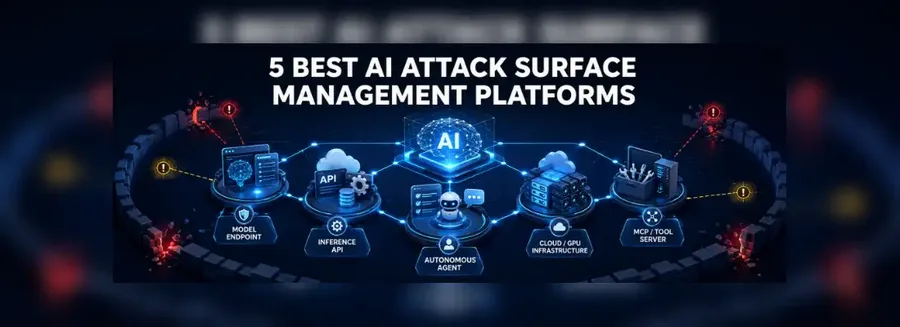
Security teams cannot manage an AI attack surface they cannot see. Models, inference APIs, agents, experimental applications, service identities, and supporting cloud resources may appear outside the inventory used for routine security reviews. Those gaps make it harder to spot exposed endpoints, risky configurations, or unmanaged deployments before they become overlooked exposures.
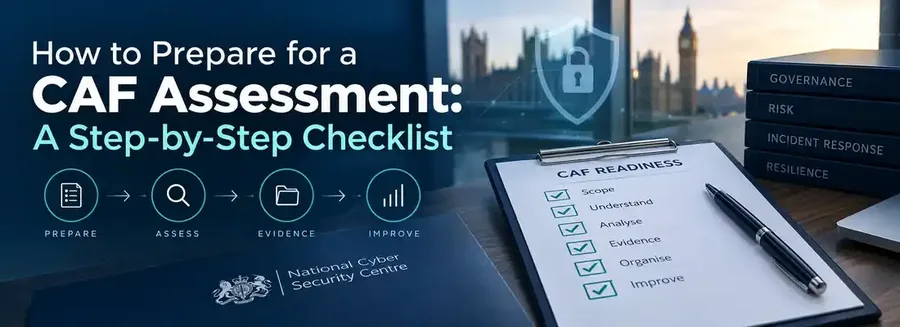
A CAF assessment prepares an organisation to demonstrate cyber resilience against the NCSC Cyber Assessment Framework by gathering evidence, mapping it to the framework's outcomes, and closing gaps before a formal review. Preparation involves confirming your scope and essential functions, assembling outcome-based evidence, running a gap analysis against the 14 principles, and organising documenta…
Online entertainment has become a high-value target for cybercriminals. Streaming services, gaming platforms, digital marketplaces and betting-related websites all combine large user bases with login credentials, payment data and constant account activity. That mix creates an attractive environment for phishing, credential stuffing, payment fraud and account takeover. For security teams, the chal…
Medical practices are outsourcing admin work faster than their security programmes can keep up. Scheduling, intake, billing, EMR updates, all of it moving to remote assistants who often sit in another country. The business case writes itself. The security case usually does not get written at all.
Cybersecurity vendors often know exactly what an ideal enterprise customer looks like. The harder problem is earning serious attention inside that company. A security purchase can begin with one executive sponsor, then slow down when technical teams question deployment risk or procurement asks for stronger proof. Broad lead generation rarely reflects how these deals develop.
A growing library of website pages, product sheets, technical documentation, and PDFs can quickly outpace the manual translation process a company started with. At the same time, sending business documents through multiple translators, agencies, email threads, and disconnected tools can create another problem: sensitive information may pass through more systems and people than necessary.
Industrial asset inventories rarely become inaccurate because someone deliberately ignores them. They drift because equipment changes as the plant is maintained, while cybersecurity records are updated through a separate process. By the time an audit asks what is actually connected and in service, the official inventory may already be behind the plant.
August 2026 saw cyber threats cut across an unusually diverse range of sectors, from logistics and financial services to healthcare, government and critical infrastructure. Major incidents involving CEVA Logistics, the French Tax Authority, Sakura Internet, RingCentral, SafePal, CareCloud and Apollo Global Management demonstrated that both large enterprises and public-sector organisations remain …
For technology companies, the best enterprise risk management software connects to your cloud and engineering tools, watches your controls without waiting for a quarterly review, and maps to the security frameworks buyers ask about like SOC 2 and ISO 27001. The five that fit tech teams best right now are Vanta, LogicGate, AuditBoard, ServiceNow, and Riskonnect. Each suits a different kind of tech…
A coach on a Counter-Strike 2 broadcast has about three seconds to call a rotation before the round is lost. No time to convene a meeting. No time to check with legal. Just a headset, a shared read of the situation, and a decision that the whole team commits to instantly. That's not so different from what happens in a Security Operations Centre at 2 am when ransomware starts encrypting file share…
Cybersecurity experts talk about complicated threats, technical systems, and fast-moving hazards. It can be quite hard to turn that knowledge into an interesting presentation. A successful cybersecurity presentation should do more than inform. It should help the audience understand why the subject is important and what they should do next. Industry events add to the burden. Attendees could includ…
On 27 August 2026, Manchester Airports Group (MAG), the operator of Manchester, London Stansted and East Midlands airports, confirmed it had been hit by a cyber security incident in which an unauthorised third party obtained a "quantity of customer data."
Generative AI has now become a tool of the day-to-day. It is used by people to plan trips, explain hard ideas, write e-mail, to take notes and to explore new topics. There is a benefit to that convenience, but there's also a responsibility. A chatbot can give confident answers that are incomplete, out-of-date and wrong. AI can receive information that should remain private. Treat it as a useful a…
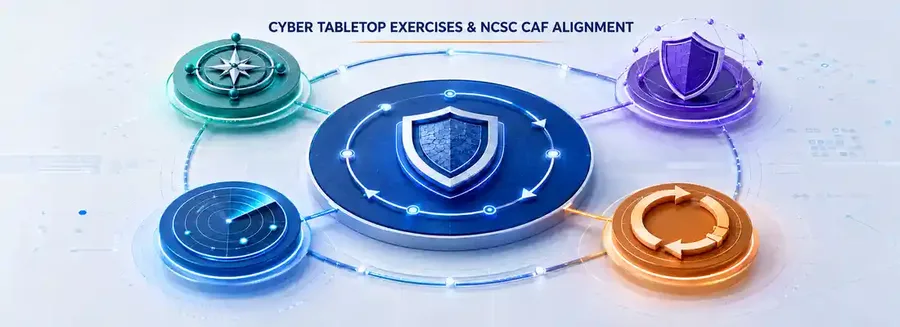
The NCSC Cyber Assessment Framework asks a demanding question that cannot be answered by policy documents alone: Can an organisation demonstrate that its essential functions are genuinely resilient to cyber disruption? A well-designed Cyber Crisis Tabletop Exercise (or cyber drill) helps answer that question by placing real people and established plans inside a credible incident scenario. It then…
Data-driven forecasting depends on more than having enough information. Organisations also need confidence that the data they collect is accurate, complete, appropriately protected and trustworthy.
Bitcoin is often considered one of the most secure financial networks on the planet. It has withstood attacks, market crashes, and regulatory pressure for over 15 years without compromising the core protocol. However, a future major Bitcoin security threat might not be someone who can hack the blockchain system. It can be from the software environment that surrounds it: wallets, exchanges, develo…
Phone scams claimed more than $25.4 billion from American adults in a single year , with 21% of the population — over 56 million people — falling victim at least once, according to Truecaller's US Spam & Scam Report. The calls sound real. The numbers look familiar. And the tactics are getting more convincing by the month. Knowing how to spot suspicious calls and verify unknown numbers before enga…
Wiz is a leading cloud security platform, but an enterprise may still look for alternatives when cloud workload pricing grows, AppSec remains distributed across separate products or engineering teams struggle to turn cloud findings into source changes. Reducing tool sprawl requires more than swapping one CNAPP for another: the replacement must cover the controls the organization can realistically…
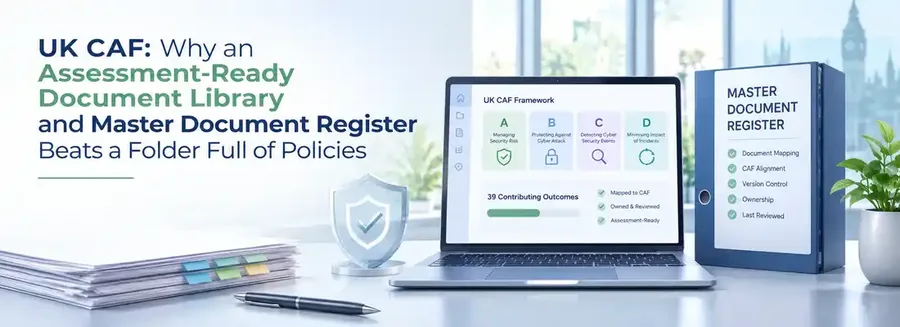
Passing a UK Cyber Assessment Framework (CAF) assessment isn't about having policies. It's about proving, for each of the 39 contributing outcomes across Objectives A-D, exactly which document satisfies it, who owns it, and when it was last reviewed. A pre-mapped CAF Document Library paired with a live UK CAF Master Document Register turns that proof from a weeks-long scramble into something you …
An NFL stadium used to be judged by its sightlines, seating capacity, turf, concessions, and atmosphere. Today, it is also judged by uptime. Modern stadiums are no longer just sports venues. They are connected technology environments that must operate like small smart cities for a few intense hours every week.
research.io
Sign up to keep scrolling
Create your feed subscriptions, save articles, keep scrolling.














 research.io