Electric vehicles are central to the clean-energy transition, but the way their batteries are sourced and manufactured still carries a sizable environmental footprint. Research from Annick Anctil, associate professor in the Department of Civil and Environmental Engineering at Michigan State, shows that decisions about reshoring and friendshoring the battery supply chain can meaningfully shift tha…
Promising university research does not become a product, process, or tool overnight. Between early discovery and real-world use lies a critical stretch of work that often determines whether an innovation moves forward or stalls. Translational funding supports that stage by helping researchers build prototypes, generate validation data, reduce technical risk, and show that a discovery … The post F…
People across Michigan are purchasing cannabis at high levels, but researchers are unable to study many of the products their neighbors are consuming. As cannabis use continues to grow, experts are calling for better research policies and changes to federal laws so they can better support public health information, decisions and research. Michigan State University … The post Ask the Expert: How f…
Roughly 6 million patients go to the emergency department each year with skin and soft tissue infections, yet their medical evaluation is based on centuries-old guidelines: the “four cardinal signs” of inflammation — redness, heat, swelling and pain. There is no diagnostic tool to help medical professionals determine which conditions require hospitalization for intravenous antibiotics … The post …
For decades, silicon has been the foundation of modern electronics because it is abundant, relatively affordable, and well suited to the precise control of electrical current that makes computer chips possible. But today’s most advanced systems, from AI hardware to high-power and quantum technologies, are pushing silicon harder than ever, demanding more speed, more power, … The post Great Lakes C…
A new study published in The Lancet Public Health found that Rx Kids, the nation’s first community-wide prenatal and infant cash prescription program, led to significant improvements in birth outcomes for infants born in Flint, Michigan. The program reduced low birthweight and preterm birth rates and prevented admissions to the neonatal intensive care unit, or NICU. The findings … The post Resear…
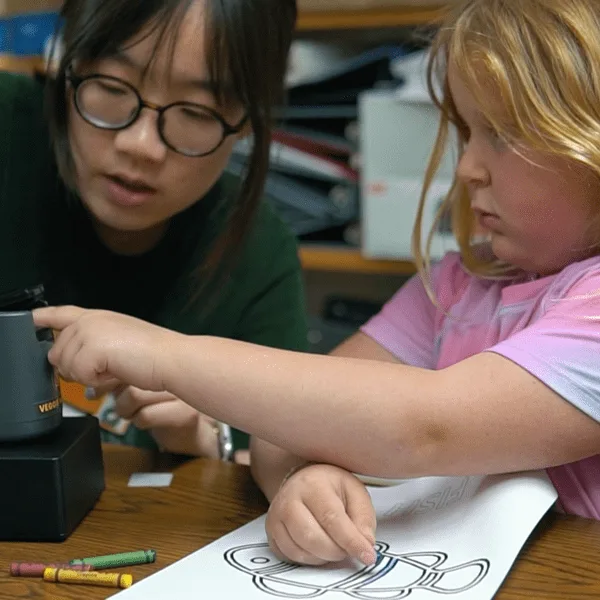
A new free elementary science curriculum now available nationwide could reshape how young students learn science — and a Michigan State University professor helped lead its development. Amelia Wenk Gotwals, a professor in MSU’s College of Education, played a central role in developing OpenSciEd, an open-access K–5 science curriculum aligned with the Next Generation Science Standards, … The post N…
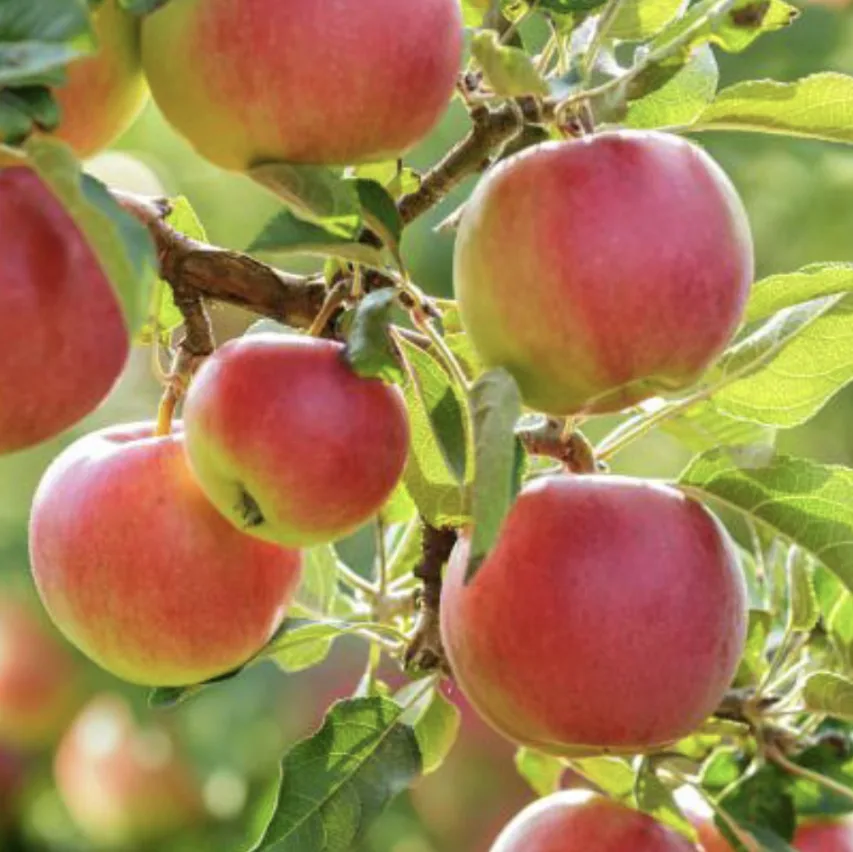
Keeping apples in pristine condition as you bring them home from the store requires a gentle touch. Imagine keeping a whole orchard of apples from getting bruised as they’re harvested. The AgriDynamic Robotics Apple Harvester, developed under the leadership of Zhaojian Li, Red Cedar Distinguished Associate Professor in the Department of Mechanical Engineering at Michigan State, gives growers the …
Benjamin Nketsiah is a junior at Michigan State University studying biochemistry and molecular biology with a minor in pharmacology and toxicology. His research focuses on disparities in triple-negative breast cancer, including work with patients in the United States and West Africa. He is the founder of She’s Strong, a digital health initiative aimed at improving … The post Student view: Why pre…
Researchers in the Michigan State University College of Nursing are improving health outcomes for people of all ages beyond traditional clinical settings, from supporting cancer caregivers through grief to helping children build lifelong healthy habits. Backed by federal research funding, Spartan nursing faculty are translating evidence-based research into real-world solutions that strengthen the…
Michigan State University leadership hosted more than 100 stakeholders and friends of the university on May 14 to celebrate the opening of the newly renovated MSU Plant Science Research Greenhouse Complex. Upgrades to the greenhouse facility, through a combination of renovations and additions, include state-of-the-art environmental controls and LED lighting configured to respond to varying exter…
Spartan Engineers are among the top researchers at Michigan State University for producing commercialization and innovative discoveries. Two new grants, totaling more than $1 million, are adding to MSU’s ability to build the economy and generate jobs for Michigan and the Midwest. Assuring that software updates are helpful, not harmful An associate professor in the Department … The post More than …
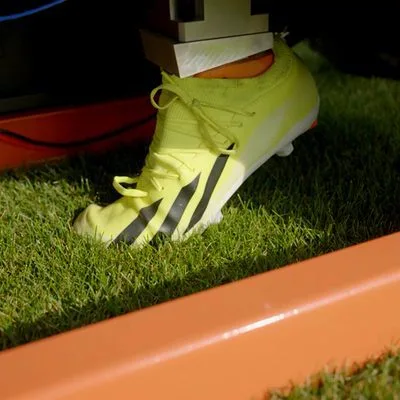
The FIFA World Cup 2026 tournament is less than a month away. One of the biggest challenges facing the turfgrass scientists at Michigan State University and the University of Tennessee is ensuring the consistency of the natural turfgrass across three continents, 16 cities and three distinct climate zones. While Vancouver, Canada; Kansas City, Missouri; and Mexico City, … The post Ask the expert: …
As dozens of Michigan State University faculty and administrators boarded a bus headed to Flint, Saginaw and Bay City for this spring’s Spartan Bus Tour, participants couldn’t have known that during their immersive two-day, 222-mile trip that they would be traveling through time. Led by President Kevin M. Guskiewicz, Ph.D., the group — representing a … The post Rooted in solidarity: Spartan Bus T…
In his office in MSU’s forestry department, EEB core faculty member David Carter shows off an image of a virtual forest on his laptop. It’s not just any forest. It’s a computerized replica, or “digital twin,” of a loblolly pine stand, created using lidar, the laser scanning technology that self-driving cars use to map their surroundings. Carter … The post How “digital twins” could help predict th…
Most high school biology students learn that plants use photosynthesis to turn light into energy. Associate Professor Berkley Walker said that’s only scratching the surface. Plants use that energy to capture carbon dioxide, or CO2, from the atmosphere and convert it into sugars. These sugars are the building blocks plants use to grow. From the … The post What if we could solve food sustainability…
Between 50,000 and 10,000 years ago, many of the world’s largest mammals disappeared. Picture creatures like saber-toothed cats with 7-inch fangs and elephant-sized sloths. Woolly mammoths whose curved tusks grew longer than 12 feet. Even a 3-ton wombat the size of a car. After roaming the Earth for millions of years, most large-bodied mammals — … The post Giants that vanished 10,000 years ago tr…
EAST LANSING, Mich. — In 2013, funding challenges were at the forefront for Michigan State University AgBioResearch, weakening the ability to support efforts at its strategically located research stations around the state. The organization was still enduring the residual effects of the Great Recession, and difficult decisions were imminent. As a result, AgBioResearch leaders assembled a committee…
Radiochemistry and Radiopharmacy Solutions, more commonly known as RadCore, has launched an exciting new era of scientific possibility at Michigan State University, with several clinical trials underway fueled by the new central facility – the MSU Radiopharmacy. RadCore’s mission is to manufacture and transform raw radioisotopes into high-quality imaging and therapeutic agents for research studie…
Recent epic leaps in genetics have created a biodiversity library. As the genetic make-up of animals, plants, fungi, bacteria, and viruses has been mapped, researchers racing to develop solutions to today’s global challenges run into a question: Why be limited to a mouse? Fish, bears, birds, snakes, water fleas, and carnivorous plants are among the … The post Moving past the mouse – genetic advan…
biologygenetics
research.io
Sign up to keep scrolling
Create your feed subscriptions, save articles, keep scrolling.

 research.io