A new study suggests the brain nonconsciously filters out emotionally negative spoken words when people are distracted. The findings indicate that the mind protects conscious awareness by ignoring disruptive emotional sounds.
Nature Communications, Published online: 21 June 2026; doi:10.1038/s41467-026-74462-6 Madar et al. show that neural representations of choice options predict how context shifts decisions. By leveraging the brain’s feature encoding, previously inaccessible to decision researchers, they improve predictions of well-known choice biases.
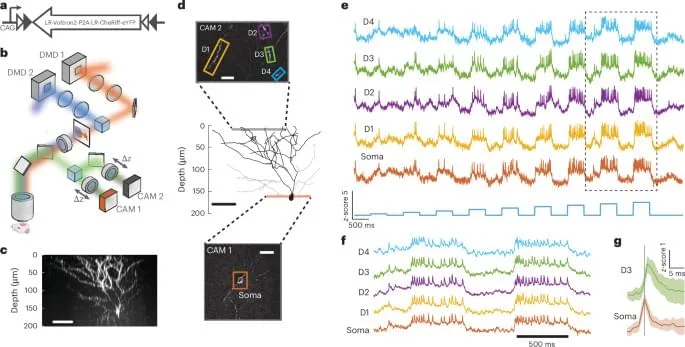
Simultaneous voltage imaging of soma and dendrites in layer 2/3 cortical neurons in live mice reveals rich dynamics of spike back-propagation, with amplitude shaped by spiking history, dendrite location and behavioral state.
Scientists discovered that the visual brain may secretly “feel” what it sees, turning sight into physical experience and helping make empathy possible. Working with researchers from institutions around the world, Nicholas Hedger (University of Reading) and Tomas Knapen (Netherlands Institute for Neuroscience & Vrije Universiteit Amsterdam) investigated one of neuroscience’s biggest questions: how…
The brain relies on a delicate balance of excitatory and inhibitory signals. A new study on mice reveals that excessive inhibitory connections in the prefrontal cortex directly drive the memory loss and cognitive decline associated with aging.
Nature Neuroscience, Published online: 19 June 2026; doi:10.1038/s41593-026-02332-x Cao et al. identify tryptamine as a sleep signal in mice. Wake-active monoaminergic neurons release tryptamine, which binds to GPR139 in POA neurons that suppress wake-promoting neurons. GPR139 agonists could be a new class of sleep medication.
Nature Communications, Published online: 19 June 2026; doi:10.1038/s41467-026-74576-x Little is known about how cerebellar population activity controls movements in ways distinct from individual neuron correlations. Here the authors show that Purkinje neuron population covariance uniquely influences motor coordination in mice.
Lower vitamin C levels were linked to reduced brain volume and weaker neural connectivity in older adults, suggesting a potential connection between nutrition and brain health. Could a common vitamin help preserve the brain as we age? A new study of more than 2,000 older adults in Japan found that people with lower levels of [...]
Older mice that received a faecal microbiome transplant from younger animals went on to have improved brain plasticity, which suggests their brains could overcome a neurological condition that is typically successfully treated only in childhood
High-altitude hypoxia imposes substantial challenges on cerebral oxygen delivery and brain functional regulation. Body mass index (BMI) may influence neurophysiological adaptation to such environments through metabolic and hemorheological pathways, yet its relationship with resting-state Electroencephalography (EEG) microstate dynamics remains unclear. This study examined whether blood viscosity …
Nature, Published online: 18 June 2026; doi:10.1038/d41586-026-01967-x Researchers have tracked the electrical activity of individual brain cells during conversation in real time. Plus, the history of GPS and a cross-species transplant that could reveal clues about the origin of animals.
Put on a virtual reality headset, watch a stranger’s cheek being stroked while a researcher strokes your own in perfect
New! Sign up for our email newsletter on Substack.
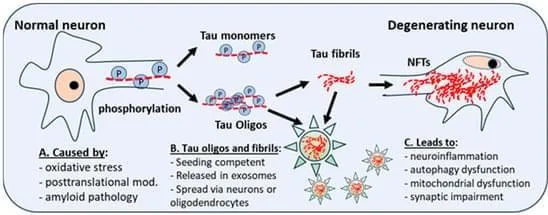
Background: Individuals with Down syndrome (DS) exhibit an almost complete penetrance of Alzheimer’s disease (AD) pathology but are underrepresented in clinical trials for AD. The Tau protein is associated with microtubule function in the neuron and is crucial for normal axonal transport. In several different neurodegenerative disorders, Tau misfolding leads to hyper-phosphorylation of Tau (p-Tau…
Traumatic experiences can cause memory problems, and estrogen may be a key factor that shapes the brain's resilience against such stressors, a mouse study finds.
A Yale-led study uncovered unexpected communication between retinal visual pathways that were thought to operate separately. Researchers at Yale School of Medicine (YSM) have discovered unexpected insights into how the eye handles visual information. When we view a scene, the visual system quickly separates different features, including color, contrast, and motion, and processes them independentl…
biologycognitive-neuroscienceneuroscience
Frontiers in Neuroscience | New and Recent Articles
Neurological disorders such as Alzheimer's disease, Parkinson's disease, and autism disrupt the brain's structural and functional organization, particularly in specific regions, and ultimately lead to cognitive impairments. In Alzheimer's disease-related dementia, neuronal degeneration impairs structural connectivity between brain regions, which in turn leads to functional breakdowns. This phenom…
The glymphatic system is a recently discovered brain waste clearance system that is mostly active during sleep and disengaged during wakefulness. Impaired glymphatic function leads to the deposition of metabolic waste products in the brain potentially causing inflammation leading to various symptoms in ME/CFS. While the glymphatic function has been assessed in other neurodegenerative diseases usi…












 research.io