evolution-and-paleontology-studies

Latest Science News -- ScienceDaily

Tyrannosaurus rex may have been a much slower grower than scientists realized. A new study of 17 tyrannosaur fossils found that the giant predator likely took about 40 years to reach its full size of roughly eight tons, extending previous estimates by 15 years.

biologyevolutionpaleontology
The Guardian

In 1996, a blizzard in Everest’s notorious ‘death zone’ killed ‘Green Boots’. Now, a fresh expedition plans to retrieve his body, and establish his identity Thirty years after he perished in a small limestone cave near the top of Mount Everest, the body of the climber known only as “Green Boots” may finally be heading home. If successful, the mission into Everest’s notorious “death zone” will als…

earth-sciencegeologypaleontology
A
All-geo RSS Feed

José Fernando BonaparteOne of the hardest-working, most intense and multi-faceted palaeontologists to ever grace our planet was José Fernando Bonaparte (14 June 1928 - 18 February 2020).We often imagine the great scientific pioneers as figures lo...

ancient-historybiologyhistorypaleontology
The Daily Galaxy –Great Discoveries Channel
Knowridge Science Report

More than 100 million years ago, a flying reptile called a pterosaur flew over the oceans hunting squid and fish. Much more recently, one of its wing bones was discovered in Brazil, transformed over the eons into a fossil made of a complex assemblage of different chemicals and minerals. And in new research published in […] The post Microbes destroyed an ancient pterosaur’s wingbone, then preserve…

biologymicrobiologypaleontology
Science News | Latest Updates on Scientific Discoveries | The Hindu
A
All-geo RSS Feed

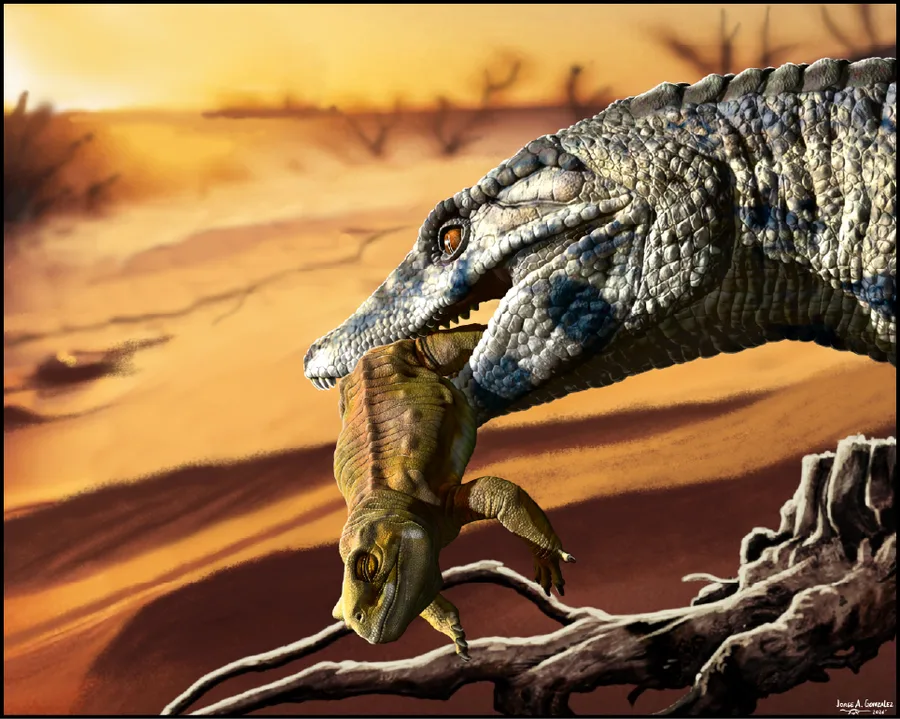
Almost 100 million years ago, the Kokorkom Desert stretched across the region now occupied by the provinces of Río Negro and Neuquén in Argentina; it was a vast system of mobile dunes in a hot and arid climate, shaped by the wind. This fossil-rich zone, which is part of La Buitrera, discovered and studied over the last 25 years by Dr. Sebastián Apesteguía and his team, has been the site of numero…

biologyevolutionpaleontology
O
Organic Geochemistry
G
Geophysical Research Letters

Abstract Despite decades of research, hundreds of peer‐reviewed papers, and considerable relevance to Earth's future, the rapid global warming and tremendous CO 2 input at the start of the Paleocene‐Eocene Thermal Maximum (PETM) remain highly debated. Cael and Foster (2026, https://doi.org/10.1029/2025gl120456 ) present a statistical treatment of Cenozoic benthic foraminifera (BF) stable isotope …

Paleontology and Stratigraphy of Fossils

Nature Communications

Nature Communications, Published online: 20 June 2026; doi:10.1038/s41467-026-74093-x This study presents a tropical temperature record across the last deglaciation using stalagmites from central-eastern South America. Tropical temperature broadly tracks atmospheric CO₂ and ocean circulation.

climate-scienceearth-sciencepaleontology
Sci.News: Breaking Science News
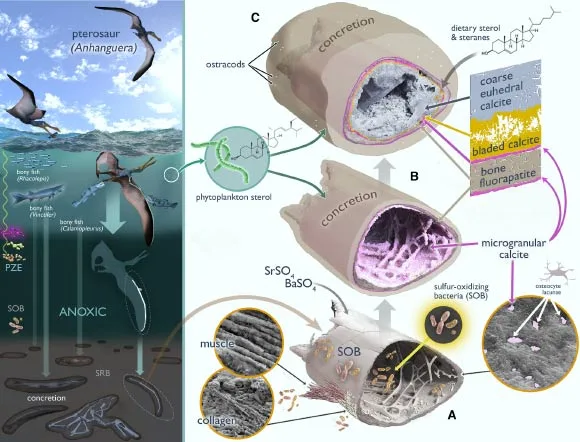
A 113-million-year-old pterosaur fossil from northeastern Brazil has yielded rare evidence of soft tissues, organic molecules and chemical traces of a diet heavy in fish and cephalopods such as squid or nautilus relatives. The post 113-Million-Year-Old Pterosaur Fossil Reveals What Flying Reptiles Ate appeared first on Sci.News: Breaking Science News .

biologypaleontology
Sci.News: Breaking Science News
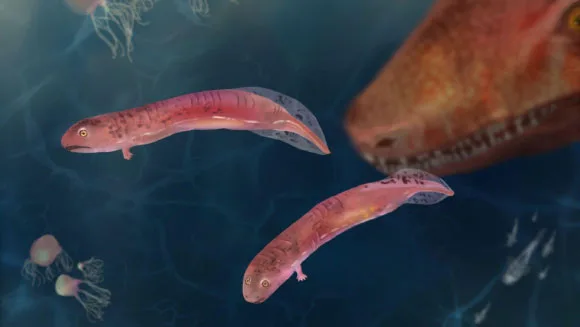
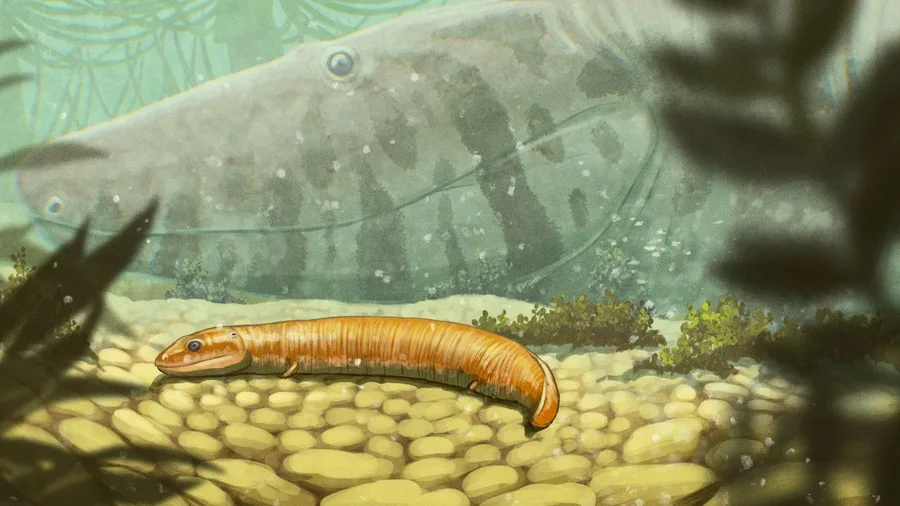
Paleontologists from the Field Museum of Natural History have described the fossilized remains of baby embolomeres, crocodile-like predators that prowled ancient rivers and swamps between 350 and 280 million years ago. The post Earth’s First Land Animals May Never Have Been Amphibian-Like After All appeared first on Sci.News: Breaking Science News .

biologypaleontology
The Daily Galaxy –Great Discoveries Channel
Science News | Latest Updates on Scientific Discoveries | The Hindu

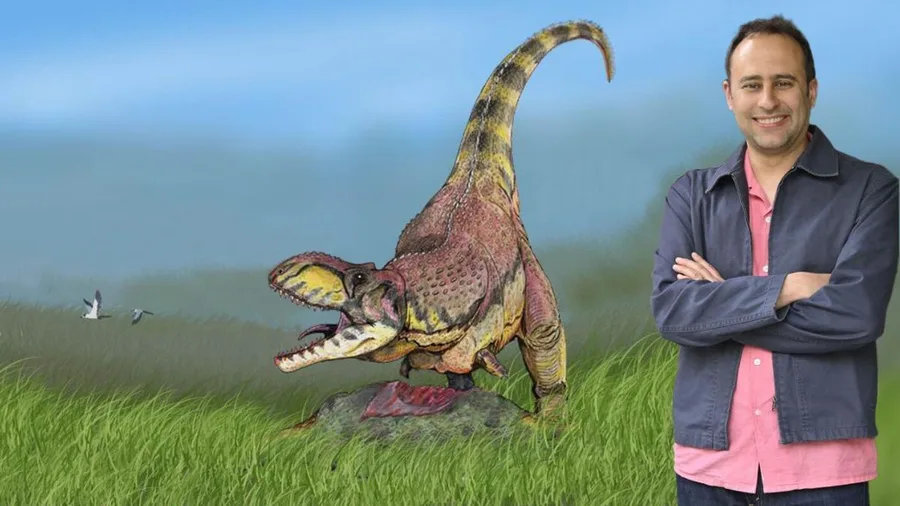
Palaeontologist Steve Brusatte on why India is the field’s next great frontier, how dinosaurs came back as the birds outside your window, and what the asteroid did The palaeontologist and Jurassic World consultant says the subcontinent holds some of Earth’s most important dinosaur secrets — if enough young scientists go looking

biologyearth-scienceevolutionpaleontology
The Daily Galaxy –Great Discoveries Channel
Nature Communications

Nature Communications, Published online: 19 June 2026; doi:10.1038/s41467-026-74636-2 Increased continental erosion during the end-Permian mass extinction buffered carbon emissions, delaying global warming by ~50 kyr and promoting marine anoxia, revealing a key link between ecosystem collapse and climate response.

climate-scienceearth-scienceenvironmentpaleontology
Scientific American
Latest from Live Science
A
All-geo RSS Feed

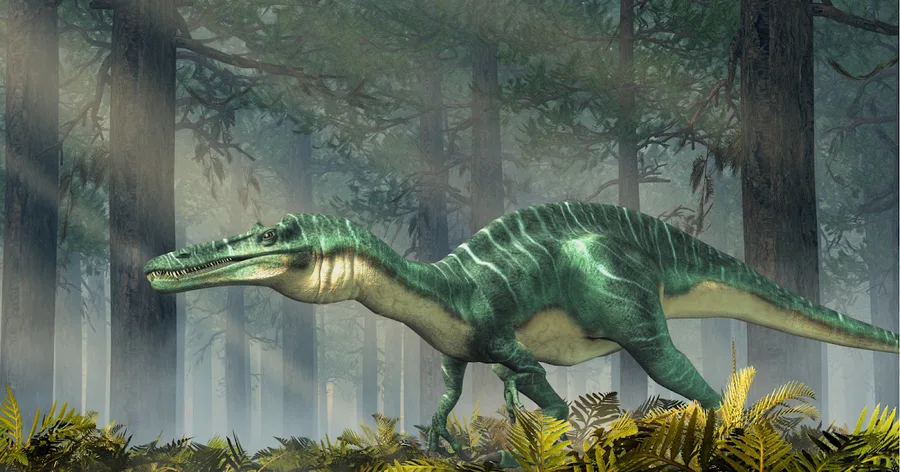
Here is a fellow to strike terror into your heart. Meet Suchomimus tenerensis, a large, long-snouted spinosaurid theropod who prowled what is now Niger during the Early Cretaceous, roughly 125 million years ago. If you imagine a T. rex that...

biologypaleontology
research.ioresearch.io

Sign up to keep scrolling

Create your feed subscriptions, save articles, keep scrolling.

Already have an account?