inorganic-chemistry

Frontiers in Chemistry | New and Recent Articles

Spin crossover (SCO) is a well-established phenomenon by which transition-metal complexes can reversibly switch between low- and high-spin states, a phenomenon widely studied in materials chemistry. Recently, transition metal complexes that exhibit SCO have attracted increasing attention as catalysts in chemical reactions. Combining SCO with catalysis presents a promising strategy for creating sw…

catalysischemistryinorganic-chemistrymaterialsnanomaterials
Nature Communications

Nature Communications, Published online: 19 June 2026; doi:10.1038/s41467-026-74699-1 Low-valent main group radicals are difficult to isolate because they are highly unstable. Here, the authors report a stable germanium radical anion and reveal its structure, bonding and distinctive reactivity.

chemistryinorganic-chemistry
News and press releases
Frontiers in Chemistry | Electrochemistry section | New and Recent Articles

Lithium-metal batteries are widely regarded as one of the most promising routes toward cell-level energy densities beyond the limit of conventional graphite-based lithium-ion batteries. However, the practical energy delivered by a lithium-metal cell is not determined only by the theoretical capacity of the cathode or the low potential of lithium metal. In many cases, the accessible energy is grad…

battery-materialschemistryinorganic-chemistrymaterialsphysical-chemistry
Inorganic Chemistry and Catalysis
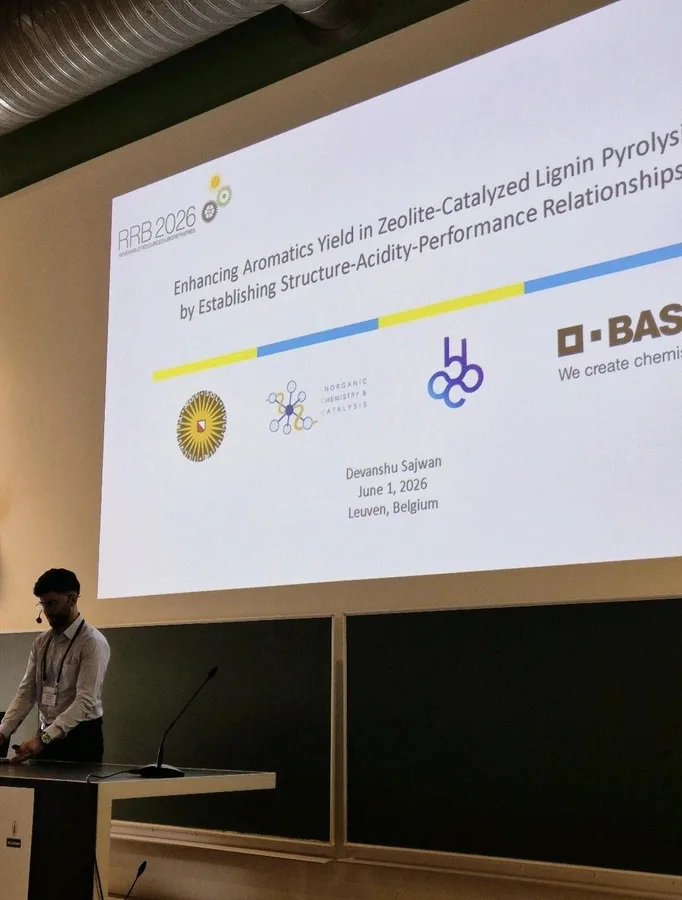
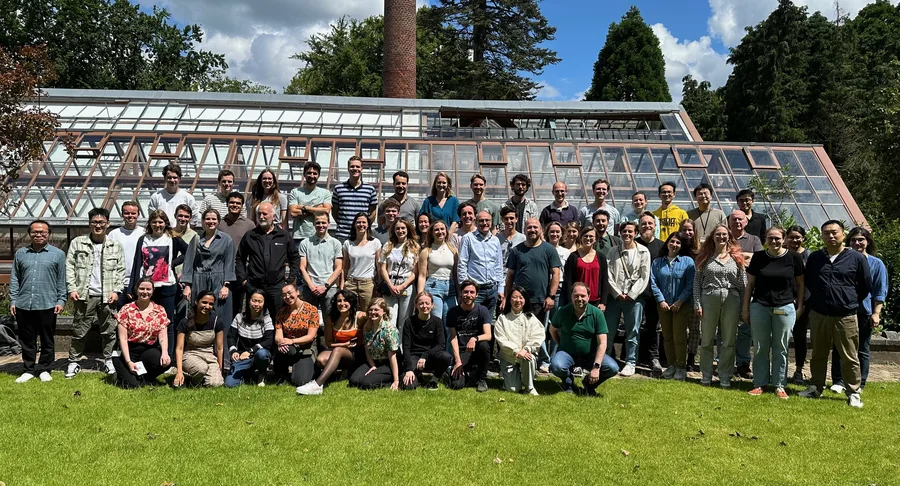
At the International Conference on Renewable Resources & Biorefineries in Leuven, Belgium, Devanshu presented his recent work, and won the best PhD talk prize! He showed his progress on enhancing […] The post Devanshu Sajwan wins Best PhD Talk Prize in Leuven appeared first on Inorganic Chemistry and Catalysis .

catalysischemistryinorganic-chemistry
Nature Communications

Nature Communications, Published online: 13 June 2026; doi:10.1038/s41467-026-74224-4 The design and synthesis of molecules featuring both boron and silicon moieties hold significant promise for delivering unique reactivity patterns and material properties. Herein, the authors report a titaniumcatalyzed selective hydroboration of the C(sp3)–Si bonds in silacyclobutanes for the synthesis of boryl-…

chemistryinorganic-chemistrymaterialsnanomaterialssurface-science
Nature Communications

Nature Communications, Published online: 11 June 2026; doi:10.1038/s41467-026-74386-1 Light-driven oxygen redox offers a new strategy to boost oxygen evolution activity by enabling direct O–O bond formation. Here, the authors report that sulfur-treated cobalt oxyhydroxide generates non-bonding oxygen states under light, enhancing oxygen evolution performance.

catalysischemistryinorganic-chemistrymaterialsnanomaterials

Frontiers in Chemistry | New and Recent Articles

Superalkalis are defined as the species having lower ionisation energies (IEs) than alkali atoms or the cations having lower electron affinities than alkali cations. Typical examples include FLi2+, OLi3+, NLi4+, etc., which can be represented by the general formula of XMk+1, where X is a central electronegative atom of valency k, and M represents alkali metal ligands. Enormous progress has been m…

chemistryinorganic-chemistrymaterialsnanomaterialssuperconductors
SciTechDaily
Okinawa Institute of Science and Technology (OIST) Graduate University
16d ago

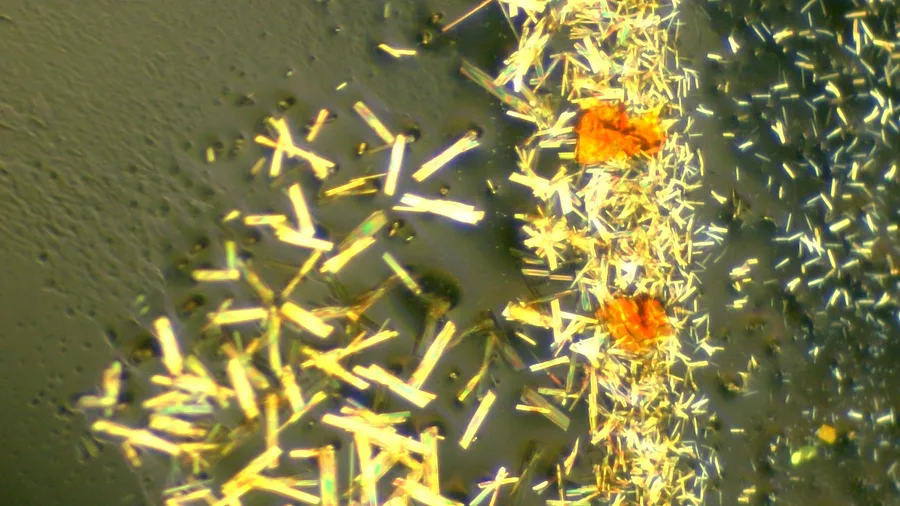
Scientists caught a famous “sandwich” molecule in a rare hidden state, uncovering a long-missing step in its formation. For more than 70 years, metallocenes have been among the most important molecules in organometallic chemistry. These compounds feature a metal atom positioned between two carbon-based rings, creating a structure often described as a molecular sandwich. They [...]

chemistryinorganic-chemistry
Biological sciences : Scientific Reports subject feeds
Nature Communications

Nature Communications, Published online: 29 May 2026; doi:10.1038/s41467-026-73820-8 Embedding heavy main-group elements at the core of rigid π-conjugated frameworks has long been recognized as an ideal strategy for enhanced stability yet synthetic realization has remained elusive. Here the authors use a directed, regioselective trilithiation strategy for controlled incorporation of heavy element…

chemistryinorganic-chemistrymaterialsnanomaterials
Knowridge Science Report

Scientists have observed the earliest stages of a powerful chemical reaction between hydrogen gas and uranium metal for the first time, a breakthrough that could improve the safety of nuclear fuels, hydrogen storage systems, and future fusion energy technologies. The study was carried out by researchers at Lawrence Livermore National Laboratory and published in npj […] The post Scientists Finally…

chemistryinorganic-chemistryphysical-chemistry

MIT Department of Chemistry
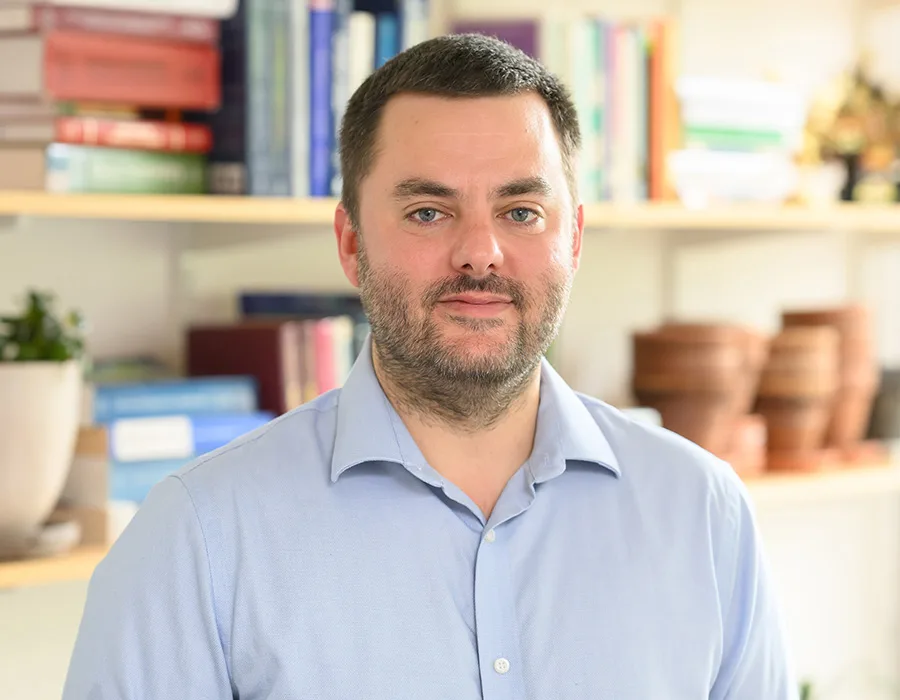
Professor Daniel L.M. Suess, currently the Arthur Amos Noyes Associate Professor of Chemistry and Associate Department Head for Education, has been promoted to Full Professor, effective July 1, 2026. Suess earned Bachelors degrees in chemistry and English from Williams College before obtaining his PhD in inorganic chemistry from Caltech. Following postdoctoral research in the laboratory […]

chemistryinorganic-chemistry
Nature Chemistry

Nature Chemistry, Published online: 28 May 2026; doi:10.1038/s41557-026-02153-2 Triplet tetrylenes are typically too short-lived for detailed investigation. Now a triplet germylene with a 14-h half-life at 25 °C has been generated through photoexcitation of a germylene compound, enabling spectroscopic characterization and probing of its reactivity.

chemistryinorganic-chemistryphysical-chemistry

Nature Communications

Nature Communications, Published online: 28 May 2026; doi:10.1038/s41467-026-73357-w The reversible σ-dimerization of radicals is a fundamental process in bond formation and cleavage, yet is challenging to achieve with an isolable heavy carbyne analog. Herein, the authors report the synthesis and characterization of an isolable germylyne radical that demonstrates ambient stability while undergoin…

catalysischemistryinorganic-chemistryphysical-chemistry
Manusights Blog
Nature Communications

Nature Communications, Published online: 27 May 2026; doi:10.1038/s41467-026-72767-0 Through a one-dimensional inorganic ionic polymerization strategy, researchers have successfully obtained elastic minerals that combine high hardness with elastomer-like flexibility, which hold promise for high-strength intelligent strain sensors.

chemistryinorganic-chemistrymaterialsnanomaterialspolymers
New Scientist - Home

research.ioresearch.io

Sign up to keep scrolling

Create your feed subscriptions, save articles, keep scrolling.

Already have an account?