Agglomerations
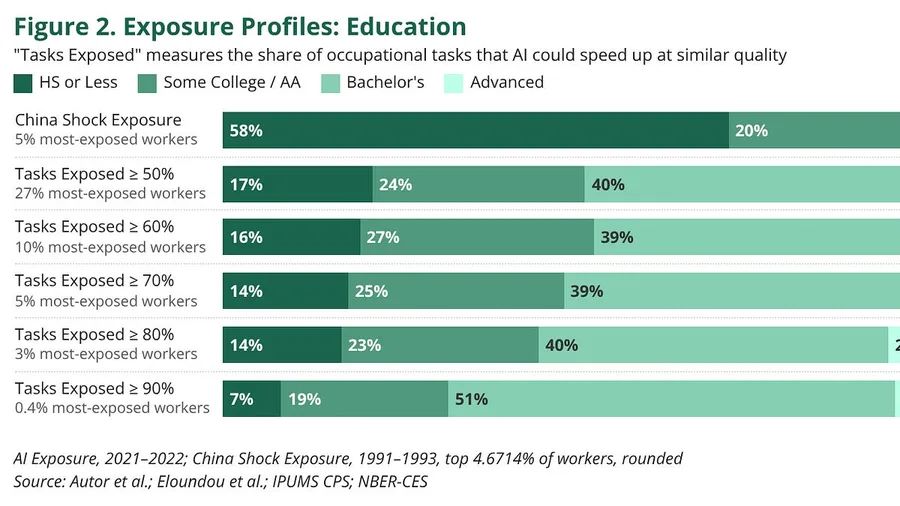
AI versus the China Shock Lessons, right and wrong To hear an extended conversation about the themes in this post, please subscribe and listen to our podcast, The New Bazaar. The China Shock refers to the widespread job loss that certain workers and communities suffered because of the rapid rise of trade with China in the 2000s. The AI Shock refers to the same thing happening to white collar work…
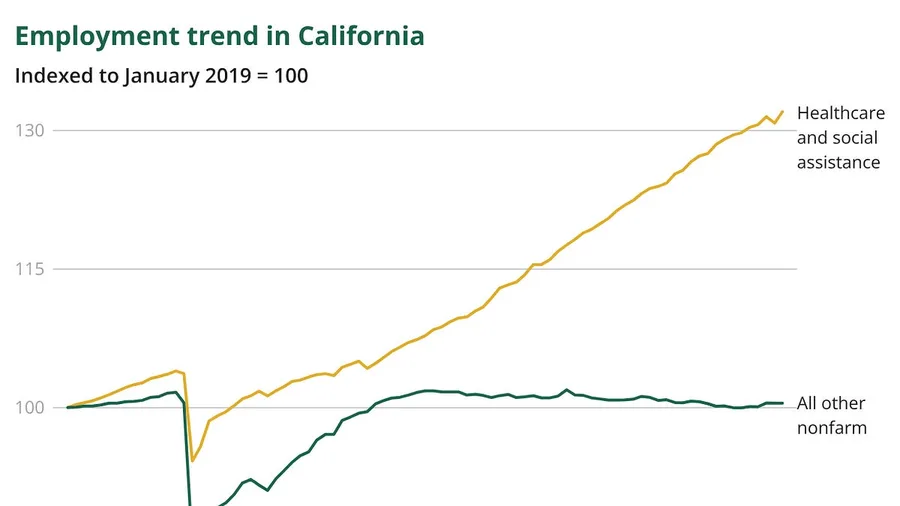
Monthly Multiplier: EIG's May Highlights One Big Thing While overall national jobs numbers continue to inch upward, more granular data at the state and sectoral levels reveal a startling trend across the country: healthcare jobs in many states are booming, but most other sectors are stagnant. “And no state appears as reliant on the healthcare and social assistance sector to support its labor mark…
The Babysitter Clause and the Problem of Partial Noncompete Bans Why half measures fall short If you work in Washington, DC, and earn a middle-class salary, your employer cannot legally stop you from taking another job or starting a business in your field. Unless, that is, you’re a babysitter. Washington, DC bans noncompete agreements for workers earning below roughly $160,000 a year. But the ban…
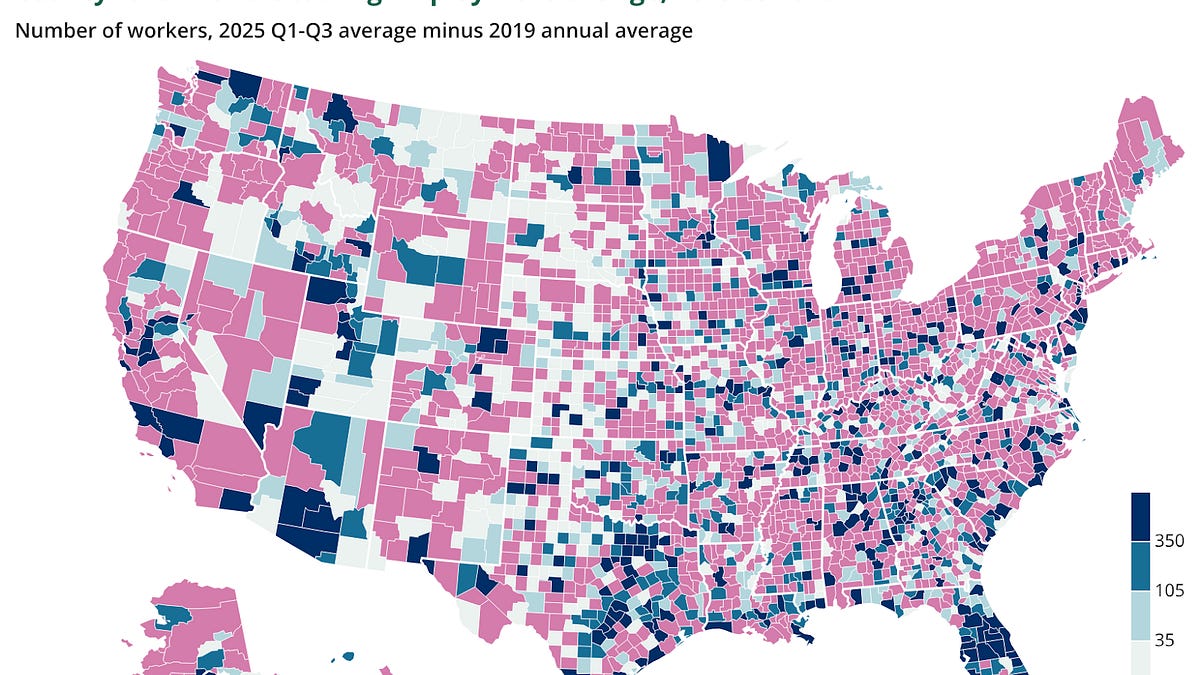
Forget AI. The California job market is powered by healthcare But is the trend benign or malignant? Another monthly jobs report, another reminder that healthcare has been the driving behind U.S. job growth in recent years. Given that healthcare is used by everyone, everywhere, we initially assumed that all those new healthcare jobs would be evenly distributed across the map, varying only by rates…
A recent Lumina Foundation-Gallup poll found that 42 percent of bachelor’s degree students have reconsidered their degree choice because of Artificial Intelligence.
Monthly Multiplier: EIG's April Highlights One Big Thing On the final day of April, President Trump signed an executive order to address one of the biggest wealth-building gaps in America’s economy: that too many workers, including 42 percent of full-time private-sector workers, lack access to retirement plans. With the finalization of a policy hinted at in February’s State of the Union address, …
The Trump administration’s new policy is a first step in the right direction.
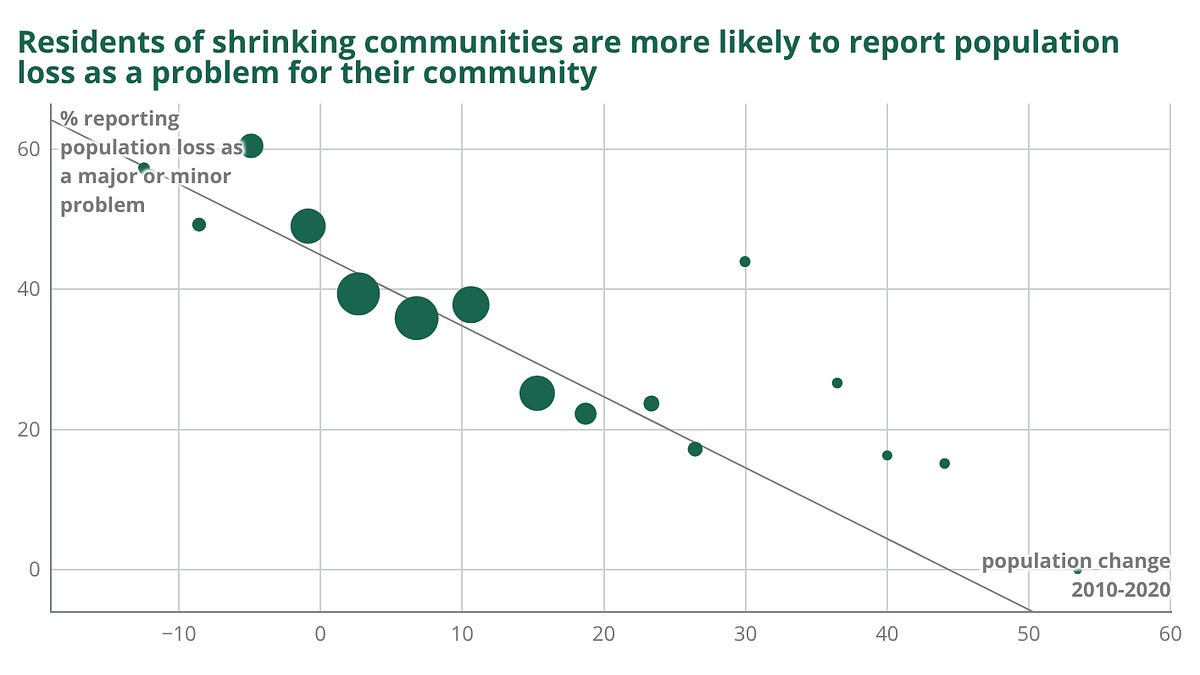
The Problem of Population Loss Do people perceive population loss as a problem for their local community? Population loss has severe consequences for local communities. Declining populations often coincide with shrinking economic opportunities, aging workforces, and the erosion of vital local services such as hospitals, public schools, and infrastructure built for larger populations. How to help …
Attracting and retaining talent will be critical in deciding whether the United States can stay ahead of China in the race to build out Artificial Intelligence technologies — an obvious lesson that now appears lost on American policymakers, but not on China.
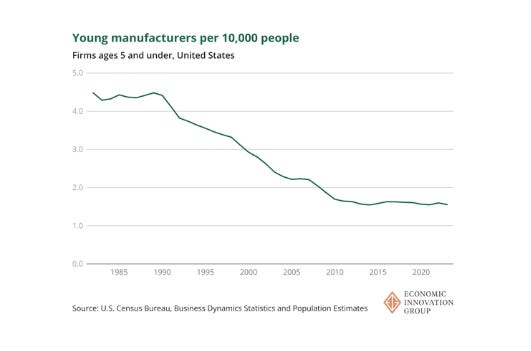
Most recent manufacturing job gains are fading, but growth persists in dynamic places By the third quarter of 2022, U.S. manufacturing employment had not only surpassed its 2019 peak but also reached its highest level since the Global Financial Crisis. Yet post-pandemic gains in manufacturing employment have been uneven across states and metropolitan areas. Data through 2025 reveals that manufact…
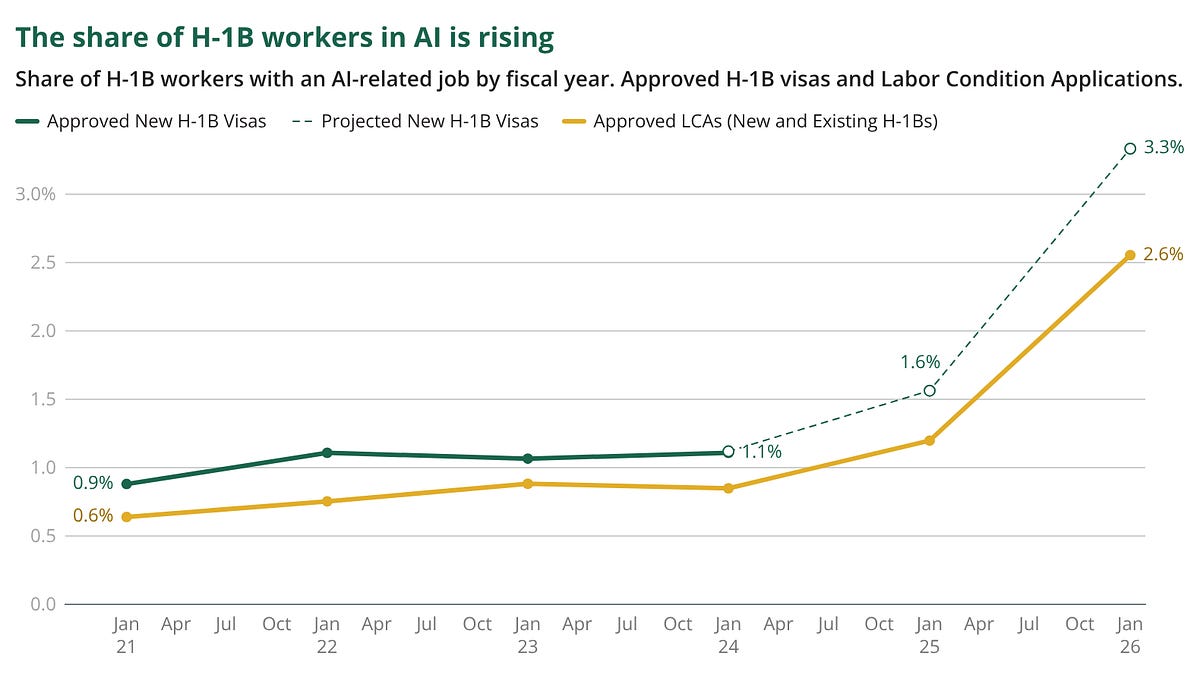
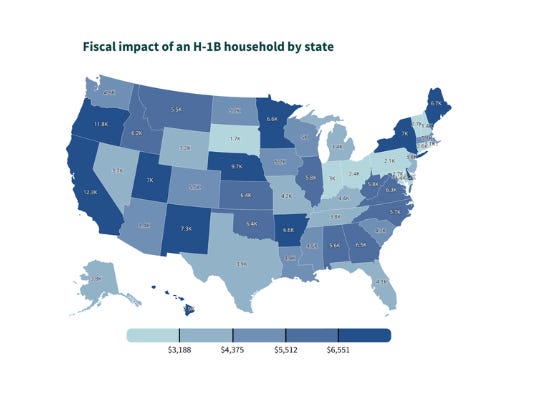
Monthly Multiplier: EIG's March Highlights One Big Thing H-1B immigration has long been proven to boost innovation, entrepreneurship, and America’s macroeconomic outcomes. New research from EIG’s Adam Ozimek and Sarah Eckhardt shows that it also provides a shot in the arm for America’s fiscal woes. In a report we published on March 17, Adam and Sarah find that the average H-1B household contribut…
Does a legacy in manufacturing preclude a future in it? We're trying to implement industrial policy without the industrial base, and that's a problem. What can geography reveal about the frontier of manufacturing in America? The first post in this series documented U.S. manufacturing’s stasis ever since the Great Recession of 2008 — low rates of job creation and job losses, low rates of job turno…
H-1B Immigration Plugs Fiscal Gaps Everyone hates the fiscal deficit, but no one wants to do anything about it. The problem, of course, is that addressing the deficit proactively jeopardizes politicians’ favorability with voters. What if, however, there were a politically popular way to shore up fiscal balances at the federal, state, and local levels without taxing citizens more or cutting their …
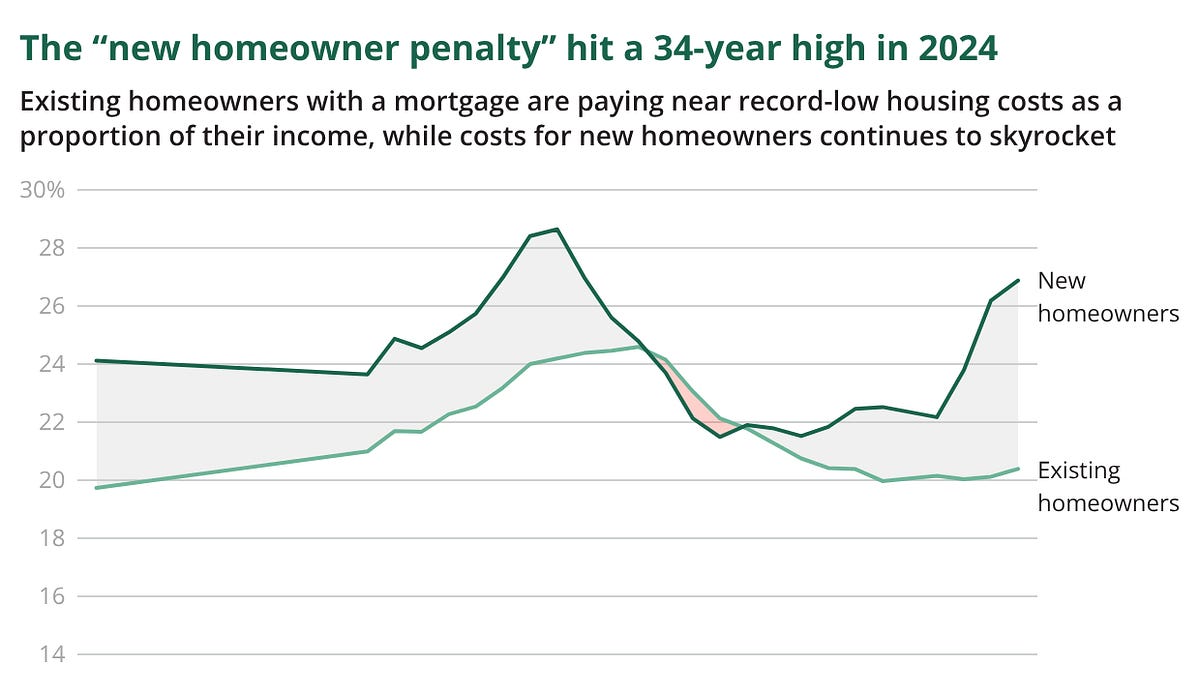
How the Housing Market Split in Two New and existing homeowners live in different worlds In a recent Economist-YouGov poll, a whopping 78 percent of respondents said that it’s difficult to find affordable homes in their community. But while Americans almost universally understand that housing affordability is a problem, it isn’t a problem that they universally experience. The national housing mar…
In our latest release of the Distressed Communities Index, we highlighted the very strong relationship between local economic distress and the gap in educational outcomes between men and women.
AI and Young-adult Jobs: The Real Mystery Start by using the right measures The unemployment rate for recent college graduates has moved up substantially over the past two years — more than either overall unemployment or unemployment for young workers without degrees. It is therefore easy to understand why so many people have begun wondering if AI is to blame. Are they right? Has AI started autom…
Monthly Multiplier: EIG's February Highlights One Big Thing A dynamic economy needs a dynamic housing market. America doesn’t have one. This month EIG launched a new housing policy vertical to help rectify that. Housing costs are pricing families out of opportunity-rich regions, distorting labor markets, and weakening national growth. EIG argues that affordability requires large-scale supply expa…
Yes, high-skilled workers should have to compete Should anyone have to compete anymore? Populists seem not to think so. Tariffs protect American companies from competing with imports. The Jones Act protects American ships and shipbuilders from competing with foreign made or owned vessels. Some populists even seem to believe that states and regions within the United States should be protected from…
AI and the Real Bottlenecks to Growth Ideas will continue to face barriers to implementation “A country of geniuses.” That is Anthropic CEO Dario Amodei’s vision of the world after the arrival of truly powerful artificial intelligence. He foresees millions of independent, highly intelligent agents capable of being sent off to do projects, like an army of smart employees. Sounds like science ficti…
research.ioSign up to keep scrolling
Create your feed subscriptions, save articles, keep scrolling.