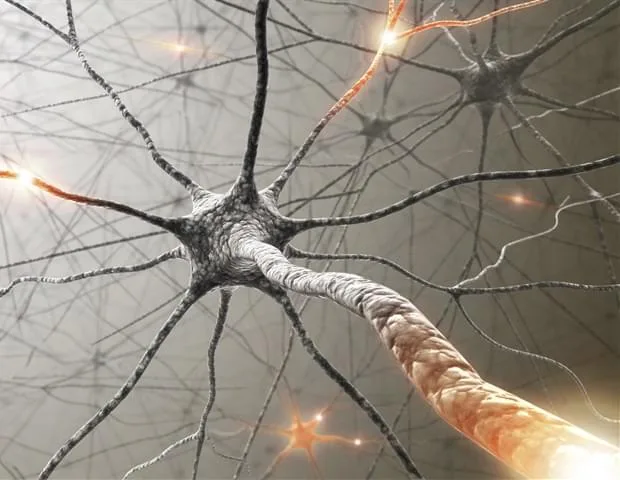
Nature Communications, Published online: 22 June 2026; doi:10.1038/s41467-026-74553-4 Aggarwal et al. develop OCaMP, an orange fluorescent calcium indicator optimised for imaging neural activity at wavelengths above 1000 nm, enabling improved deep tissue imaging and expanded compatibility with existing sensors.
neuroimagingneuropharmacologyneuroscience
H
HAL (Le Centre pour la Communication Scientifique Directe)
A new study suggests the brain nonconsciously filters out emotionally negative spoken words when people are distracted. The findings indicate that the mind protects conscious awareness by ignoring disruptive emotional sounds.
New research reveals that while infants' brains process musical structure as early as three months old, their bodies take much longer to catch up. Structured physical movement to music doesn't emerge until closer to their first birthday.
Nature Communications, Published online: 21 June 2026; doi:10.1038/s41467-026-74462-6 Madar et al. show that neural representations of choice options predict how context shifts decisions. By leveraging the brain’s feature encoding, previously inaccessible to decision researchers, they improve predictions of well-known choice biases.
Adolescence is a vulnerable neurodevelopmental period between childhood and adulthood. Binge drinking is common during this period of development. New research using rodents has found that adolescent binge drinking can repress neurons in the brain so they operate less normally because the genes required for their neurotransmitter function have been turned off. These results and others will be sha…
Alcohol use disorder (AUD) is a chronic, relapsing disorder involving compulsive alcohol consumption despite negative consequences. Post-traumatic stress disorder (PTSD) is a mental-health condition developed due to trauma. A new study has used rats genetically selected to prefer alcohol and possess elevated anxiety to demonstrate that the molecular basis of AUD/PTSD lies in a specific region of …
While extensive research has documented strong associations among alcohol use, sexual assault victimization, and sexual aggression, much less is known about how these risk factors transfer to online situations. A new study has found that college students who drank more were more likely to perpetrate cyber sexual aggression, and among those who did perpetrate, they did so more frequently. These re…
A new study shows that the amount of Bifidobacterium in the gut during a child’s very first week of life is linked to the risk of attention-deficit/hyperactivity disorder (ADHD) at the age of 10 years. The finding suggests that signalling molecules from gut bacteria may influence brain development during a particularly sensitive window immediately after birth, says a researcher.
Researchers at the Medical University of Vienna, in collaboration with ETH Zurich, the Technical University of Munich and Medical Faculty Belgrade, have developed a wearable neurorobotic system that combines electrical neurostimulation with hand exoskeletons. In a clinical trial involving 14 patients with hand impairments caused by neurological injury, the technology supported finger mobility, ta…
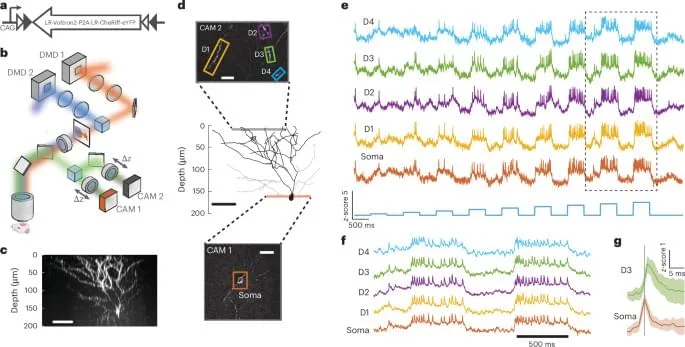
Simultaneous voltage imaging of soma and dendrites in layer 2/3 cortical neurons in live mice reveals rich dynamics of spike back-propagation, with amplitude shaped by spiking history, dendrite location and behavioral state.
If we can model a fly brain, and run that fly in a sim, we might do it with us. We live in the age of the brain, and relational machines, when we can do so much more than ever.
Many of my essays are quite old. They were, in effect, written by a person who no longer exists in that my views, beliefs, and overall philosophy have grown and evolved over the years. Consequently, if I were to write on the same topics again, the resulting essays might differ significantly from their current versions. […]
Further Reading. Thumbnail image credit: Adobe Stock. Brains and algorithms partially converge in natural language processing. https://www.nature.com/articles/s4200… Strong Prediction: Language Model Surprisal Explains Multiple N400 Effects. https://pmc.ncbi.nlm.nih.gov/articles… Foundation model of neural activity predicts response to new stimulus types. https://www.nature.com/articles/s4158… De…
Nature Communications, Published online: 20 June 2026; doi:10.1038/s41467-026-73714-9 Brain networks are heritable, but their genetics remain incompletely understood. Here, authors show that the genetics of cortical similarity networks relate to cortical evolution, causally predict functional connectivity, and link to psychiatric risk.
Scientists discovered that the visual brain may secretly “feel” what it sees, turning sight into physical experience and helping make empathy possible. Working with researchers from institutions around the world, Nicholas Hedger (University of Reading) and Tomas Knapen (Netherlands Institute for Neuroscience & Vrije Universiteit Amsterdam) investigated one of neuroscience’s biggest questions: how…
cognitive-neuroscienceemotionneuroscience
research.io
Sign up to keep scrolling
Create your feed subscriptions, save articles, keep scrolling.










 research.io