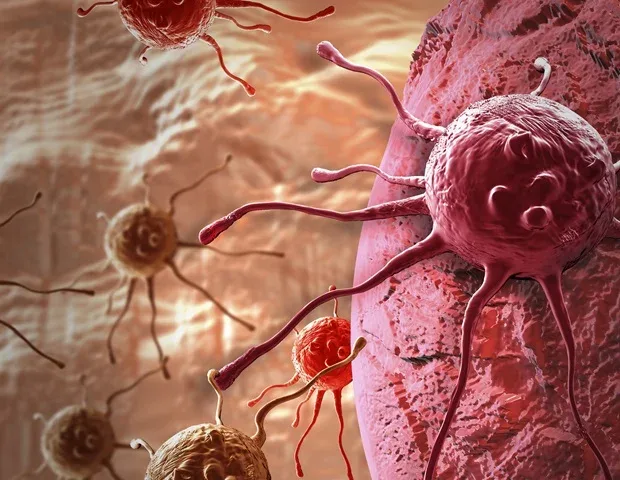
Nature Communications, Published online: 21 June 2026; doi:10.1038/s41467-026-74702-9 A genome wide screen reveals down-regulating the Wnt, Hippo, Tpr53, PIDDosome, ciliary biogenesis, or autophagy pathways overcomes inhibitory effects of PLK4-mediated centrosome amplification on cell proliferation. Depletion of tumor suppressor, ARHGAP15, activates autophagy to reduce centrosomes. ARHGAP15 is op…
Nature Communications, Published online: 21 June 2026; doi:10.1038/s41467-026-74103-y Here authors use human iPSC-derived cerebral organoids to model the pathogenic m.3243 A > G mitochondrial mutation and reveal heteroplasmy-dependent, cell-type-specific vulnerability in human cortex neurons.
As newborn neurons make their way through the developing brain, they must squeeze through incredibly tight spaces to reach their final destinations. Researchers discovered that this physical journey routinely causes some of the most severe forms of DNA damage—double-strand breaks—yet the young brain has evolved an impressive ability to repair the damage almost immediately.
Nature Communications, Published online: 20 June 2026; doi:10.1038/s41467-026-74695-5 The study reveals how the 3D genome changes during germ cell formation across vertebrates that split over 350 million years ago, uncovering shared and species‑specific patterns and showing that genome size and chromosome shape drive DNA folding.
Nature Communications, Published online: 20 June 2026; doi:10.1038/s41467-026-74726-1 RNA polymerase II drives gene transcription through dynamic chromatin interactions. Here, the authors use single-molecule imaging to show that most binding events are short-lived, with rare productive events, and identify TAF1 as a regulator promoting pause release and elongation.
Most people never think much about how their hair grows. We notice when it gets longer and needs a haircut, but the process happening inside each hair follicle is hidden beneath the skin. For many years, biology textbooks have taught a simple explanation. According to this long-accepted idea, new cells in the base of the […] The post Scientists Discover Hair Grows by Being Pulled, Not Pushed appe…
In a paper published in Cell, a USC Stem Cell-led team reports a new way of generating a renewable and expandable supply of the progenitor cells that give rise to macrophages.
An epigenetic "mechanostat" has been discovered that protects tooth-forming progenitor cells from mechanical stress and supports lifelong tissue renewal.
Nature, Published online: 19 June 2026; doi:10.1038/s41586-026-10812-0 Author Correction: Autophagic cell death restricts chromosomal instability during replicative crisis
Nature Cell Biology, Published online: 19 June 2026; doi:10.1038/s41556-026-01970-4 Nguyen et al. show that accumulation of dimethylarginine in lysosomes in disease models is associated with lipotoxicity and lipid droplet abundance.
Nature Communications, Published online: 19 June 2026; doi:10.1038/s41467-026-74587-8 King and colleagues use scTECH-seq to attain spatial mapping of single-cell gene expression and drug response in three-dimensional cultured cell spheroids. Spatial expression analysis provides insight into heterogeneous drug responses in 3D culture models.
Nature Communications, Published online: 19 June 2026; doi:10.1038/s41467-026-74596-7 The mechanisms that coordinate cell polarity and the cell cycle are incompletely understood. Here, the authors show that defects in polarity trigger an adaptive response that reconfigures cyclin-dependent kinase activity both temporally and spatially to correct polarity defects.
biologycell-biologydevelopmental-biology
Frontiers in Neuroscience | New and Recent Articles
Spinal degeneration, spinal deformity, and spinal cord injury (SCI) are classically managed as discrete biomechanical or neurological entities. However, emerging evidence reveals them as an interconnected pathological continuum. This mini-review introduces the “ferroptosis-mediated domino effect” as the core metabolic driver linking these conditions. The cascade initiates within the avascular int…
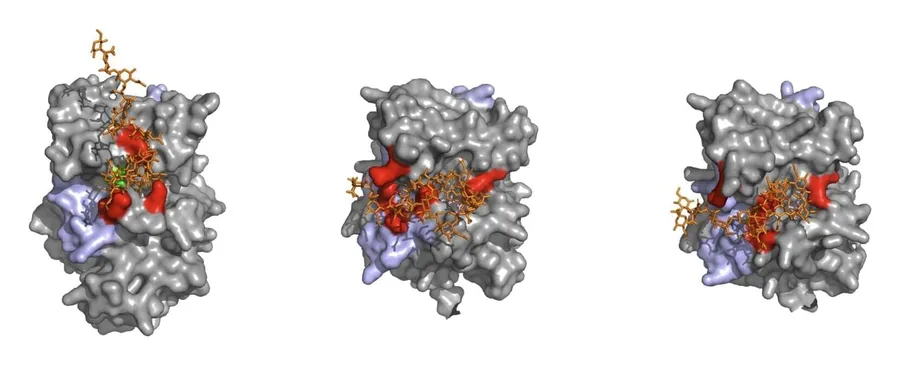
A chance discovery at Nagoya University in Japan has shown that a well-known brain enzyme has a hidden ability: It builds a sugar chain on itself, becomes secreted from the cell and deactivates, then switches on outside the cell once the chain is removed. The finding, published in the Journal of Biological Chemistry, overturns a […]
Introduction Mitochondria are often referred to as the powerhouses of the cell since they produce most of the adenosine triphosphate (ATP) that serves as the primary energy source to support cellular function. However, the contribution of mitochondrial metabolism to cellular function is not limited to the production of ATP. Mitochondrial metabolism is essential on many fronts including crucial an…
Nature Communications, Published online: 19 June 2026; doi:10.1038/s41467-026-74494-y Here the authors define the conformational landscape of human IP3R-2 and identify a ligand-dependent inter-channel interface that mediates receptor clustering during calcium signalling.











 research.io