

edge-ai
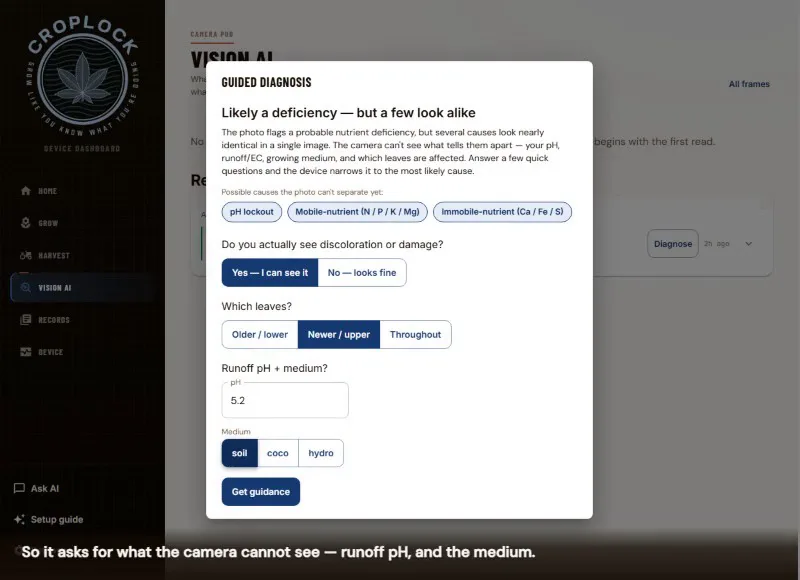
Retiring into Edge AI (and a grow tent) Notes on retiring from a software career — and building an AI device for my grow tent that keeps everything in the house. The dichotomy This year, it became time for me to retire from my lifelong career in software development. Like most things, the situation was a dichotomy: I was tired of task lists and meetings and schedules and difficult people; but at …

SRI - A global leader in R&D with deep roots in Silicon Valley. 2018 SRI spinout helps developers compress, secure, and deploy AI models at the edge. The post Case study: Edge AI deployment gets simpler with Latent AI appeared first on SRI .

The Browser Is Becoming a Compute Platform: How Edge AI and High-Performance Web Architectures Are Reshaping the Modern Web For most of the web's history, browsers were presentation layers. They rendered HTML, executed lightweight JavaScript, and delegated computationally expensive tasks to backend infrastructure. That assumption is rapidly becoming obsolete. Modern web applications now perform w…
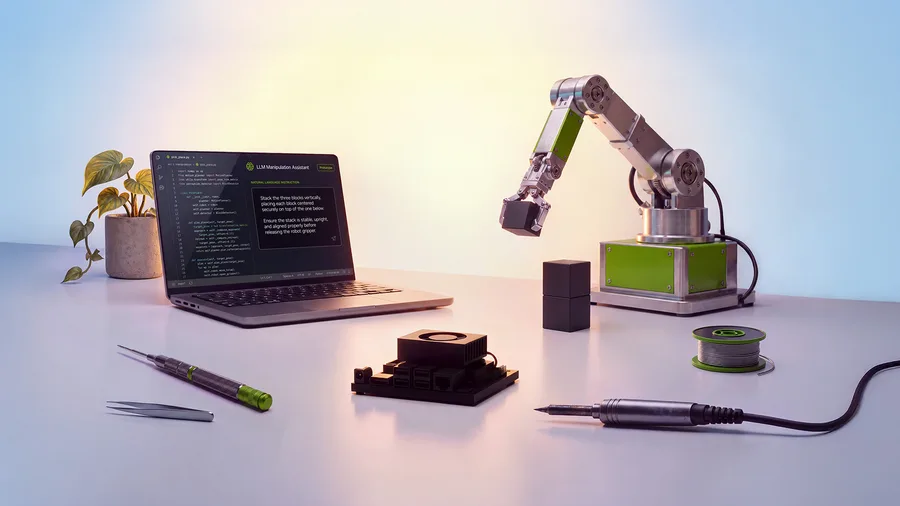
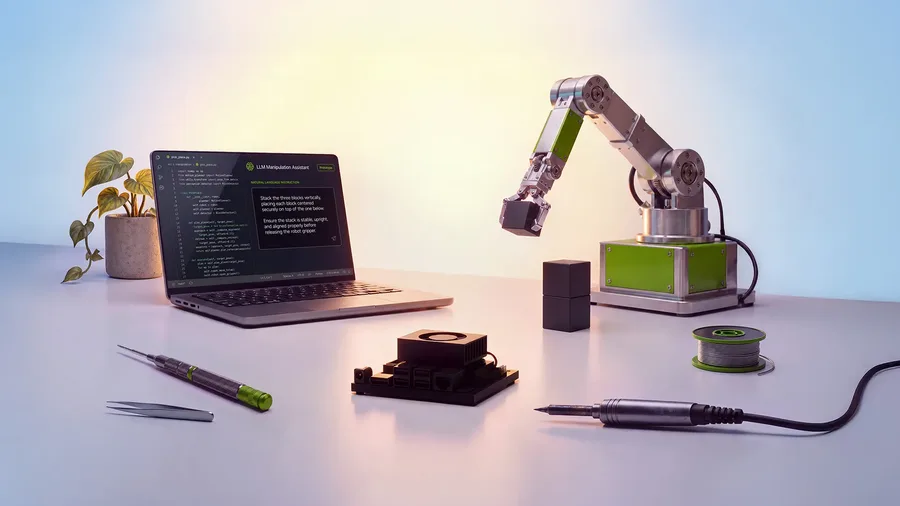
Insider Brief Nvidia has introduced Jetson Orin Nano 2, a compact robotics computer aimed at entry-level edge AI applications including robots, delivery and inspection drones, and machine-vision systems. According to Nvidia, the new module delivers twice the inference performance of the previous Jetson Orin Nano Super while retaining the same form factor. At equivalent performance, […]

The Jetson Orin Nano 2 is the company’s upgrade to its Jetson Orin Nano Super computer, with twice the inference performance of the earlier Super model. The entry level robotics […] The post Nvidia unleashes robotics computer set for entry level edge AI appeared first on Electronics Weekly .

OmniVision Group reported a sharp drop in first-half 2026 profit as weakness in consumer electronics and automotive electronics weighed on its core image sensor business, even as machine vision, robotics and edge AI emerged as faster-growing sources of revenue.

According to 36Kr , Shanghai Guangyu Xinchen Technology says its TC1000 series of 3D-stacked near-memory-computing AI processors has moved from silicon validation to mass-production deployment, marking a claimed acceleration in the commercialization of memory-centric computing for edge AI.

Morse Micro, one of the world’s Wi-Fi HaLow silicon provider, has announced two Wi-Fi HaLow USB Dongle Reference Designs that can bring long-range Wi-Fi HaLow connectivity to existing devices via … Continued The post Morse Micro announces two Wi-Fi HaLow USB Dongle Reference Designs to enable long-range Edge AI connectivity appeared first on IoT Now News - How to run an IoT enabled business .
Deploy Gemma 4 on Raspberry Pi using LiteRT. Learn about mixed-precision quantization, GPU acceleration, and building resilient Edge AI systems. The post Mastering Edge AI with Raspberry Pi LiteRT and Gemma appeared first on SourceTrail .

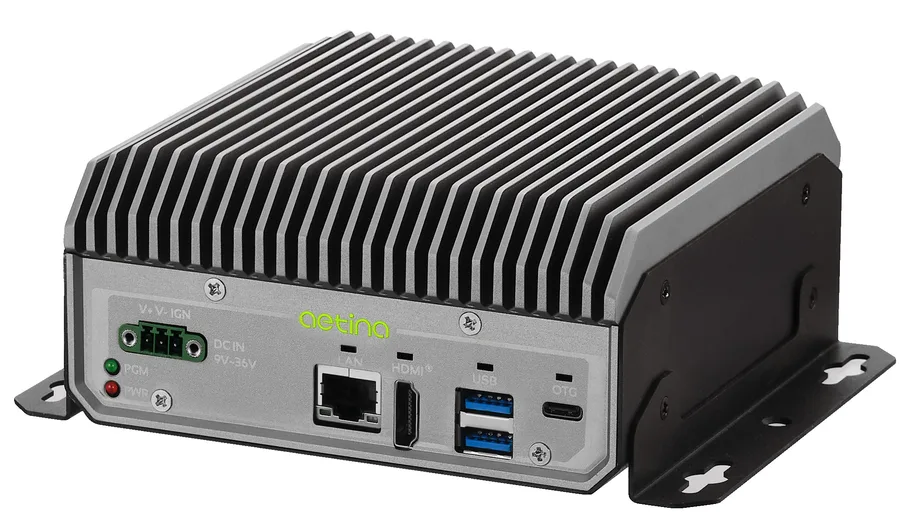
Aetina Corporation has announced the DeviceEdge AIE-VN34/44 and AIE-VO24/34 palm-sized in-vehicle edge AI systems powered by NVIDIA Jetson Orin NX and NVIDIA Jetson Orin Nano modules. The systems deliver up to 100 TOPS or 67 TOPS of AI performance, support up to four GMSL2 cameras, use a 136.3 x 132 x 63 mm fanless chassis […] The post Edge AI systems support four GMSL2 cameras appeared first on …
- 45M - Params - 800+ tok/s - Pi5 prefill - 500+ tok/s - Pi5 decode - CQ2-bit - Compression - 14 MB - File size - 28 MB - Session RAM Our Bet Bringing On-Device AI to <$200 Devices: Edge AI has lately meant Macs and PCs, but the edge is mostly cheap hardware: over 21 billion connected IoT devices against roughly 1.5 billion PCs, and in emerging markets most phones ship under $200. Count budget ph…

SolidRun, a developer of embedded computing and edge AI solutions, and Leopard Imaging, a global contributor in embedded vision and camera technology, has announced a technology collaboration to simplify and … Continued The post SolidRun and Leopard Imaging collaborate to accelerate Edge AI vision development appeared first on IoT Now News - How to run an IoT enabled business .

How to Run an 80B Qwen Model in 4.3GB of RAM: The Edge AI Revolution Explained It started with a single Hacker News post — a screenshot of system_profiler showing 4.3GB of memory used by Qwen 80B , running at an uncomfortable but usable 4 tokens per second. Within hours, someone posted a follow-up: a 35B model running on an iPhone 18 Pro, not in the cloud, not even in the high-end Pro Max, but th…
Edge AI semiconductor leader expands use of ChipAgents' agentic AI platform to accelerate ultra-low power chip design and verification. The post Ambiq and ChipAgents Collaborate to Advance Agentic AI for Semiconductor Engineering appeared first on Semiconductor Digest .

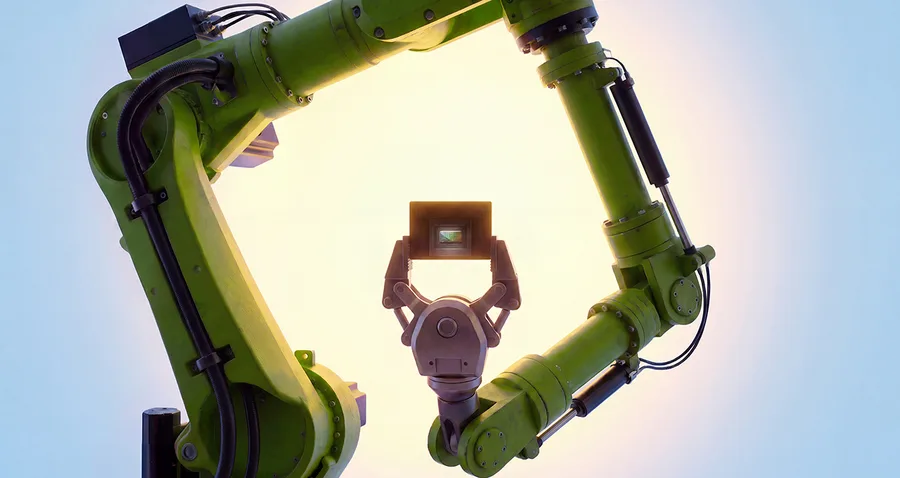
General-purpose robots and autonomous machines are moving from research labs to real-world mass-market deployment, creating demand for compact, power-efficient AI supercomputers capable of running foundation models at the edge. To meet that need, NVIDIA today introduced the T3000 and T2000, new modules based on the NVIDIA Thor architecture that enable mass-market robotics and edge AI […]
Imagine you are building the next generation of "always-on" smart assistants. Your app needs to listen for a specific wake word, suppress background noise in a crowded cafe, or provide real-time transcription—all while the user’s smartphone sits in their pocket. If you attempt to run these heavy neural networks on a standard mobile CPU, you will run into a brutal reality: your user's battery will…

Sixfab AI HAT+ and Edge AI Expansion Board, the most accessible way to bring edge AI to Raspberry Pi 5, processed entirely on-device. Now available. [...] Read More... The post See Everything. Send Nothing. appeared first on Sixfab .

You’ve spent weeks optimizing your transformer-based model. You’ve pruned the weights, quantized the tensors, and fine-tuned the architecture to ensure your Edge AI application runs like a dream on high-end Android hardware. But then, something unexpected happens. Ten minutes into a real-world user session, the smooth 30 FPS object detection begins to stutter. The latency, which was a crisp 30ms,…

You’ve spent weeks optimizing your machine learning model. You’ve pruned the weights, quantized the tensors, and fine-tuned the hyperparameters. On your high-end development workstation, the inference speed is blistering. But then, you deploy it to a real-world Android device. Three minutes into usage, the app starts to lag. The frame rate drops. The device feels uncomfortably warm in the user's …
research.ioSign up to keep scrolling
Create your feed subscriptions, save articles, keep scrolling.