Alzheimer’s disease (AD) is the most prevalent form of dementia, characterized by progressive memory loss, cognitive decline, and emotional dysregulation. Adult hippocampal neurogenesis (AHN) critically contributes to cognition and mood but undergoes precipitous decline during AD progression. Here, we investigated whether enhancing AHN through genetic expansion of endogenous neural stem cells (NS…
BackgroundPost-stroke depression (PSD) is a common neuropsychiatric condition after stroke, but its resting-state functional imaging correlates remain incompletely characterized. This study examined multi-level resting-state functional differences between patients with PSD and healthy controls and evaluated whether interpretable machine learning could identify candidate imaging features associate…
Evidence is mounting that there are distinct subtypes of autism, and now, scientists have found that the condition can vary according to the strength of people’s brain connections
neurogeneticsneuroscience
Frontiers in Human Neuroscience | New and Recent Articles
Socially meaningful symbolic cues are common in everyday visual environments, yet the timing with which they diverge from neutral objects during neural processing remains unclear. This study examined the temporal dynamics of one culturally meaningful class of symbolic cues, national-symbol icons, using event-related potentials (ERPs). Thirty-four Chinese university students completed a within-sub…
BackgroundSleep deprivation impairs core cognitive functions, such as working memory. Previous studies focused on global working memory performance, and direct comparisons of how different cognitive enhancers mitigate sleep deprivation-induced deficits in object working memory remain limited, particularly regarding the underlying neurophysiological mechanisms. This study compared the counteractiv…
cognitive-neuroscienceneuroimagingneuroscience
Frontiers in Pharmacology | New and Recent Articles
BackgroundLigustilide (LIG), a natural phthalide compound mainly isolated from Angelica sinensis and Ligusticum chuanxiong, has attracted increasing attention because of its diverse pharmacological activities, including anti-inflammatory, antioxidant, anti-apoptotic, and neuroprotective effects. Emerging studies suggest that LIG may have therapeutic relevance in central nervous system (CNS) disor…
Nature Communications, Published online: 22 June 2026; doi:10.1038/s41467-026-74553-4 Aggarwal et al. develop OCaMP, an orange fluorescent calcium indicator optimised for imaging neural activity at wavelengths above 1000 nm, enabling improved deep tissue imaging and expanded compatibility with existing sensors.
neuroimagingneuropharmacologyneuroscience
H
HAL (Le Centre pour la Communication Scientifique Directe)
A new study suggests the brain nonconsciously filters out emotionally negative spoken words when people are distracted. The findings indicate that the mind protects conscious awareness by ignoring disruptive emotional sounds.
New research reveals that while infants' brains process musical structure as early as three months old, their bodies take much longer to catch up. Structured physical movement to music doesn't emerge until closer to their first birthday.
Nature Communications, Published online: 21 June 2026; doi:10.1038/s41467-026-74462-6 Madar et al. show that neural representations of choice options predict how context shifts decisions. By leveraging the brain’s feature encoding, previously inaccessible to decision researchers, they improve predictions of well-known choice biases.
Adolescence is a vulnerable neurodevelopmental period between childhood and adulthood. Binge drinking is common during this period of development. New research using rodents has found that adolescent binge drinking can repress neurons in the brain so they operate less normally because the genes required for their neurotransmitter function have been turned off. These results and others will be sha…
Alcohol use disorder (AUD) is a chronic, relapsing disorder involving compulsive alcohol consumption despite negative consequences. Post-traumatic stress disorder (PTSD) is a mental-health condition developed due to trauma. A new study has used rats genetically selected to prefer alcohol and possess elevated anxiety to demonstrate that the molecular basis of AUD/PTSD lies in a specific region of …
While extensive research has documented strong associations among alcohol use, sexual assault victimization, and sexual aggression, much less is known about how these risk factors transfer to online situations. A new study has found that college students who drank more were more likely to perpetrate cyber sexual aggression, and among those who did perpetrate, they did so more frequently. These re…
A new study shows that the amount of Bifidobacterium in the gut during a child’s very first week of life is linked to the risk of attention-deficit/hyperactivity disorder (ADHD) at the age of 10 years. The finding suggests that signalling molecules from gut bacteria may influence brain development during a particularly sensitive window immediately after birth, says a researcher.
Researchers at the Medical University of Vienna, in collaboration with ETH Zurich, the Technical University of Munich and Medical Faculty Belgrade, have developed a wearable neurorobotic system that combines electrical neurostimulation with hand exoskeletons. In a clinical trial involving 14 patients with hand impairments caused by neurological injury, the technology supported finger mobility, ta…
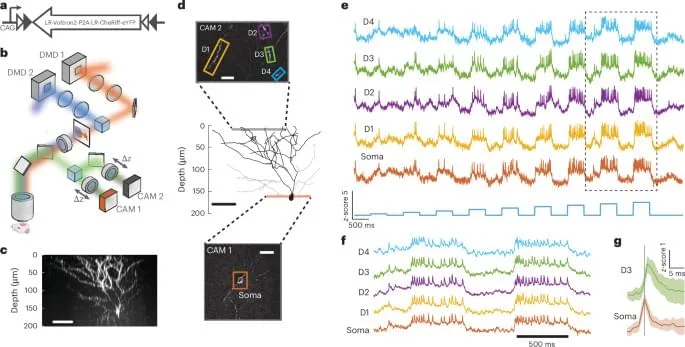
Simultaneous voltage imaging of soma and dendrites in layer 2/3 cortical neurons in live mice reveals rich dynamics of spike back-propagation, with amplitude shaped by spiking history, dendrite location and behavioral state.
cognitive-neuroscienceneuroimagingneuroscience
research.io
Sign up to keep scrolling
Create your feed subscriptions, save articles, keep scrolling.












 research.io