

Bioprinting — the use of specialized 3D printing techniques to deposit living cells, biomaterials, and bioactive compounds into structured tissue constructs — has long occupied a space between scientific ambition and clinical reality. For years, the field struggled with reproducibility, material limitations, and the complexity of replicating biological architecture. The integration of artificial intelligence is now meaningfully changing that equation, enabling automation, precision, and adaptability that manual processes cannot match.
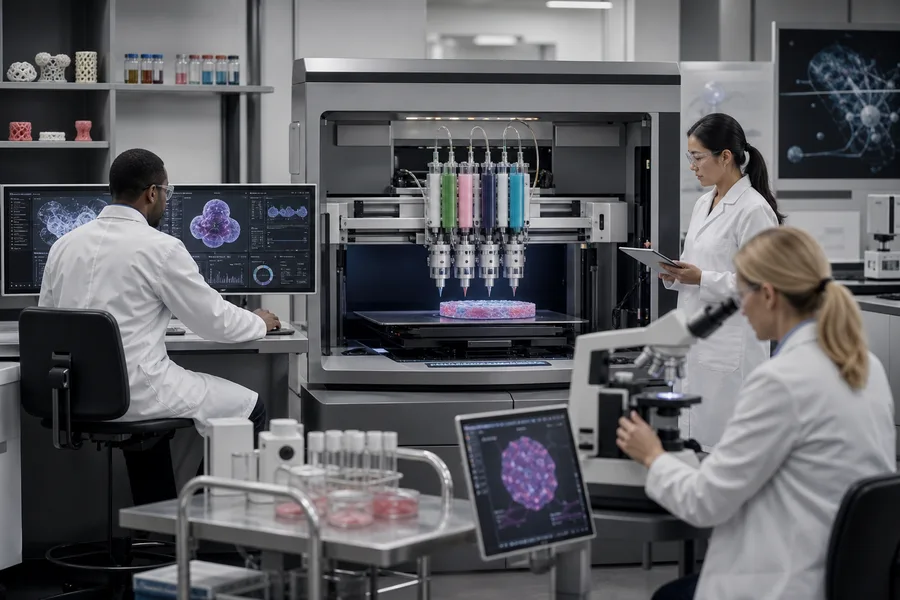
AI in Bioprinting: Key Benefits and Challenges
BCC Research Staff Analysts