Formulation Of Sustainable Floral Foam with Enhanced Water Retention and Structural Strength client Floral Foam Our Role We redefined fast-casual loyalty... The post Biodegradable Floral Foam: Optimization Fiber Hydration and Structural Strength appeared first on Food Research Lab .
BackgroundSkin wounds are common in horses due to species-specific behavioral responses. Equine skin morphology, vascularization, and inflammatory responses to wounds are comparable to those in humans, supporting the translational relevance of equine wound-healing studies. Investigating biomaterials such as tilapia and frog skin may improve wound management. This study demonstrated that sterilize…
Traditional polymer materials, linked by strong covalent bonds, offer excellent mechanical stability but are difficult to recycle or repair. Conversely, supramolecular polymers, which are held together by reversible non-covalent interactions, are dynamic and can self-heal, but often lack the mechanical robustness needed for practical, real-world applications.
Erectile dysfunction affects over 40% of men over 40, yet our understanding of the condition remains limited. Research on this issue has mostly relied on real organs, making it difficult to study the detailed interaction between blood flow and tissue during an erection. In a recent study published in Nature Biomedical Engineering, a team of […]
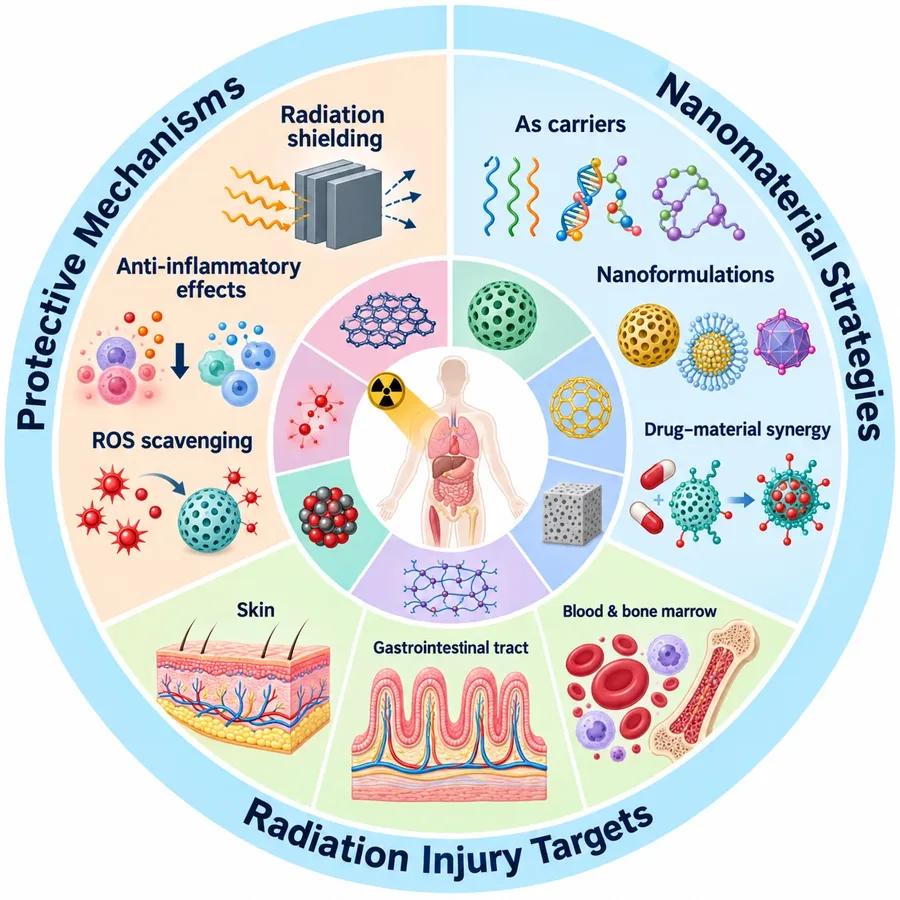
A comprehensive review examined how nanomaterials could protect healthy tissues from radiation damage through targeted drug delivery, reactive oxygen species scavenging, anti-inflammatory activity, and physical radiation shielding. Although experimental studies show promising protection across several tissues and organ systems, most approaches remain preclinical, with long-term safety, biodistrib…
Nature Communications, Published online: 07 September 2026; doi:10.1038/s41467-026-77574-1 This work demonstrates an antisite-defect suppression strategy for Bi2Te3 single-crystal thin films, enabling flexible thermoelectric generators that deliver high power output and long-term bending durability for wearable microelectronic applications.
Netherlands-based independent 3D printing resin manufacturer Liqcreate has introduced Liqcreate Tray, a CE Class 1 certified biocompatible resin designed for 3D printing custom dental impression trays.  The material was developed in collaboration with dental laboratories and clinical partners and is formulated to work across a broad range of open-platform resin printers. “We heard cons…
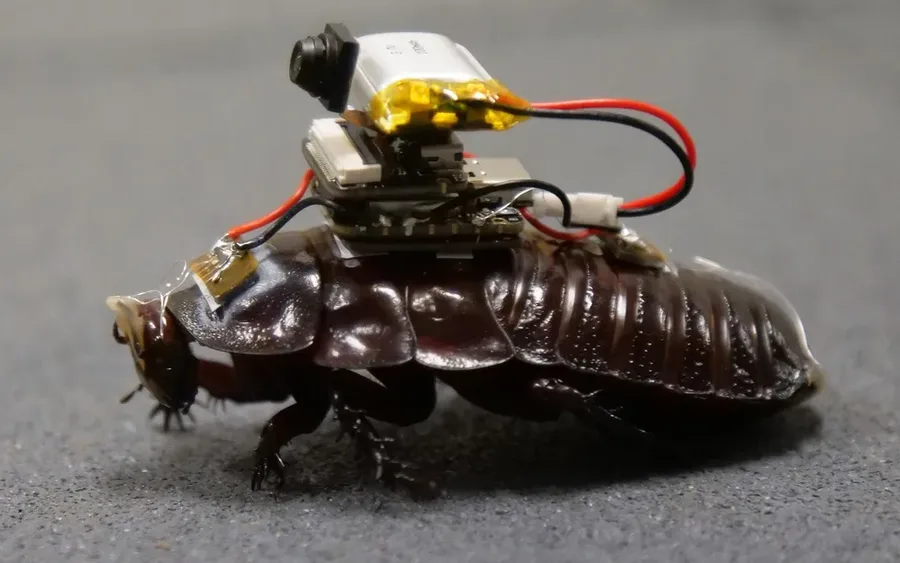
Imagine you are trapped under rubble after an earthquake and you see an electronics-covered cockroach with a spring-loaded needle on its back scuttling toward you. Although the sight might be unnerving, to say the least, this prototype paramedic cyborg, or “Paraborg,” might one day help deliver lifesaving aid to disaster victims who might be otherwise impossible to reach. The Hardest Problems in …
Scientific Reports, Published online: 05 September 2026; doi:10.1038/s41598-026-66956-6 Mechanical, durability, and microstructural performance of biochar-modified concrete using faecal sludge–derived biochar
Harvard researchers have transformed ordinary knitting into a platform for creating fabrics that can snap between different shapes and perform useful functions. Using elastic yarns and industrial knitting techniques, the team engineered thick textiles that naturally curve and lock into multiple stable configurations, much like a light switch flipping between on and off. By adding conductive yarn,…
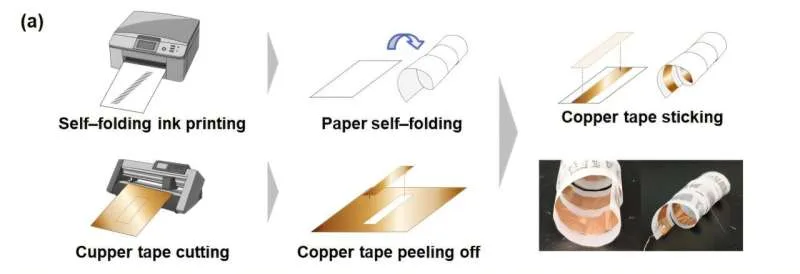
A new paper-based design tool creates self-folding wearable sensors that conform to body shapes, offering a simple route towards flexible biosignal monitoring for personalised sensing. Researchers at Shibaura Institute of Technology in Japan have developed a parametric design tool that transforms flat sheets of paper into self-folding helical wearable sensors. The approach integrates copper tape …
Researchers developed modular organ-targeting metal-phenolic network coatings that altered where diverse nanoparticles accumulated after intravenous administration in mice. By tuning metal ions, phenolic ligands, and PEG molecular weight, the researchers redirected nanoparticles toward the lungs, kidneys, heart, and brain while preserving functional mRNA delivery in coated lipid nanoparticles.
Scientific Reports, Published online: 04 September 2026; doi:10.1038/s41598-026-70253-7 Six-order amplification of third-order optical susceptibility (χ(3)) and bandgap engineering in ion-doped chitosan biopolymers
Researchers engineered a living Citrobacter sp. MICI21 biofilm on copper that outcompeted the corrosive sulfate-reducing bacterium Oleidesulfovibrio alaskensis G20 and formed a dense, mechanically cohesive barrier. The MICI21-dominated biofilm limited sulfide ingress and pitting and produced substantially greater corrosion resistance, supporting microbiome engineering as a potential strategy for …


 research.io