

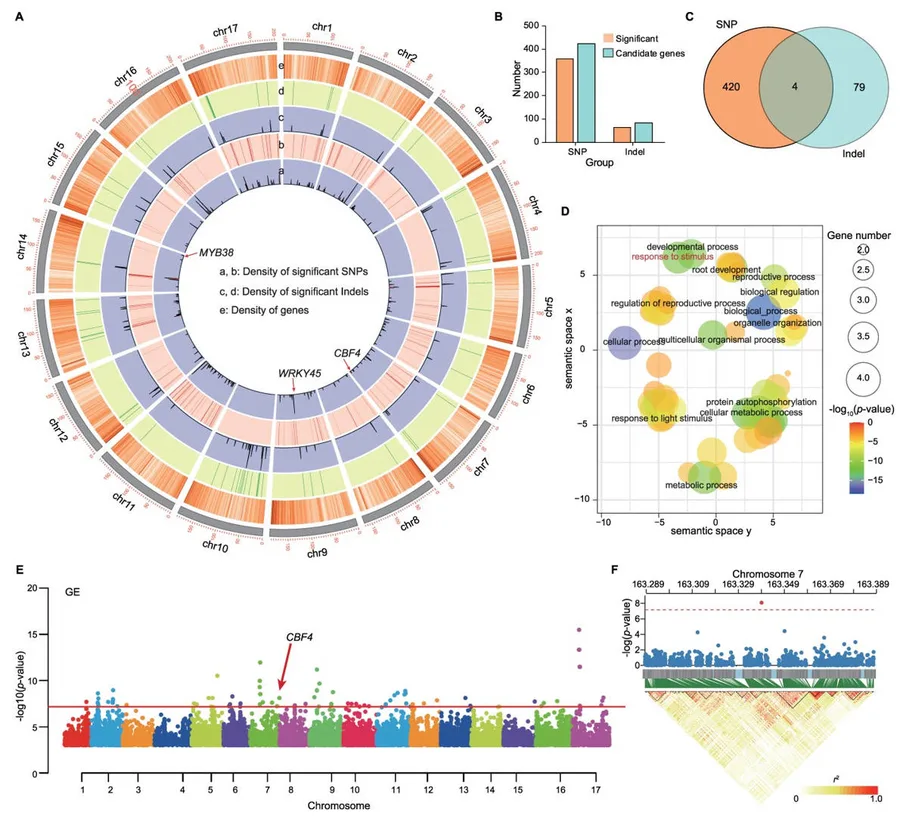
Sunflower is valued as an oilseed crop and as a resilient plant that can grow where many crops struggle. Yet salt in soil still threatens seed germination, early seedling growth, and future yield, especially as agriculture increasingly turns to marginal land. A new study traces this problem to a specific genetic control point in sunflower. By combining high-throughput phenotyping with genome-wide analysis and functional validation, researchers identified the HaCBF4-HaHAK11 module as a positive regulator of salt tolerance. The work explains how young sunflower plants activate stress-response pathways under saline conditions and provides candidate genes that could support breeding of more salt-tolerant sunflower varieties.
Sunflower's Salt-Survival Switch Comes Into Focus
Chinese Academy of Sciences