Nature Human Behaviour, Published online: 03 September 2026; doi:10.1038/s41562-026-02569-3 People can form emotional bonds with AI companions. Using two AI product updates as natural experiments and combining with survey evidence, De Freitas et al. show that changes to AI companions can elicit attachment-related loss and restoration desires.
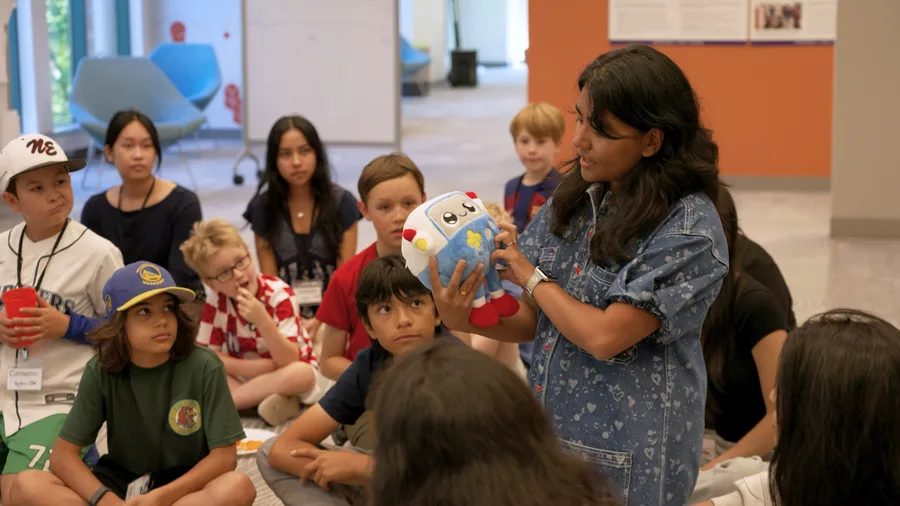
University of Washington researchers gathered eight kids on campus to explore how they played with AI toys. The kids initially were curious, asking introductory questions, such as "What is your name?" But after communication breakdowns, the kids turned to antagonizing the toys, calling them "ugly" and "evil" and joking about throwing them in the ocean.
This article introduces a study that designed AR-HMDs and spatial user interfaces (SUIs) to support collaboration among emergency department clinicians.
The rapid integration of large language model-based conversational systems has intensified longstanding questions in mediated communication, human–computer interaction, and social presence research by placing language-generating systems within ongoing conversational exchanges. Rather than treating these systems only as information-retrieval tools, users often orient to them through interactional …
Clark and Chalmers (1998) proposed that cognitive processes can extend beyond the brain when external artefacts function as reliable parts of an agent’s cognitive routine. Twenty-seven years later, generative AI offers qualitatively new possibilities for such extension. Clark (2025) has argued that large language models represent a genuinely novel form of hybrid thinking system. Barandiaran and c…
What Happened A Show HN thread titled "What should the GUI for AI agents look like?" sparked debate among developers, designers, and ops engineers. The post displayed mock‑ups and asked for feedback on layout, interaction, and the trade‑off between low‑code flexibility and technical depth. Contributors favored node‑based canvases, timeline views, and form‑driven panels. They also warned about sca…
PurposeWith digital technology and AI increasingly embedded in work, human-computer interaction design has become pivotal in unlocking intelligent technologies’ creative potential for both research and practice. Most research focuses on AI’s association with employee creativity but rarely explores the psychological mechanisms linking human-computer interaction to employee creativity. This study e…
Adaptive cruise control (ACC) is becoming increasingly common; however, many users still struggle to understand system states and interventions, which may hinder trust and acceptance. Prior research has focused primarily on visual human–machine interfaces (HMIs), but driving is a visually demanding task. Therefore, voice-based HMIs are increasingly being considered as an alternative or complement…



 research.io