

This plant caught my eye as it reminded me a little of a bluebell. If you’re near a professional botanist you might be hearing a stream of foul language, as Adenophora triphylla is not at all closely related to bluebells (Hyacinthoides non-scripta). Unless you’re next to a Scottish botanist, because in Scotland bluebell can refer to harebell. Adenophora triphylla is a much closer relative to the harebell than the bluebell, as it’s in the Campanulaceae, sometimes called the bellflower family. It’s the family which includes Campanula and Lobelia. You can find the Campanulaceae around the world, but Adenophora triphylla is an East Asian plant, ranging from Southern Siberia in the north to Laos and Vietnam in the south. GBIF records show a concentration in Japan, Korea and China. Curtis’s Botanical Magazine has it in broad-leafed forests, scrub, coastal sand and meadows, up to 1770 m, and you’ll find it in grasslands, mountainsides and along rivers. One way Adenophora triphylla differs from a bluebell is in its pollinators. They look a similar shape, so you’d expect similar pollinators, which would be bees. In fact Funamoto and Ohashi have found that they court nocturnal moths. How do they know, seeing as bees visit the flowers? Well, they experimented to find out which visitors were pollinating the plants. They also point out that the flowers open after sunset, they produce nectar only at night and they time flower changes to be ready in the evenings. They might look bee pollinated, but their actions are all for moths. Once pollinated it grows small light seeds, but these aren’t very well adapted for spreading, relying on gravity, wind and possibly getting shuffled along the ground by running water. This lack of mobility makes it an indicator of traditional field margins, where it grows in undisturbed soils. It can also indicate ancient grasslands, meaning that it can act as a signal to find sites of high biodiversity that may need protection. It’s eaten by generalist...
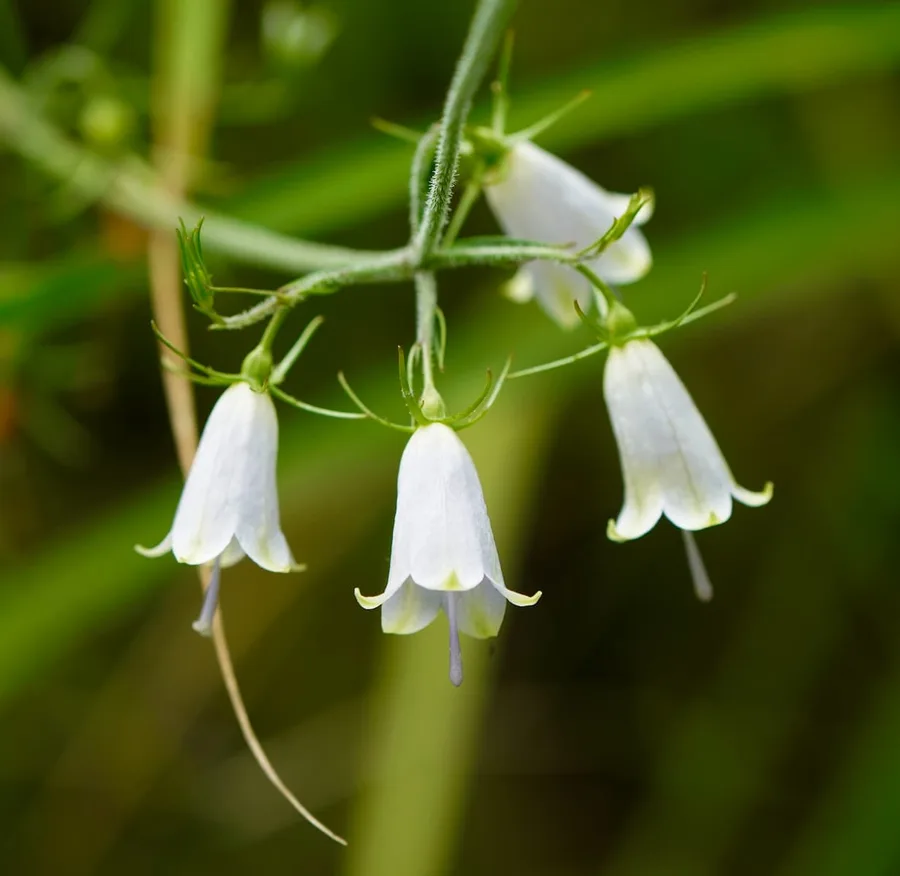
*Adenophora triphylla*
Alun Salt
5 min read