A non-relativistic classical system can be described with the Lagrangian formalism. I have heard that one can construct a Riemannian manifold, using the kinetic energy to form the metric. The system then follows geodesics in the manifold. How does one construct the metric tensor? I'm looking for an equation here.
TL;DR: I need help picking out a textbook out of the "big 3" Hello! I have the option of using: Raymond A. Serway, John W. Jewett - Physics for Scientists and Engineers with Modern Physics Fundamentals of Physics, Volume 2, 12th Edition 2 -- David Halliday & Robert Resnick & Jearl... Read more
Consider a right cone with vertex ##O## and vertex angle ##2\alpha##. A coin of radius ##r## rolls around the cone without slipping being in contact with the cone along a generatrix, such that the center of the coin coincides with the vertex of the cone. Let a point ##M## lie on the coin's rim... Read more
Arathoon; Philip; Ball; Gavin; Kvalheim; Matthew D
7/31/2026
Physics > Classical Physics
Title:The Maxwell Conjecture is False
View PDF HTML (experimental)Abstract:We exhibit a configuration of five point charges in Euclidean space whose electrostatic potential admits at least 24 critical points all of which are non-degenerate. Maxwell's conjecture that the field of \(n\) point charges has at most \((n-1)^2\) critical points which are all non-degenerate is…
This paper is a playful yet thoughtful exploration of whether Load Minimization Theory (LMT) can offer a fresh perspective on both classical and quantum physics. Rather than claiming to propose a new physical theory, we simply ask: what happens if we view familiar physical phenomena through the dynamic lens of LMT? The foundational dynamic equation is expressed as: dL/dt = dU/dt + dF/dt + dE/dt −…
How do you portray momentum in space accurately? Columnist Chanda Prescod-Weinstein takes a look at the origins of our understanding of motion, which runs from Isaac Newton back to the Zhou dynasty a millennia ago
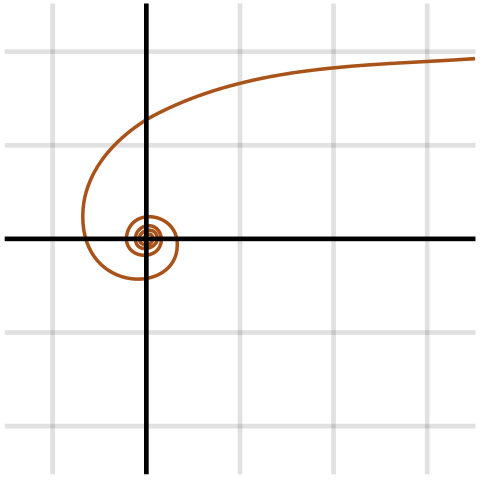
The Inverse Cube Force Law
Posted by John Baez
Here’s a draft of my next column for the Notices of the American Mathematical Society. It’s about the inverse cube force law in classical mechanics.
Newton’s Principia is famous for his investigations of the inverse square force law for gravity. But in this book Newton also did something that was rarely discussed until the 1990s. He figured out what …
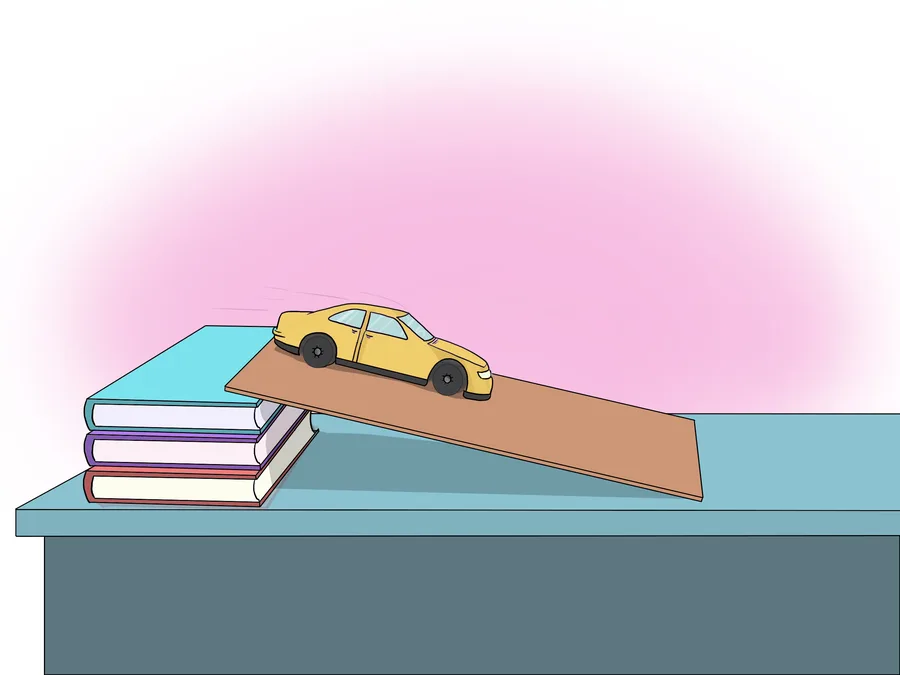
How gravity causes a perfectly spherical ball to roll down an inclined plane is part of elementary school physics canon. But the world is messier than a textbook. Scientists have sought to quantitatively describe the much more complex rolling physics of real-world objects. They have now combined theory, simulations, and experiments to understand what happens when an imperfect, spherical object is…
Working in quantum many-body theory, I slowly learned that many key concepts and techniques have predecessors and analogues in classical systems and one-body quantum systems. Examples include Green's functions, path integrals, cumulants, the linked cluster theorem, Hubbard-Stratonavich transformation (completing the square), mean-field theory, localisation due to disorder, and BBGKY hierarchy . L…
Predicting Eclipses: The Three Body Problem
Predicting Eclipses: The Three Body Problem
Solar eclipse prediction has driven innovation across the history of science and mathematics, from the Saros cycle to Greek geometry to Newton’s calculus to the three-body problem.
Explore All Videos
Biggest Breakthroughs in Biology 2025
2025’s most surprising breakthroughs in biology included a finding that a…
Introduction The applicability of Newton’s second law in the oft-quoted “general form” $$\begin{align}\frac{d\mathbf{P}}{dt}=\mathbf{F}_{\text{ext}}\end{align}$$ was an issue in a recent thread (see post #4) in cases of systems with variable mass. The following example illustrates the kind of confusion that could arise from the (mis)application of Equation (1): A rocket is hov…
In my previous post, I mentioned an exercise that I often give to my General Physics students that are learning about projectile motion. Using a PhET application, they found out that two different scenarios produced a projectile motion that has the same maximum height and same time of flight. I asked the students to figure out why.
I decided to post the same question to ChatGPT. The result was a …
All moving objects have momentum. Another way to think about momentum is how hard it is to stop a moving object. It's harder to stop an object moving quickly than an object moving slowly. What is the momentum equation? All moving objects have momentum. Momentum is a vector quantity which means it has size AND […] The post What is Momentum? appeared first on Science Experiments for Kids .
Introduction In a previous Physics Forums article entitled “How to Master Projectile Motion Without Quadratics”, PF user @kuruman brought to our attention the vector equation ##\frac{|V_0 \times V_f|}{g} = R## and lamented the fact that: “Equally unused, untaught and apparently not even assigned as a “show that” exercise is Equation (4) that identifies the range as the...
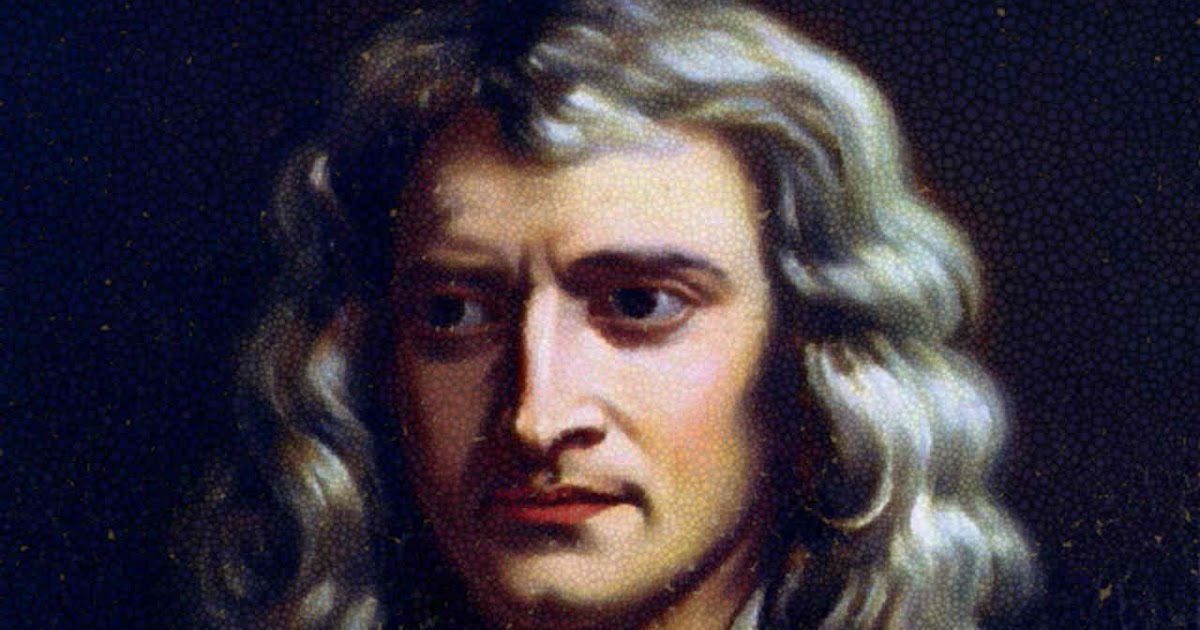
Isaac Newton is one of the few names that will forever be enshrined in physics history and that too with a lot of glamour associated. Contributions of none other physicist match his, well, probably Einstein's, or not even his!? The following are Newton's ten most well-known works that changed the world later on. Laws of motion 1. An object will remain at rest or move in a straight line unless act…






 research.io