brain-computer-interfaces


Motor Imagery-based (MI) Electroencephalography (EEG) has emerged as a leading solution in non-invasive Brain-Computer Interface (BCI) systems, leveraging its strong motor intention correlation to enable reliable neural decoding. However, practical implementation of MI confronts three persistent challenges: low signal-to-noise ratio, substantial variability across subjects or over time, and inher…

Nature Neuroscience, Published online: 07 September 2026; doi:10.1038/s41593-026-02447-1 Implanted brain–computer interfaces hold great promise for restoring communication and other functions and for revealing new aspects of human brain physiology. Yet as the number of implantations in humans expands, ethical clarity must keep pace with technical ambition. We propose that this should involve dist…

Join our member, the Brain-Computer Interface Society, in Croatia for the 12th International BCI Meeting, the premier global gathering dedicated to brain–computer interface research and innovation. This landmark event will bring together scientists, engineers, clinicians, users, and industry leaders spanning all areas of BCI research, development, and clinical application. From cutting-edge basic…

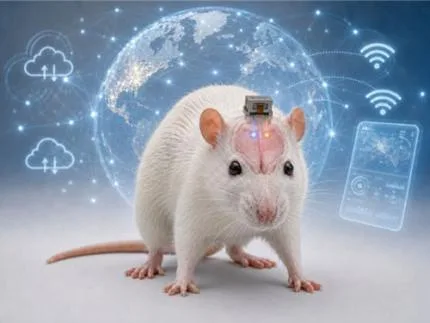
A researcher in Chicago remotely controls a miniaturized brain implant in Daejeon, Korea — over the internet. Korean researchers have developed a wireless device that can deliver drugs and light to precisely modulate targeted neurons from anywhere in the world. The technology is expected to overcome the constraints of distance and location, supporting long-term studies […]

research.ioresearch.io

Sign up to keep scrolling

Create your feed subscriptions, save articles, keep scrolling.

Already have an account?