neuroscience

Nature Neuroscience, Published online: 08 September 2026; doi:10.1038/s41593-026-02418-6 Although Alzheimer’s disease (AD) is a disease of the brain, we demonstrate that it disrupts myeloid cell production in the bone marrow via a type I interferon signal, preventing protective monocyte-derived macrophages from reaching the brain. Blocking this signal in the 5xFAD mouse model of amyloidosis resto…

A new Northwestern Medicine study suggests a major psychiatric risk gene remains important well into adulthood and may influence brain communication, according to a study published in the Proceedings of the National Academy of Sciences. The post Understanding the Link Between Genetic Risk and Brain Communication Disorders appeared first on News Center .

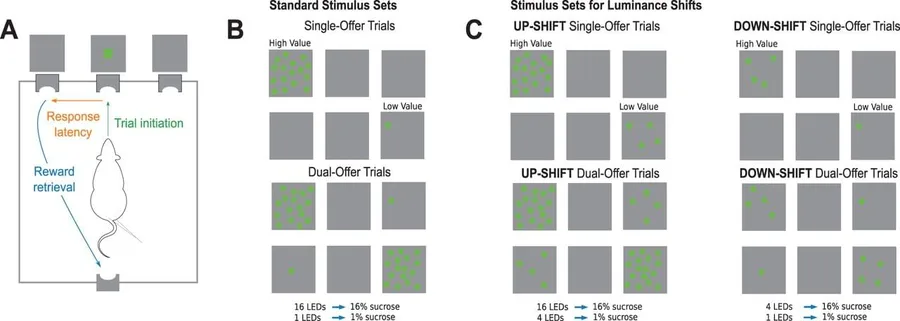
Studies of visual discrimination in rodents can confound the effects of cue salience with reward value making it difficult to determine which factor guides choice behavior. We examined this issue by testing how changes in relative salience affect decision dynamics in rats (nine females and five males) performing a two-alternative forced-choice task with visual cues […]

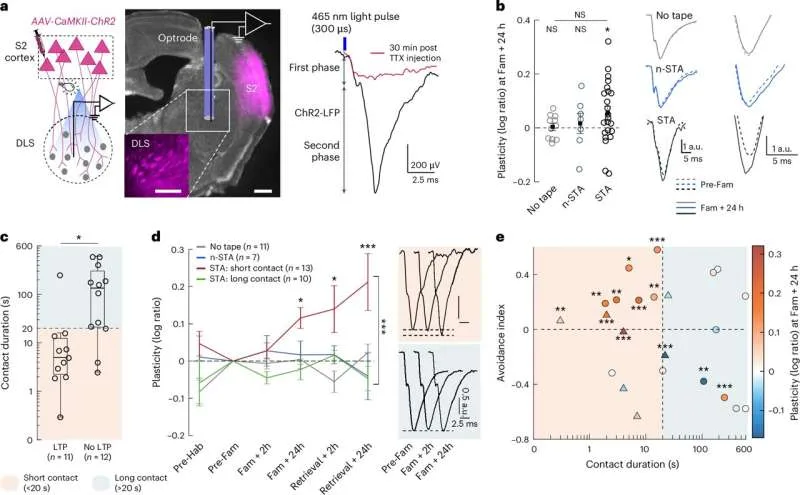
Sometimes, even a single experience can be highly impactful, prompting humans and other animals to change their behavior or influencing their future choices. The formation of influential memories from a single, brief experience is also known as one-shot learning. Researchers at Collège de France (CNRS/INSERM/Université PSL), Inria, Université Claude Bernard Lyon 1 and Brandeis University […]

BackgroundFunctional and structural differences in the central nervous system, including higher motor cortex activation, lower corticospinal excitability, and smaller corticospinal tract volume have been proposed as potential contributors to persistent quadriceps strength deficits following anterior cruciate ligament reconstruction (ACLR). However, prior work has largely examined these difference…

Imagine learning a list of names in the evening and then getting only a few hours of sleep. Normally, you would expect to remember less the next morning, because sleep is one of the main periods when the brain strengthens new information. A new experiment suggests there may be a surprisingly simple way to soften […] The post Exercise Could Give the Sleep-Deprived Brain a Memory Boost appeared fir…

In this episode, Sriram Sudarsanam, Luis E. Guzman-Clavel, and Alex L. Kolodkin discuss their paper, " Mef2c Controls Postnatal Callosal Axon Targeting by Regulating Sensitivity to Ephrin Repulsion ," published in Vol. 45, Issue 21 of JNeurosci. Find the rest of the Spotlight collection here . With special guests: Sriram Sudarsanam, Luis Guzman-Clavel, and Alex L. Kolodkin Hosted by: Megan Sansev…

research.ioresearch.io

Sign up to keep scrolling

Create your feed subscriptions, save articles, keep scrolling.

Already have an account?