BackgroundChildhood trauma may influence clinical presentation in first-episode schizophrenia (FES), but its specific associations with cognitive function and clinical symptoms remain unclear.MethodsSeventy-one FES participants and 62 healthy controls were assessed using the Childhood Trauma Questionnaire (CTQ-SF), MATRICS Consensus Cognitive Battery (MCCB), Positive and Negative Syndrome Scale (…
A 2026 Mendelian-randomization study connected genetic proxies for certain gut bacteria with cognitive performance. The finding is a research clue, not evidence that a probiotic or diet can improve cognition.
The sun is not real. It is a cognitive placeholder. We did not discover the east—we invented it, because cognition cannot begin without a first anchor, and that anchor, in daylight, must be one thing, shared by all. Everything else follows: the west is deduced, the north is projected, the south is an afterthought. Time, calendar, myth, and the entire cosmic order are not descriptions of the world…
Embodied cognition, a research programme that is standardly presented as a corrective to classical cognitive science, insists that brain, body, and environment must be understood together if cognition is to be explained adequately. This paper argues for the stronger claim that cognition has always been an embodied phenomenon, because embodied cognition was the first kind of cognition to evolve. T…
The rapid adoption of generative artificial intelligence (GenAI) has introduced new forms of cognitive support as well as potential behavioral risks in academic contexts. Rather than treating AI use as a purely homogeneous phenomenon, this study conceptualizes GenAI engagement through a psychological dual-pathway framework that explicitly separates capability-oriented AI familiarity from exposure…
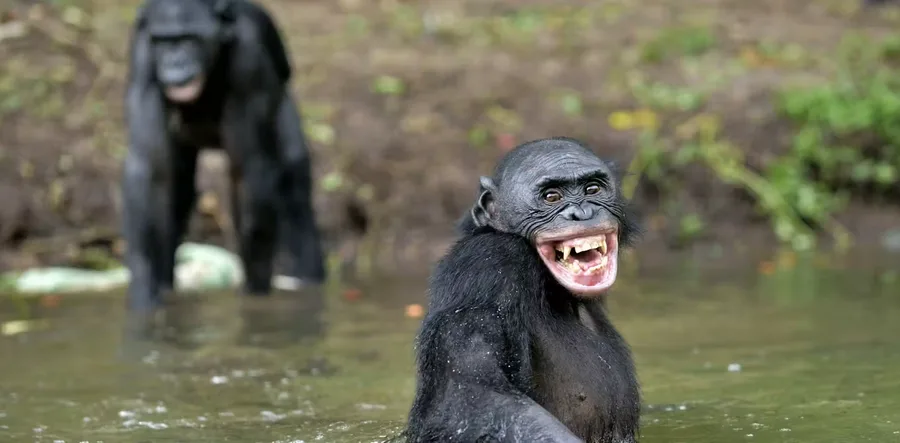
By identifying ‘living fossils’ in modern speech, some researchers are arguing that human language evolved slowly through a ‘survival of the wittiest’. The theory suggests verbal humour was sexually selected over physical fighting, using visual brain regions to build the foundation of complex modern grammar
Michael Levin is a developmental and synthetic biologist at Tufts University whose work sits at the intersection of biology, bioelectricity, artificial life, regenerative medicine, synthetic biology, computer science, cognitive science, and philosophy of mind. He is known for his research on how cells communicate, make decisions, build bodies, repair tissues, and form collective intelligence thro…
Traditional cognitive science has historically confined the mind within the cranium. While the “second brain” metaphor underscores the autonomy of the enteric nervous system, it remains entrenched in a neurocentric paradigm. Here, we propose a transformative framework: the gut microbiota may function as a constitutively relevant contributor to specific embodied cognitive architectures. We contend…
This study presents a quantitative analysis of errors in the perception and interpretation of hydronyms by university students in Western Kazakhstan. The aim of the study is to identify the types of errors that occur when students interpret hydronymic units and to reveal the cognitive difficulties underlying these errors. The study involved 120 university students who had previously completed cou…
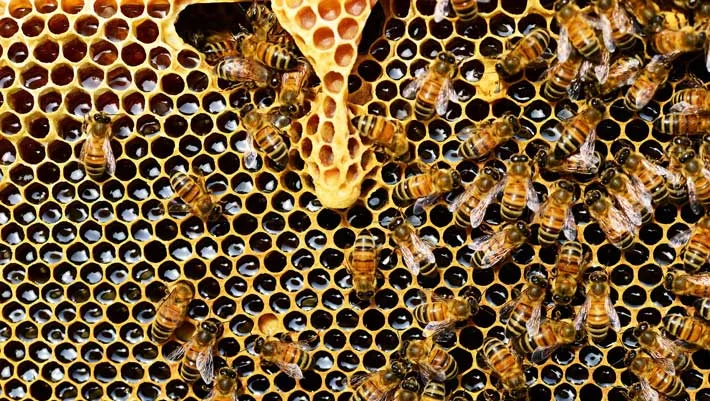
A new analysis of honeybee vision suggests their ability to distinguish quantities is not a trick of visual patterns, but evidence of genuine numerical cognition shaped by how their brains see the world. The post Honeybees Can Process Numerical Information, New Study Confirms appeared first on Sci.News: Breaking Science News .
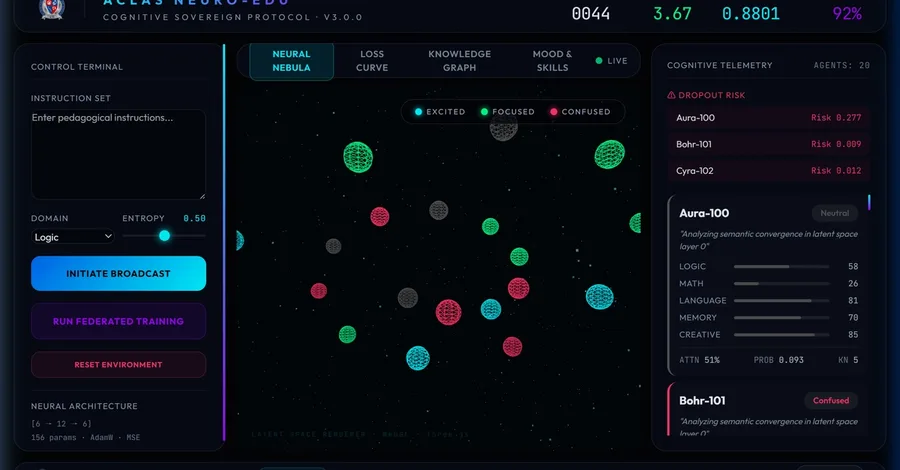
Deep Dive: The Cognitive Science Behind the ACLAS Neuro-Edu SDK 🏛️🧠 At the Atlanta College of Liberal Arts and Sciences (ACLAS) , we aren't just building "another AI tutor." We are engineering a fundamental reconceptualization of how Large Language Models (LLMs) align with the human mind. Today, we’re peeling back the curtain on the Neuro-Edu Technical Whitepaper . If you’ve ever wondered why gen…
Progress has always been made by people who think differently. Neurodiversity helps us think outside the box – and when we do, the sky’s the limit One of my favourite pieces of scientific equipment is something called a retrospectroscope. I admit that it only exists in my imagination, but it has turned out to be a very useful bit of kit. It allows me to look back through the years of my life and …


 research.io