
neurogenetics
As the human brain takes shape before birth, a remarkable type of stem cell helps give it many of the features that make it distinctly human.
Why do some ants help nestmates in distress while others don't? A research team from Johannes Gutenberg University Mainz (JGU) and Tel Aviv University has addressed this question in a new study.

As the global race for artificial intelligence (AI) consumes vast oceans of electricity and pushes modern utility grids to the brink, a team of California researchers is looking to biological neuroscience to build an entirely new class of energy-efficient microelectronics. Their objective is straightforward but radical: reverse-engineer the human brain to solve the semiconductor industry's loomin…
The follow-up to the no-LLM experiment: every neuromodule under the loops. How a spike is born, where homeostasis lives, what the stem multiplies, and why frozen encoding exists. With code. From the map to the tissue The first post made a bet: a body that thinks with weights you own, remembers outside the prompt, wants on a scale of hours, sleeps — no rented LLM in the head. It stayed at the alti…

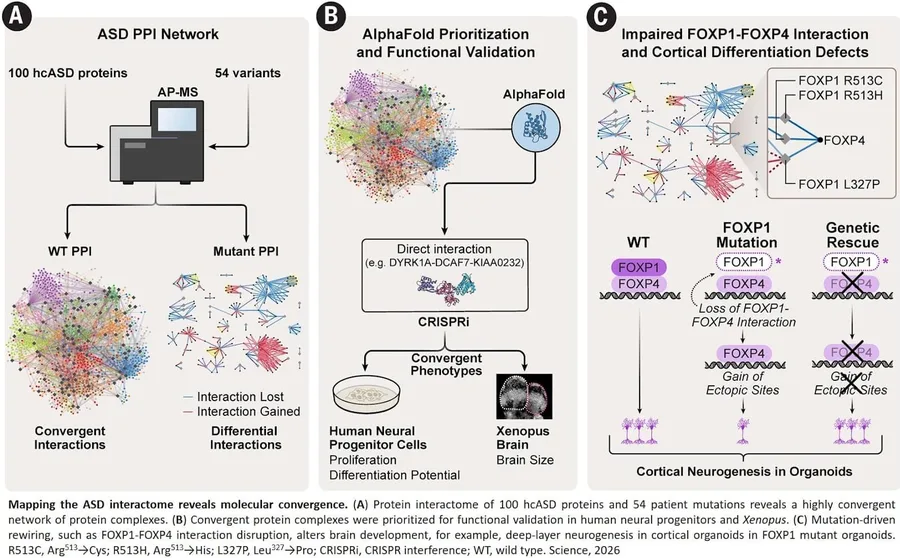
For more than two decades, researchers have identified hundreds of genes that increase the risk of autism spectrum disorder (ASD). Yet multiple fundamental questions have remained unanswered: among them, how do mutations in these genes lead directly to changes in brain development and how can that knowledge be translated into more effective therapies? In a […]
Researchers have identified a specific brain circuit that drives increased alcohol intake following social isolation. The findings provide a biological mechanism for how a negative social environment changes what the brain treats as a valuable reward.

The longer we stay awake, the more certain brain cells appear to turn up the pressure to sleep, eventually making rest nearly impossible to resist. Sleep drive is the biological pressure to rest that builds during waking hours, making it increasingly difficult to stay alert. After prolonged wakefulness, it typically produces longer, deeper recovery sleep, [...]
Silent synapses represent a unique class of synaptic connections that are non-functional at rest but possess the potential to become functional, serving as a critical reservoir for neural plasticity. Their activation mechanisms not only challenge traditional models of synaptic maturation but also provide novel insights into brain function regulation and disease pathology. This article provides a …
As the human brain takes shape before birth, a remarkable type of stem cell helps give it many of the features that make it distinctly human.
A Rutgers-led international team co-authored a study, which was published in Nature Neuroscience, revealing 36 genes significantly increasing the risk for obsessive-compulsive disorder (OCD) and chronic tic disorders. This research offers the most comprehensive biological insight into the development of these conditions and potential future treatments.
Variation in the microtubule-binding protein tau is causally implicated in numerous neurodegenerative diseases, including Alzheimer’s disease. However, the mechanisms by which such variation results in disease are not well understood. The JNPL3(P301L) mouse model mimics the effects of the P301L mutation on human tau associated with frontotemporal dementia. As previously reported, phospho-tau aggr…
People who score high in neuroticism not only react more intensely to negative events, but they also transfer those bad feelings onto neutral objects more easily. New research highlights how personality traits shape our vulnerability to anxiety.
CSF peptidomics reveals an IGF2-derived peptide as a candidate biomarker for neurosyphilis diagnosis
BackgroundNeurosyphilis (NS) diagnosis is challenging due to the cerebrospinal fluid-Venereal Disease Research Laboratory (CSF-VDRL) assay has limited sensitivity, whereas CSF abnormalities lack sufficient specificity.MethodsTo identify novel CSF peptide biomarkers for NS, we performed comparative peptidomic analysis of CSF samples from 51 individuals across four groups: NS, syphilis/non-NS (NNS)…
BackgroundChronic Inflammatory pain can lead to emotional abnormalities such as anxiety and a decreased appetite. However, the specific mechanisms underlying these abnormalities remain unclear. The anterior cingulate cortex (ACC), which plays a crucial role in integrating nociceptive perception and emotional responses to chronic inflammatory pain, is an ideal region for studying how pain influenc…
UCLA researchers have discovered two powerful influences that help guide how the human brain forms before birth. Radial glia, stem cells responsible for producing much of the cerebral cortex, change their behavior depending on how they process glucose and on physical contact with signals arriving from the thalamus. Those signals can alter which types of neurons are produced, including upper-layer…

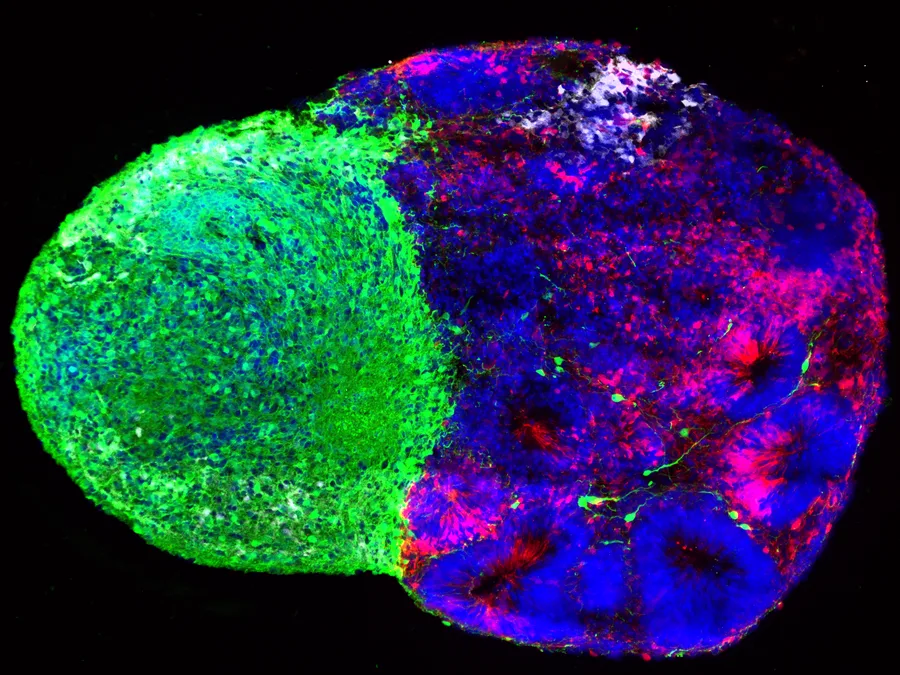
In two new studies, UCLA researchers used lab-grown brain organoids, donated human tissue and fused "assembloids" to investigate how radial glia -- the stem cells that build the human cerebral cortex -- decide which types of brain cells to make.
[Molecular Psychiatry] The authors highlight the integration of brain organoids and AI as an emerging “organoid intelligence” approach to uncover autism biology and advance personalized therapeutic discovery.
Psilocin, the active compound in magic mushrooms, promotes the rapid growth of neural connections in laboratory settings. A new study reveals how these structural changes match the effects of established psychiatric drugs like ketamine and lithium.

Researchers created 3D epigenomic analyses of four key glial cell types—including outer RG and microglia—to reveal how these “maps” guide human brain development.
research.ioSign up to keep scrolling
Create your feed subscriptions, save articles, keep scrolling.