environmental-chemistry
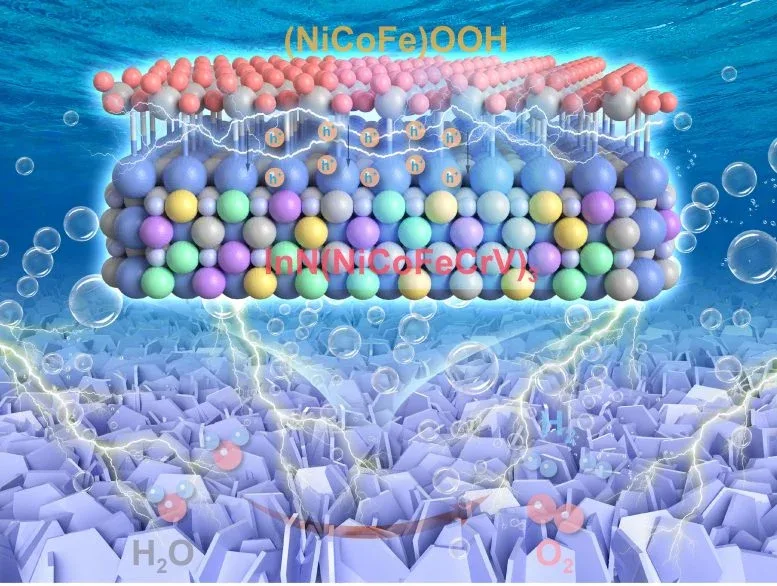
Scientists have developed an extremely small and highly efficient catalyst that could improve the production of green hydrogen, one of the cleanest fuels being explored for the future. The international research team, led by scientists from Tohoku University, Tokyo University of Science, Vanderbilt University and the University of Adelaide, created tiny clusters made from only […] The post Tiny 1…
The colorimeter is an important scientific instrument used to measure the concentration of colored substances in a solution by analyzing how much light the solution absorbs. Today, colorimeters are widely used in chemistry, biology, medicine, environmental science, and industry. Their development over more than a century has greatly improved the accuracy and efficiency of chemical analysis. The h…
Scientific Reports, Published online: 20 June 2026; doi:10.1038/s41598-026-59084-8 Efficiency of a microplastic removal system from synthetic wastewater using a chemical process combined with simple filtration
Scientific Reports, Published online: 19 June 2026; doi:10.1038/s41598-026-58798-z Anionic surfactant reformed carbon composite voltammetric sensor for the efficient and sensitive detection of carmoisine in food samples
Scientific Reports, Published online: 22 June 2026; doi:10.1038/s41598-026-56504-7 Interfacial removal of amoxicillin from water using a dendrimer-functionalized graphene–silica hybrid: mechanistic insights and validation in real samples
The selection of an appropriate functional unit (FU) is a critical yet often overlooked aspect in the life cycle assessment (LCA) of activated carbon (AC) systems. Existing studies commonly rely on product-based FUs, such as impacts per kg of AC produced, or waste intake-based FUs, such as impacts per kg of precursor or waste feedstock processed. While useful for evaluating production efficiency …
Nature Communications, Published online: 18 June 2026; doi:10.1038/s41467-026-74607-7 Light alkanes offer a route to key aromatics, but controlling competing catalytic steps remains difficult. This study separates and matches reaction stages to boost benzene, toluene and xylene production.
Nature Communications, Published online: 18 June 2026; doi:10.1038/s41467-026-74604-w Atomically precise metal clusters that combine structural clarity, functional modularity, and spatial programmability are becoming increasingly relevant. Here, the authors report the synthesis and applications of the cluster-based Au8Pd1(DPPF)42+/Al2O3 catalyst for hydrogen peroxide generation.
Researchers in Japan have developed a new artificial photosynthesis system that can produce solar fuel more reliably under changing sunlight conditions without using batteries. The team from Osaka Metropolitan University says the technology could make solar fuel systems simpler, cheaper, and more practical for everyday use. Artificial photosynthesis is inspired by the process that plants […] The …
The Washington Monument is once again visible in the refilled pool, but Trump's vision of an azure expanse between the D.C. landmarks has been complicated by the harsh realities of chemistry and biology known to any backyard pool owner.
Scientific Reports, Published online: 17 June 2026; doi:10.1038/s41598-026-57285-9 Chemical grafting of waste polystyrene with acrylic acid and subsequent amine functionalization to enhance polystyrene modified bitumen characteristics
Nature Water, Published online: 16 June 2026; doi:10.1038/s44221-026-00666-1 The narrow-bandgap organic photovoltaic catalysts can use sunlight to simultaneously break down toxic hydrazine and generate hydrogen efficiently, achieving wastewater purification without external energy or added chemicals.
Nature Communications, Published online: 17 June 2026; doi:10.1038/s41467-026-73904-5 Metal-organic frameworks are candidates for carbon capture. Here the authors introduce a computational workflow to investigate their CO2 capture performance considering molecular diffusivity and identify promising water-tolerant systems.
LTU biomedical engineering graduate Taylor Huschke helped build an NSF-funded research device that could give scientists a clearer picture of vaping exposure, lung deposition and airborne nanoparticles When someone exhales after using an e-cigarette, what exactly goes into the air? How much of the aerosol stays in the lungs, how much comes back out, and […] The post What Are We Breathing? appeare…
Researchers discovered that hydrogen radicals generated by intense UV light can break down stubborn PFAS “forever chemicals” without added chemicals. The breakthrough reveals a key mechanism that could lead to greener and more effective technologies for permanently destroying these pollutants.
A new study shows that deep learning can predict how fast biochar materials break down antibiotic contaminants, offering a faster path toward cleaner water and smarter environmental remediation. Antibiotic pollution is an increasing environmental and public health concern. These compounds can enter ...
Quaternary ammonium compounds (QACs) are widely used in consumer products and industrial processes as disinfectants. In water resource recovery facilities, a substantial portion of QACs reside with solids, and thus pass through anaerobic digesters. As antimicrobial agents, QACs present a potential risk to digester operation, yet we have limited understanding of their toxicity to this unit operati…
Multi-isotope calibration (MICal) was evaluated as an alternative quantitative strategy for multi-elemental determination by inductively coupled plasma mass spectrometry (ICP-MS) in complex agroalimentary matrices. Infrared-assisted digestion (IRAD) was employed as a rapid and acid-efficient sample preparation approach. Method performance was assessed using certified reference material and furthe…
research.ioSign up to keep scrolling
Create your feed subscriptions, save articles, keep scrolling.