Nature Communications, Published online: 07 September 2026; doi:10.1038/s41467-026-77589-8 Lithium metal batteries face safety and lifespan challenges. Here, authors develop a nanocluster electrolyte that suppresses dendrites, forms stable interphases, and enables >800 cycles in high loading cells and >500 Wh kg-1 in Ah-level pouch cells, with nail penetration and overcharge tolerance.
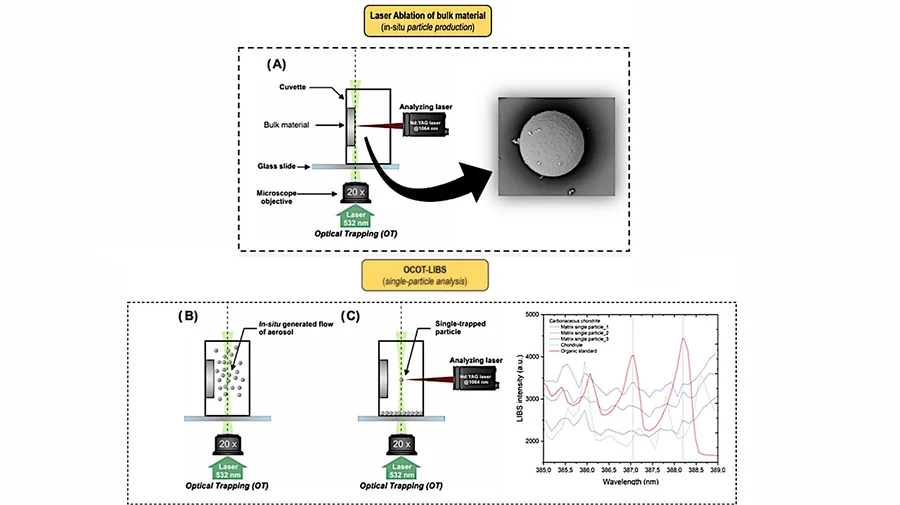
[Analytical Chemistry] The chemical characterization of scarce or heterogeneous solid samples remains a significant analytical challenge due to the high material quantities required by conventional techniques. Here, a microsampling approach […] The post Analytical Platform (Microsampling, Catapulting, Trapping, and LIBS) for the Characterization of Discrete Domains in Samples of Astrochemical Int…
IntroductionMolecular hybridization is an effective approach employed to synthesize molecules that possess the ability to function as dual inhibitors, thereby addressing the issue of growing resistance. Resistance by the malaria parasite is one such example. Therefore, the study aims to develop hybrid compounds consisting of 4-aminoquinoline and 4-thiazolidinone, utilizing molecular docking for s…
Black liquor, the alkaline effluent of kraft pulping, is one of the largest underutilized sources of technical lignin globally. This chemically valuable aromatic biopolymer is predominantly incinerated for energy recovery, foregoing the considerable chemical value embedded in lignin’s aromatic backbone and reactive functional groups. Conventional lignin isolation via acid precipitation is constra…
Scientific Reports, Published online: 07 September 2026; doi:10.1038/s41598-026-69752-4 Predictive power of edge–edge Zagreb indices in the analysis of octane isomers
Scientific Reports, Published online: 07 September 2026; doi:10.1038/s41598-026-68916-6 Synthesis of SAPO-34 using polyacrylamide enhances the catalyst lifetime and selectivity of light olefins in MTO
Nature Catalysis, Published online: 07 September 2026; doi:10.1038/s41929-026-01611-x Despite decades of clinical use, the biosynthetic origin of 5-azacytidine remained unknown. Now the responsible gene cluster is identified, revealing enzymes that convert guanosine triphosphate into a triazine nucleobase through rare skeletal editing and unconventional thiamine-dependent chemistry.
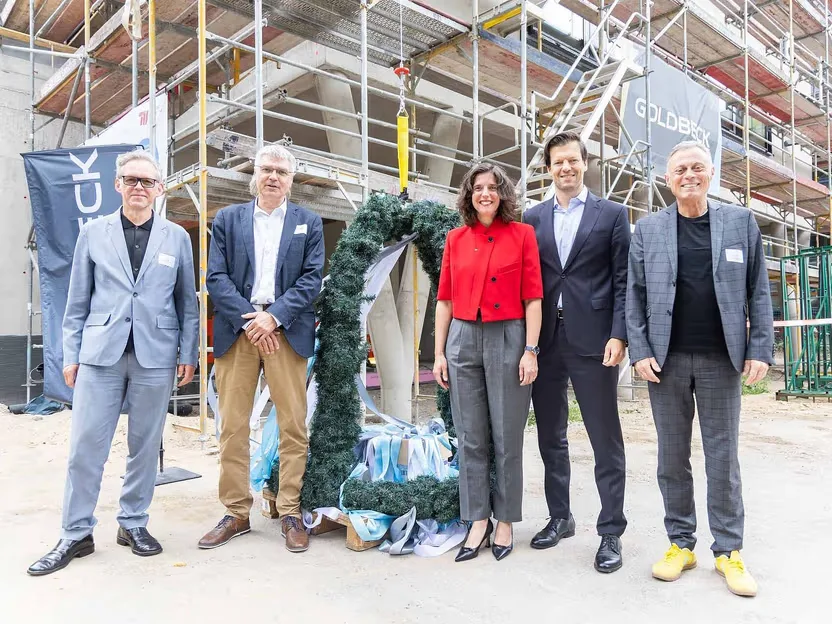
On the Charlottenburg campus of the Technical University of Berlin, the Chemical Invention Factory – John Warner Center (CIF) is taking shape as a venue for knowledge transfer in green chemistry that is unique in Europe. On September 4, 2026, TU Berlin celebrated the topping-out ceremony for the new...
Nature Sustainability, Published online: 28 August 2026; doi:10.1038/s41893-026-01928-2 Resource recovery from alcohol-laden wastewater remains challenging due to intrinsic limitations of current treatment technologies. This study introduces a membrane-free electrochemical system that safely and efficiently upcycles alcohol wastewater into valuable chemicals and hydrogen.
Nature Sustainability, Published online: 25 August 2026; doi:10.1038/s41893-026-01922-8 Directly converting captured carbon dioxide into fuels and chemicals could make carbon capture more efficient by avoiding energy-intensive solvent regeneration. This Review discusses the reaction pathways, key challenges and strategies for achieving high carbon conversion.
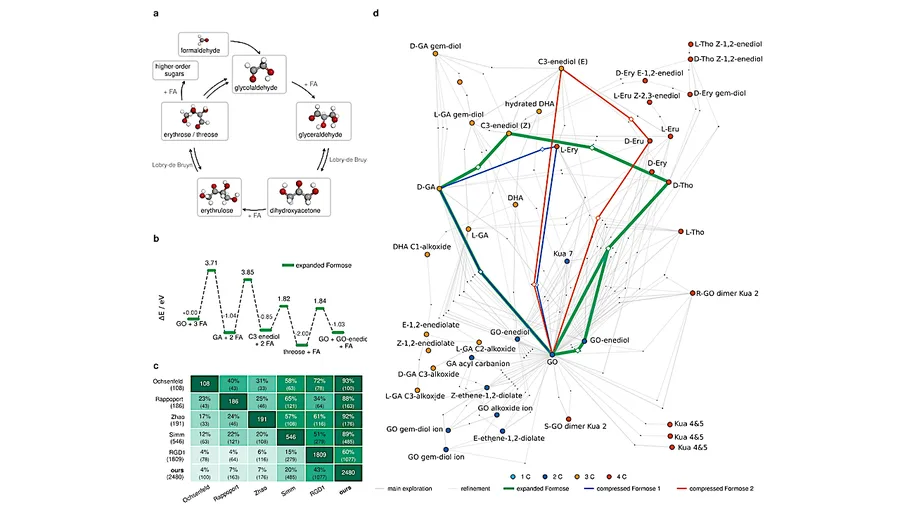
[cs.LG] Mapping a chemical reaction network, the graph of minima and transition states (TS) and the elementary reactions connecting them, is the natural language of chemistry, from catalysis to combustion […] The post ReactionAtlas: Ab Origine Exploration Of Chemical Reaction Networks With Machine Learning appeared first on Astrobiology .
Hefei Institutes of Physical Science·Chinese Academy of Sciences
1d ago
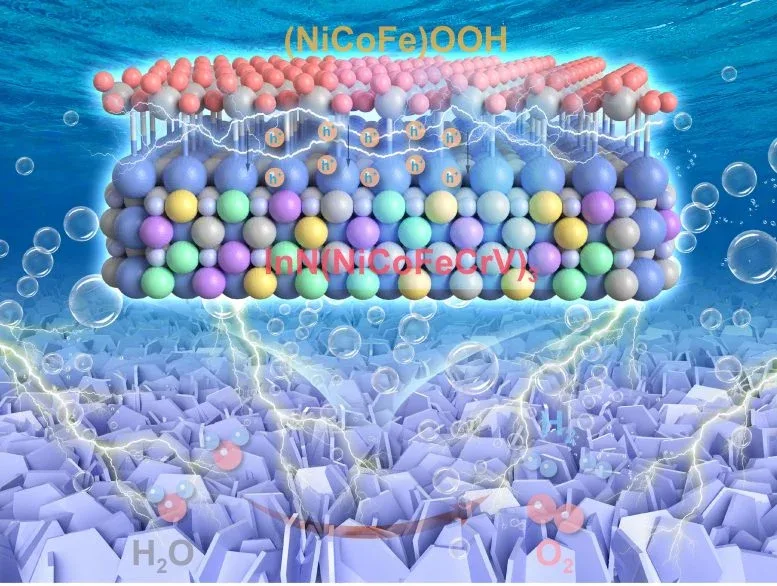
A metal surface that becomes more active as it changes could help green hydrogen electrolyzers run harder and longer. Researchers at the Chinese Academy of Sciences have developed an electrode that combines five metals in a high-entropy antiperovskite structure. Supported on porous nickel foam, the material helped an anion exchange membrane (AEM) electrolyzer sustain industrially [...]
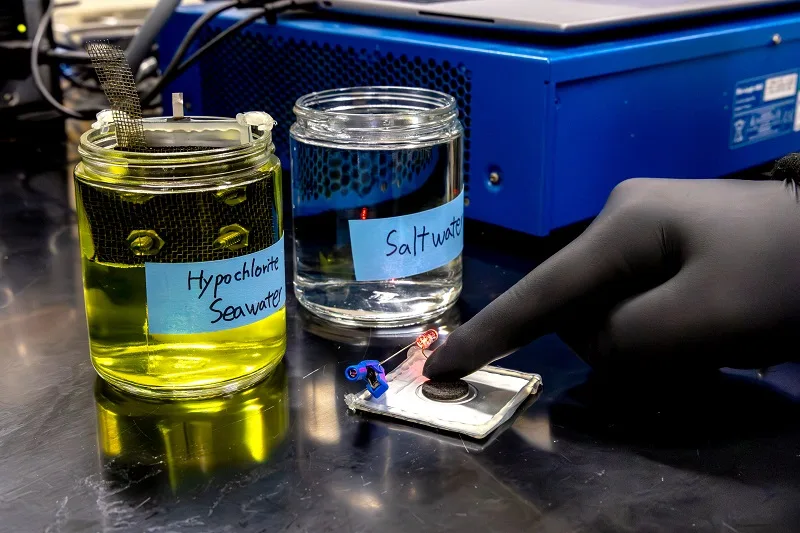
Researchers have found an unexpected way to make salt water batteries more powerful: adding a small amount of bleach. The discovery could support the development of safer and less expensive batteries for storing electricity on power grids. Scientists at the US Department of Energy’s Oak Ridge National Laboratory, or ORNL, were initially trying to improve […] The post Bleach Gives Saltwater Batter…
Metal atoms easily lose their outer electrons (usually by oxidation) and Lewis acids take up electrons (without being reduced). Can there be a situation where a metal atom binds covalently to a Lewis ...


 research.io