Scientific Reports, Published online: 03 September 2026; doi:10.1038/s41598-026-68457-y Indoxyl sulfate–associated vascular calcification is linked to mTORC1 and ER stress–integrated stress response signaling
Nature Communications, Published online: 29 August 2026; doi:10.1038/s41467-026-77308-3 The authors develop SPIN-Seq, a method that directly links the sequence of individual DNA molecules to their functional behavior, revealing how DNA sequence impacts protein-DNA interactions and the kinetics of biological reactions on nucleic acids.
Heart failure is a leading cause of death worldwide, and even with current treatments, the 5-y transplant-free survival rate is only ~50 to 70%. As such, there is a need to develop new treatments for patients that improve survival and quality of life. Recently, there have been efforts to develop small molecules for heart failure that directly target components of the sarcomere, including cardiac …
Scientific Reports, Published online: 27 August 2026; doi:10.1038/s41598-026-67593-9 Impact of combined acidic and oxidative stress on guanine DNA damage
Nature Cell Biology, Published online: 24 August 2026; doi:10.1038/s41556-026-02038-z Peng, Xue et al. develop a nucleic acid metabolites detection method, DNA RNA Elements Areal Mass Spectrometry (DREAMS) which enables the identification of DNA and RNA modifications, as well as spatial mapping of these modifications within tissues.
Australian researchers have identified a molecular switch that drives the spread of the most aggressive sub-type of breast cancer (triple-negative breast cancer), potentially paving the way for more effective treatments.
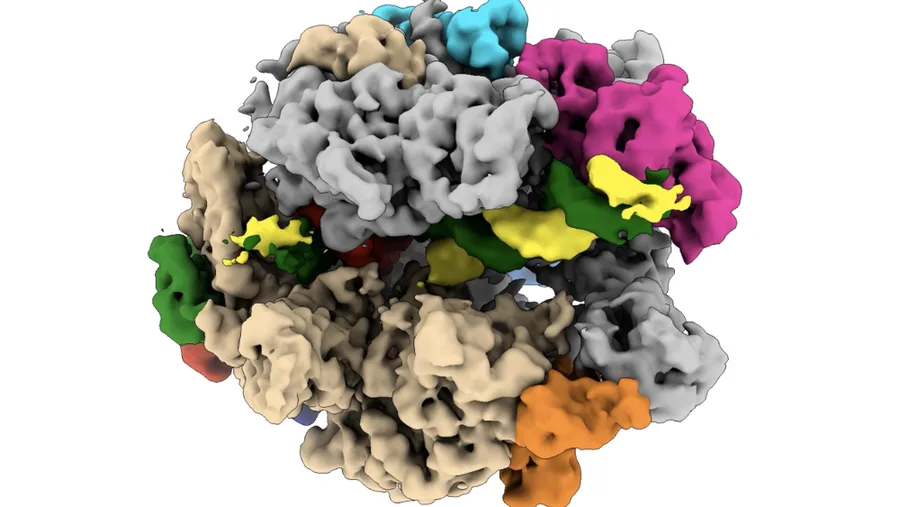
All living things have a fleet of tiny copy machines that turn instructions from DNA into RNA, the molecules responsible for helping build proteins that keep organisms alive. One of these, called eukaryotic RNA polymerase II, performs a crucial early step required by nearly every biological process. A team led by Penn State researchers has captured a glimpse of this molecular machinery as it oper…
There has been a growing focus on ‘molecular chameleons’ possessing structural flexibility; compounds that can dynamically adjust their conformations depending on the characteristics of the medium to either conceal or reveal polar parts in aqueous/lipidic environments. Drug discovery has shifted in the past few decades toward more complex molecules, such as cyclic and macrocyclic peptides, as wel…
Scientific Reports, Published online: 18 August 2026; doi:10.1038/s41598-026-67247-w DNA methylation as a complementary biomarker for HPV diagnostics in cervical lesions analyzed from FFPE material: new possibilities for stratification from pilot study
Scientists often describe life as a series of chemical reactions. Pallav Kosuri, PhD, describes life as movement. Chemical reactions are how you drive the movement of atoms, proteins, cells, and bodies-without movement, there is no life.
Researchers used cryo-electron microscopy to reveal that two classes of antibiotics shut down RNA polymerase in bacteria by locking a key structural component in place. This discovery gives new insight into the basic biology of the enzyme, revealing a previously unknown moving part that may be essential across domains of life.
Researchers used cryo-electron microscopy to reveal that two classes of antibiotics shut down RNA polymerase in bacteria by locking a key structural component in place. This discovery gives new insight into the basic biology of the enzyme, revealing a previously unknown moving part that may be essential across domains of life.
Researchers used cryo-electron microscopy to reveal that two classes of antibiotics shut down RNA polymerase in bacteria by locking a key structural component in place. This discovery gives new insight into the basic biology of the enzyme, revealing a previously unknown moving part that may be essential across domains of life.
Scientific Data, Published online: 12 August 2026; doi:10.1038/s41597-026-08094-2 A high-resolution RNA interaction atlas of Arabidopsis TUDOR STAPHYLOCOCCAL NUCLEASE1 by in vivo iCLIP
Molecular Identification of Freshwater Snails (Mollusca: Gastropoda) from Selected Rivers in Zamboanga Peninsula, the Philippines
Document Type
Article
Publication Date
2025
Recommended Citation
Siglos, L., & Lopez, C. (2025). Molecular Identification of Freshwater Snails (Mollusca: Gastropoda) from Selected Rivers in Zamboanga Peninsula, the Philippines. Philippine Journal of Science, 154(2), 48…







 research.io