Nature Communications, Published online: 07 September 2026; doi:10.1038/s41467-026-77051-9 Metformin has been proposed as a therapy for cancer, but many reports are showing limited efficacy. Here, the authors show that in high-glucose conditions, histone lactylation induces fatty acid uptake leading to metformin resistance in colorectal cancer stem cells.
Nature, Published online: 07 September 2026; doi:10.1038/d41586-026-02470-z A newly discovered function for the protein Rb explains why inhibiting cell division can enhance the signalling mediated by the oestrogen receptor that drives breast cancer.
Many prostate cancers depend on androgen hormones, including testosterone, to grow. That is why treatments for advanced disease often try to reduce testosterone production or block its effects.
For decades, natural killer (NK) cells have been classified into two main groups based on surface markers: one specialized for cytokine production and the other for direct killing.
Meeri Kim·Columbia University School of Engineering and Applied Science
2d ago
Cancer’s spread to distant organs can now be studied using lab-grown bone, lung, and blood vessel tissues. Cancer becomes far more dangerous when it stops being confined to one place. Most cancer deaths are not caused by the original tumor, but by cells that break away, travel through the bloodstream, and establish new tumors in [...]
[Gut Microbes] The authors found that Agathobacter rectalis (Ar) suppressed colorectal cancer cell growth, clonogenicity, migration, and cell cycle progression. They identified (−)-epigallocatechin (EGC) as an Ar-derived metabolite that recapitulated Ar-mediated anti-CRC effects, defining an Ar–EGC microbe–metabolite axis.
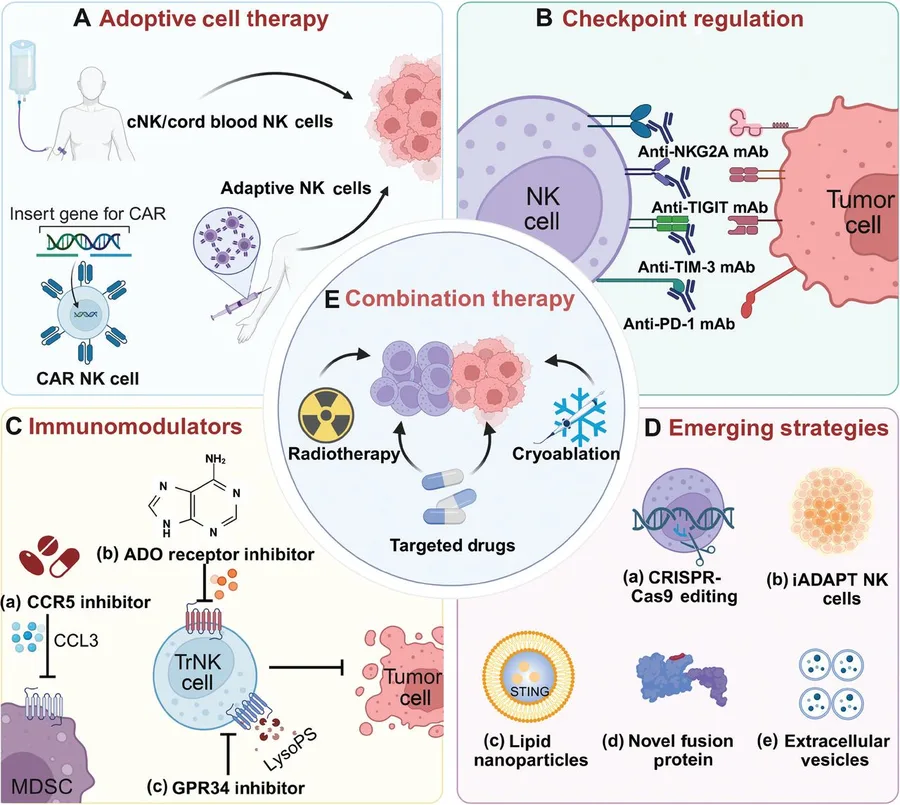
Natural killer (NK) cells are frontline immune defenders against cancer, but their behavior inside tumors is far more complex than previously understood. A comprehensive review now shows that the tumor microenvironment does not simply suppress these cells -- it actively reshapes them into distinct functional subsets with specialized roles, ranging from exhausted fighters to potent memory-like kil…
Natural killer (NK) cells are frontline immune defenders against cancer, but their behavior inside tumors is far more complex than previously understood. A comprehensive review now shows that the tumor microenvironment does not simply suppress these cells -- it actively reshapes them into distinct functional subsets with specialized roles, ranging from exhausted fighters to potent memory-like kil…
Natural killer (NK) cells are frontline immune defenders against cancer, but their behavior inside tumors is far more complex than previously understood. A comprehensive review now shows that the tumor microenvironment does not simply suppress these cells -- it actively reshapes them into distinct functional subsets with specialized roles, ranging from exhausted fighters to potent memory-like kil…
Scientists from Nanyang Technological University, Singapore (NTU Singapore) have developed microscopic peptide droplets that deliver large amounts of gene-silencing molecules into cancer and immune cells, reducing the growth of hard-to-treat colorectal tumours by about 67 per cent in mice.
The discovery of SBS111 in colorectal cancer offers new perspectives on mutational processes and DNA repair, emphasizing its significance in tumor biology.
Melbourne researchers have uncovered a critical signaling pathway that controls the timing of brain development, shedding new light on how neurodevelopmental disorders may develop.
IntroductionChemotherapy resistance is a critical bottleneck in lung cancer treatment, significantly limiting the clinical efficacy of drugs like paclitaxel. This study investigated the cytotoxic and chemosensitizing potential of hexane, acetone, and hydroalcoholic extracts from Eryngium heterophyllum Engelm. [Apiaceae] to enhance therapeutic response in A549 lung cancer cells.MethodsExtracts wer…
Researchers have uncovered new clues about why the childhood cancer rhabdomyosarcoma may become aggressive. Some children diagnosed with rhabdomyosarcoma (RMS) appear to have lower-risk disease, yet their cancer can still become dangerously aggressive. Researchers have now uncovered biological similarities that may explain why, raising the possibility of identifying these children earlier and mat…
Canine mammary gland tumors (MGTs) are the most prevalent neoplasms in intact female dogs, yet the role of the gut microbiome in their pathogenesis remains largely unexplored. This pilot study investigated the gut microbiota composition of 40 female dogs classified into MGT (n = 11), Non-MGT (n = 20), and under 2 years (U2Y, n = 9) groups using 16S rRNA gene sequencing. Alpha diversity indices sh…
[UNC School of Medicine] Dr. Jessica Thaxton at the UNC School of Medicine has been awarded a prestigious $700,000 grant from the Mathers Foundation to support research into the role of the endoplasmic reticulum in T cell metabolism and cancer development.


 research.io