Researchers have uncovered new clues about why the childhood cancer rhabdomyosarcoma may become aggressive. Some children diagnosed with rhabdomyosarcoma (RMS) appear to have lower-risk disease, yet their cancer can still become dangerously aggressive. Researchers have now uncovered biological similarities that may explain why, raising the possibility of identifying these children earlier and mat…
Part of the challenge of finding a biomarker for mental illness is the environment’s significant influence The post I’m Part of the Team Writing the Next Bible of Psychiatry—For the First Time, the DSM Will Use Biology to Understand Mental Disorders appeared first on Nautilus .
Whole-blood samples are extensively stored in biobanks worldwide, but their potential for extracellular vesicle (EV) research remains largely underused. Most circulating EV studies rely on plasma or serum, excluding part of the biological information originally present in blood and potentially overlooking molecular signals relevant to disease mechanisms and biomarker discovery.
Researchers used multi-ethnic proteomics and genetic data to identify blood proteins linked to Alzheimer’s risk. They found causal roles for immune-related proteins, highlighting potential diagnostic markers and drug targets.
Nature Reviews Drug Discovery, Published online: 24 August 2026; doi:10.1038/s41573-026-01509-0 Drug discovery for psychiatric disorders is a slow and challenging process, driven in part by reliance on symptom-based diagnostic criteria that fail to capture the underlying disease biology. In their Perspective, Etkin and co-authors suggest a framework for a precision psychiatry approach, drawing on…
BackgroundThis study aims to systematically elucidate the clinical significance and biological function of the phospholipid phosphatase (PLPP) family member (PPAP2C) phosphatidic acid phosphatase type 2C in breast cancer, and to evaluate its potential as a prognostic biomarker and therapeutic target.MethodsGene expression data from The Cancer Genome Atlas (TCGA), Genotype-Tissue Expression (GTEx)…
ObjectiveTo explore features associated with impaired retinal neurovascular coupling among individuals diagnosed with Alzheimer’s disease (AD) and its association with alterations in plasma metabolomics, and to establish an integrated diagnostic model for evaluating its possible significance regarding early-stage identification of AD.MethodsWe prospectively enrolled 85 AD patients, 82 subjects wi…
Perioperative neurocognitive disorders (PND) after cardiac surgery are common complications that adversely affect postoperative recovery, functional independence, and long-term prognosis. Their pathogenesis is multifactorial, involving cerebral hypoperfusion, microembolism, CPB-related systemic inflammation, BBB disruption, oxidative stress, metabolic dysregulation, neuroimmune imbalance, and hos…
* New biomarkers may help monitor treatment responses to perioperative immunotherapy for patients with lung cancer
* Researchers demonstrate that donor cord blood composition could influence outcomes of CAR NK cell therapy
* Immune cell signaling plays important roles in skin cancer development, arthritis following immunotherapy treatment, and responses to rapid-acting antidepressants
* The gut m…
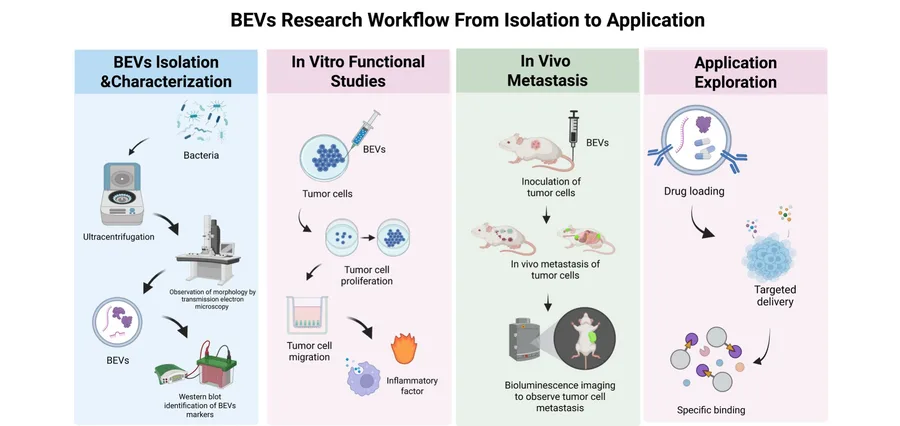
Bacteria naturally release microscopic particles known as bacterial extracellular vesicles. This review considers how these vesicles could be adapted for precision cancer medicine, from carrying drugs and activating immune responses to limiting metastasis and identifying cancer biomarkers.
Renew Biotechnologies today announced the publication of its peer-reviewed research in Frontiers in Neurology, providing evidence that native DNA methylation analysis can identify neuron-associated cell-free DNA (cfDNA) signatures in blood across Alzheimer's disease (AD), Parkinson's disease (PD), and amyotrophic lateral sclerosis (ALS).
Diagnostics World | Blood-based biomarkers predicting when symptoms of amyotrophic lateral sclerosis (ALS) will emerge are expected to catapult the medical research community forward in the quest to prevent the fatal neurodegenerative disorder. Researchers from the University of Miami Miller School of Medicine have been spearheading the Pre-Symptomatic Familial ALS (Pre-fALS) study collecting lon…
Diagnostics World | Smartwatches could one day do more than track steps, sleep, and heart rate. Researchers at the University of California San Francisco (UCSF) are working with Samsung to determine whether physiological data collected passively by a smartwatch can help identify early changes in cognitive function.
Sino Biological Inc. is pleased to announce the launch of its Recombinant Human p-Tau217 Protein (Cat. No. T08-50SN), a full-length, tag-free Tau reagent developed to support Alzheimer’s disease biomarker assay development, antibody evaluation, and Tau biology research.
Nature Medicine, Published online: 31 July 2026; doi:10.1038/d41591-026-00039-x Amateur-level soccer players who ‘headed’ the ball during a single match showed immediate dose–response elevations in p-Tau217 and S100B in the blood.
The misfolding of the amyloid-β protein is the strongest blood-based predictor of Alzheimer’s disease in the asymptomatic stage. It indicates the risk years before clinical diagnosis and significantly earlier than the widely used plasma biomarker P-tau 217. This is the conclusion of a study led by P...
A central challenge in peripheral nerve injury care is determining whether an in-continuity injury will recover spontaneously or require early surgical intervention. This determination currently depends on serial observation, during which the window for effective intervention may narrow. This Perspective discusses grip strength as a translational biomarker for peripheral nerve injury and recovery…
Diagnostics World | Growing momentum in biomarker discovery, advancing analytical technologies, and a shift toward personalized medicine have created unprecedented possibilities for diagnostic development. The pace at which this progress translates to novel, widely adopted, clinically validated diagnostic tools remains slow, but not for lack of innovation.




 research.io