immune-cells-in-cancer
Nature, Published online: 09 September 2026; doi:10.1038/s41586-026-11002-8 SERPINE1 and SERPINB2-driven fibrin-rich niches locally programme immunosuppressive macrophages and exclude T cells, enabling spatially organized immune evasion in pancreatic ductal carcinoma.
Nature Cell Biology, Published online: 09 September 2026; doi:10.1038/s41556-026-02072-x Reining in immune responses with MDM2

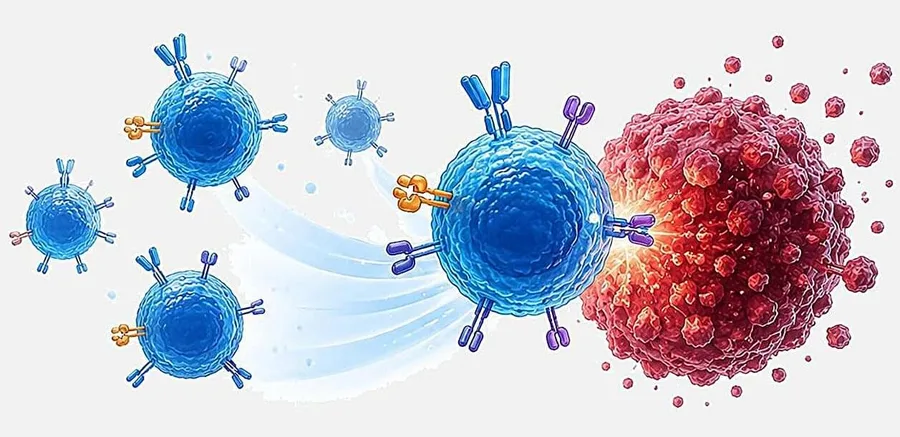
T-cell receptor, or TCR, therapy is a cancer treatment that genetically reprograms immune cells, called T cells, to hunt down cancer with precision. It’s similar to another treatment, CAR T-cell therapy, but with one key difference: CAR T-cell therapy can only spot proteins that naturally appear outside a cancer cell. TCR therapy, however, can also […]
Metabolic reprogramming is a central determinant of host defense and pathogen persistence during infection. Although the bacterial type VI secretion system (T6SS) is primarily recognized as a contact-dependent apparatus for interbacterial competition and effector delivery, emerging evidence indicates that T6SS activity can also influence host metabolism at cellular, nutritional, and microbial-com…
Ulcerative colitis (UC) involves epithelial injury, gut microbial dysbiosis, disturbed microbial metabolism, and mucosal inflammation. This study evaluated the protective effect of Schisandra chinensis (SC) against dextran sulfate sodium (DSS)-induced UC and investigated the underlying microbiota–metabolite–host signaling mechanism. UPLC-Q-TOF-MS/MS identified 38 constituents in SC, predominantly…

A new study explores how individual and community health experiences of adults with Sickle Cell Disease (SCD) shape resilience -- the capacity to adapt to adversity.
Nature Communications, Published online: 09 September 2026; doi:10.1038/s41467-026-77695-7 Author Correction: Engineering immunomodulatory and osteoinductive implant surfaces via mussel adhesion-mediated ion coordination and molecular clicking
Nature Immunology, Published online: 09 September 2026; doi:10.1038/s41590-026-02643-y Granucci and colleagues identify microbial adhesion to myeloid cells as a critical initiating event that precedes engagement of pattern recognition receptors.
A vaccine created by University of Georgia researchers to battle multiple life-threatening fungal infections is successful in achieving protective immunity in pre-clinical animal models while also maintaining the biodiversity of the gut microbiome, according to a new study.
YUMAB GmbH and ISAR Bioscience GmbH announced their collaboration to develop a novel transferrin receptor (TfR) specific antibody for the delivery of biotherapeutics across the blood brain barrier (BBB). The collaboration combines the complementary expertise and technologies of both companies. ISAR...
research.ioSign up to keep scrolling
Create your feed subscriptions, save articles, keep scrolling.